Arabfields, Meriem Senouci, Correspondent, Hanoï, Vietnam — Vietnam’s agricultural, forestry, and aquatic sectors stand at a pivotal juncture, where ambitious goals for export growth intersect with a determination to overcome persistent global headwinds and capitalize on emerging opportunities. The sector has established a target of between 73 billion and 74 billion USD in export revenue for 2026, a figure that reflects not only confidence in its foundational strengths but also a proactive approach to restructuring production systems, enhancing product quality, and diversifying market reach. This vision builds directly on the solid performance recorded in recent years, including a full-year export total of approximately 70.09 billion USD achieved in 2025, which represented a 12 percent increase over the prior period despite broader economic uncertainties. Such momentum underscores the resilience that has been cultivated over more than four decades of development, during which the industry has repeatedly demonstrated its capacity to adapt to fluctuating international conditions through targeted reforms and innovation.
The early indicators for 2026 already signal a continuation of this upward trajectory, as exports of agricultural, forestry, and aquatic products reached nearly 6.51 billion USD in January alone, marking an impressive rise of almost 30 percent compared to the corresponding month in the previous year. This strong opening month highlights the sector’s ability to maintain recovery and adaptability even as worldwide economic recovery proceeds at a measured pace and protectionist policies gain ground in several key regions. Deputy Minister of Agriculture and Environment Phung Duc Tien has emphasized that, while the year ahead presents notable difficulties, the industry’s deep-rooted foundations enable it to navigate market volatility effectively. Production restructuring efforts, combined with ongoing improvements in quality standards and supply chain organization, have collectively bolstered the competitiveness of Vietnamese offerings on the global stage, positioning the country to pursue its elevated objectives with greater assurance.
Central to the strategy for attaining the 74 billion USD target is a sustained focus on expanding and diversifying export destinations beyond long-established partners. Traditional markets continue to provide a stable base, yet the sector is actively pursuing fresh avenues in regions such as the Middle East, Africa, and South Asia, where demand for high-quality food and related products shows promising signs of expansion. The effective leveraging of free trade agreements plays a critical role in this endeavor, as these pacts deliver tariff advantages and streamlined access that enhance the appeal of Vietnamese goods. In practice, this reorientation of market priorities, paired with rigorous quality enhancements, has already produced tangible outcomes, as evidenced by the accelerated growth rates observed in early 2026. By broadening its footprint in these emerging areas, Vietnam not only mitigates risks associated with over-reliance on any single region but also unlocks additional revenue streams that can contribute meaningfully to overall export volumes.
Complementing market diversification is an equally vital emphasis on elevating the value added through advanced processing techniques, which serves as a primary catalyst for generating fresh growth impulses. Vietnam is progressively embedding itself more firmly within international supply chains by moving away from the export of unprocessed raw materials toward finished and semi-finished goods that command premium prices. This transition enhances economic returns, stabilizes income against the volatility of commodity markets, and elevates the overall standing of Vietnamese products among discerning international buyers. The coffee industry provides a compelling illustration of this approach in action. During 2025, coffee exports are estimated to have attained 8.92 billion USD, reflecting a surge of nearly 59 percent from the year before. This remarkable expansion stemmed not solely from favorable price movements but, more importantly, from a pronounced shift toward roasted, instant, and other sophisticated processed variants that incorporate greater technological input and consumer appeal. Such developments illustrate how deep processing can amplify export earnings while diminishing vulnerability to raw material price swings, thereby fostering a more robust and predictable revenue profile for producers and exporters alike.
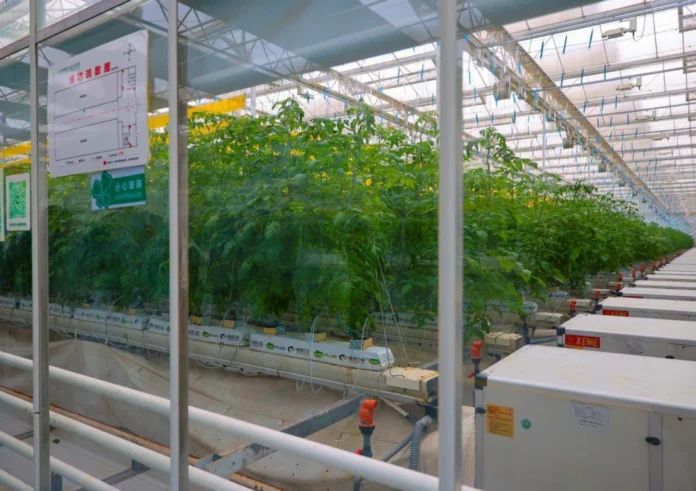
Investments in modern processing infrastructure and brand development have become indispensable elements of this evolution, with both domestic and international enterprises allocating substantial resources to establish state-of-the-art facilities capable of delivering high-value offerings. These initiatives extend across multiple categories, including fruits and vegetables, where qualitative advancements are transforming the landscape. Businesses within this segment are prioritizing the creation of standardized cultivation zones that adhere to international benchmarks, alongside investments in processing capabilities and product variety. The result is a sector that is evolving from mere volume expansion to one characterized by enhanced sophistication and market responsiveness. Experts highlight the substantial growth prospects for fruits and vegetables in particular, especially within exacting environments such as Europe, the United States, Japan, and South Korea, where consumers place a premium on safety, traceability, and extended usability. By incorporating advanced processing methods, producers can improve sensory attributes, prolong shelf stability, and satisfy the most demanding regulatory requirements, all of which translate into higher unit values and expanded market penetration.
Enterprise-level initiatives are assuming an ever more prominent function in driving this market broadening process. Numerous companies have committed to constructing certified raw material sourcing areas that ensure consistency and compliance from the outset of the production cycle. Concurrently, the integration of digital technologies into production oversight, traceability systems, and quality assurance protocols is elevating operational transparency and efficiency to levels that align seamlessly with global expectations. The digitization of entire supply chains not only facilitates real-time monitoring but also streamlines compliance with import regulations, thereby reducing barriers and accelerating delivery timelines. These technological infusions are proving instrumental in meeting the stringent demands of sophisticated buyers while simultaneously lowering operational costs and minimizing waste, outcomes that reinforce the sector’s long-term viability.
In parallel, the responsible authorities are continuously refining regulatory frameworks and support mechanisms to cultivate an enabling environment for sustained business expansion. The Ministry of Agriculture and Environment is intensifying its trade promotion activities, offering targeted assistance to enterprises seeking to enter new territories, bolstering their proficiency in navigating international norms, and facilitating adaptation to evolving import protocols in destination countries. Such governmental backing is essential for translating strategic intentions into practical achievements, as it equips stakeholders with the tools and knowledge required to compete effectively on a worldwide scale. Science and technology, in this context, emerge as the fundamental engines propelling increases in added value and overall competitiveness. Their application spans the full spectrum of activities, from cultivation and harvesting through processing and distribution, yielding improvements in product integrity, resource utilization, and environmental stewardship that are indispensable for meeting contemporary sustainability criteria.
The broader consensus among specialists is that, within the current environment of global market unpredictability, a deliberate transition from growth models centered predominantly on quantity to those anchored in quality and enriched value represents an unavoidable progression. This reorientation promises not only to optimize export performance in the immediate term but also to establish the groundwork for enduring prosperity across the agricultural domain. By concentrating resources on production reorganization, geographic market enlargement, the advancement of sophisticated processing, and the widespread adoption of scientific innovations, the sector is methodically constructing the prerequisites for a renewed era of expansion. The resultant gains in value creation, the multiplication of market outlets, and the sharpening of competitive edges will collectively serve to amplify export capabilities and reinforce agriculture’s foundational contribution to national economic vitality.
Vietnam already occupies an enviable position among the world’s foremost agricultural exporters, holding the top rank in global pepper and cashew nut shipments while maintaining prominent standings in coffee and rice categories. Key commodities, encompassing coffee, fruits and vegetables, wood products, and seafood, continue to strengthen their presence in international arenas, with an increasing proportion shifting toward processed and premium variants. This evolution aligns closely with rising worldwide requirements for food items that are both refined and produced in an environmentally responsible manner, trends that international observers project will persist and intensify. The convergence of these demand dynamics with Vietnam’s strategic measures creates fertile conditions for further market broadening, value enhancement, and deeper embedding within global value networks.
Projecting forward on the basis of the empirical data from recent periods, the sector appears well positioned to fulfill or even surpass its 73 to 74 billion USD objective for 2026, provided that the momentum evident in January’s nearly 30 percent expansion is maintained and the outlined strategies are executed with precision. Should the emphasis on processed exports continue to yield results comparable to the 59 percent advance recorded in coffee during 2025, it is plausible to anticipate that high-value segments could account for a substantially larger share of total revenues within the coming years, potentially driving overall growth rates into the mid-single digits or higher on an annualized basis. Market diversification efforts, particularly into the Middle East, Africa, and South Asia, could incrementally contribute several billion USD annually as new trade corridors mature and free trade agreement benefits compound. Over a slightly extended horizon, assuming sustained investment in technology and standardization, Vietnam may reasonably expect to consolidate its leadership in existing categories while ascending in others, such as ready-to-eat fruits and vegetable preparations or sustainably certified seafood, thereby enhancing its influence within the global food system.
Furthermore, the ongoing integration of digital tools and sustainable practices is likely to generate compounding advantages, including reduced production costs, elevated consumer trust, and compliance with future regulatory shifts toward carbon-neutral and traceable supply chains. These developments could translate into a scenario where, by the close of the decade, the combined export value comfortably exceeds current targets, supporting broader economic objectives such as rural income elevation, employment generation, and trade balance improvement. The global uptick in demand for processed and sustainable foodstuffs, as assessed by international bodies, offers a structural tailwind that Vietnam is strategically equipped to harness through its adaptive framework. Consequently, the sector’s trajectory points toward not merely quantitative expansion but a qualitative transformation that cements its status as a reliable, innovative supplier capable of addressing the evolving needs of diverse international markets.
In essence, the concerted pursuit of these multifaceted strategies, grounded in proven performance metrics and forward-looking policies, equips Vietnam’s agricultural, forestry, and aquatic industries with the resilience and agility required to navigate contemporary challenges while seizing tomorrow’s prospects. The journey toward the 74 billion USD benchmark in 2026 represents more than a numerical aspiration, it embodies a comprehensive vision for sustainable advancement that promises enduring benefits for producers, enterprises, and the national economy at large. As implementation deepens and results accumulate, the foundation laid in recent years will increasingly manifest in heightened global competitiveness and a more prominent role for Vietnam within the architecture of international agricultural trade.