Arabfields, Nadia Fatima Zahra, Arabfields, Yamoussoukro, Ivory Coast — In the heart of Cameroon’s agricultural regions, local palm fruit producers are set to benefit significantly from fresh industrial developments. Recent initiatives by Opalm promise to inject substantial funds into rural communities while addressing longstanding supply challenges in the palm oil industry.
The construction of a new palm oil processing plant in Lengue, located in the Moungo division of the Littoral region, along with the expansion of a facility in Eséka in the Centre region, marks a notable step forward. These projects, recently acquired and upgraded by Opalm, are expected to channel approximately 17 billion CFA francs, or about 30.6 million dollars, into the two production basins. Company officials anticipate that the combined efforts will generate more than 11 billion CFA francs, equivalent to roughly 19.8 million dollars, in annual revenues for palm fruit suppliers.
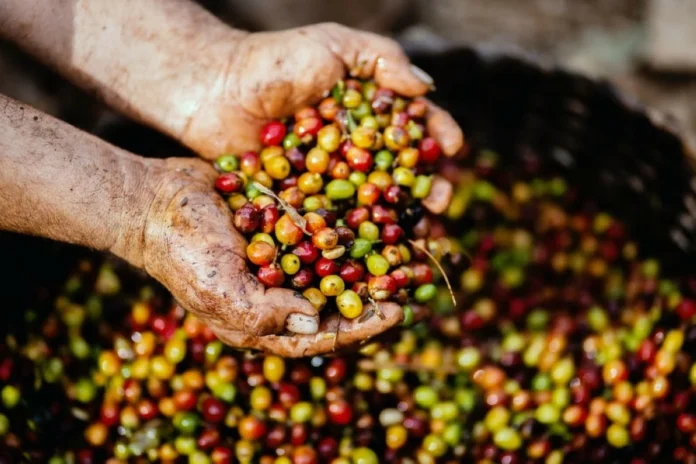
Patrice Yantho, coordinator of Opalm’s investment program, spoke during the groundbreaking ceremony for the Lengue plant on April 8, 2026. He highlighted the new facility’s capacity of 25,000 tons per year and its cost of 9 billion CFA francs. The project is projected to create over 340 direct and indirect jobs. It also guarantees annual purchases of palm fruit bunches worth more than 5 billion CFA francs for growers in the Moungo area. Yantho noted that since 2024, Opalm has already collected over 10,000 tons of fruit bunches in the Moungo division, paying producers more than 8 billion CFA francs.
In Eséka, the upgraded unit aims for even greater impact. Opalm has purchased more than 15,000 tons of palm fruit bunches in less than two months, valued at over 1.2 billion CFA francs. Once the new processing line is operational, the facility expects to handle up to 75,000 tons annually, translating to around 6 billion CFA francs paid to local suppliers each year. This expansion will raise the plant’s output from the current 7,000 tons to 25,000 tons.
Agriculture Minister Gabriel Mbairobe attended the Lengue event and emphasized the broader benefits. He pointed out that these investments will not only increase production and incomes but also improve plantation productivity through a cooperation agreement signed in December 2025 between Opalm and the government. Under this framework, the company will support farmers with high-yield seeds and fertilizers, targeting an oil yield of two tons per hectare, compared to the current 500 kilograms per hectare, a potential threefold increase.
Opalm’s overall program, backed by government support, envisions building five palm oil plants across key production areas over the next five years. The total investment is estimated at 45 billion CFA francs. This initiative seeks to add more than 100,000 tons to national palm oil output, thereby reducing the country’s current production deficit by about 50 percent. Such progress would lessen reliance on imports and contribute to a more balanced trade position.
Cameroon’s palm oil sector faces a structural gap that has persisted for years, with national demand far exceeding local supply. In 2025, the trade deficit stood at 2,145.2 billion CFA francs, reflecting a 23 percent rise from the previous year. Projections for 2026 indicate continued efforts to narrow this shortfall, including government targets for an additional 20,500 tons of crude palm oil production nationwide.
Industry observers expect these developments to foster stronger value addition in agriculture and support smallholder farmers through better market access and technical assistance. As the plants come online, communities in Moungo and Nyong-et-Kellé anticipate improved livelihoods, with steady income from fruit sales and new employment opportunities in processing and related activities.
The moves align with national goals for import substitution and agricultural modernization. With sustained implementation, including plantation regeneration and enhanced yields, Cameroon could see meaningful progress toward greater self-sufficiency in palm oil by the end of the decade. Local producers, many of whom have long depended on traditional methods, now look forward to a more secure and profitable future in the sector.