Arabfields, Sophia Daly, Financial Analyst specialized in Agriculture and Futures Markets — Cocoa prices rose sharply on Monday amid concerns over global supply disruptions after Iran on Saturday issued a statement regarding the Strait of Hormuz.
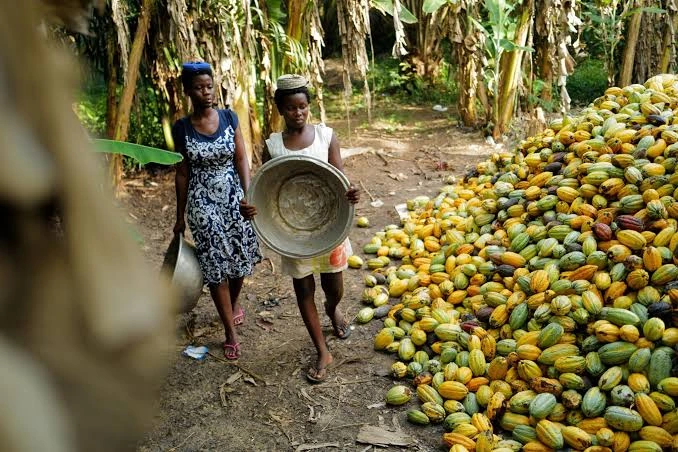
The benchmark futures contract on the Intercontinental Exchange climbed more than seven percent in a single session, reaching levels that caught many traders off guard. This latest spike reflects a market already under pressure from tight inventories and shifting weather patterns in West Africa, where most of the world’s cocoa is grown.
Analysts describe the development as a reminder of how quickly geopolitical events can ripple through commodity markets. “We are seeing heightened volatility as traders reassess risks associated with key maritime routes,” said David Thompson, a senior analyst at Global Commodities Research in New York. “Even though cocoa itself does not transit the Strait directly, the broader impact on shipping insurance and logistics costs is immediate and significant.”
Preliminary figures from industry trackers indicate that global cocoa production for the 2025-2026 season is expected to fall about 140,000 metric tons short of demand. That gap, combined with the new uncertainty, has pushed spot prices for high-quality beans up by nearly 25 percent since the beginning of the year. Processors in Europe and North America report that forward contracts are now being renegotiated at premiums not witnessed in the past two seasons.
Looking ahead, market forecasts point to sustained upward pressure if diplomatic tensions linger. Experts project that cocoa prices could average 18 to 22 percent higher than earlier estimates for the remainder of 2026, assuming no swift resolution. Such an increase would place additional strain on chocolate manufacturers, many of whom have already absorbed two rounds of cost hikes in the past 18 months.
In Ivory Coast, one of the largest producing nations, the effects are felt at the farm level. Jean Kouadio, a cooperative leader who oversees several hundred smallholder farmers near Abidjan, expressed quiet concern during a recent conversation. “We depend on stable sea routes to reach our buyers on time. If costs keep rising, it affects what we receive for our harvest and what we can invest back into the next planting.” Similar sentiments echoed among traders in Accra, where warehouses are operating at near-full capacity yet face longer lead times for vessel bookings.
As the trading week unfolds, participants will monitor any further statements from involved parties. For now, the focus remains on safeguarding supply chains and preparing for what could become a more challenging year for one of the world’s most sensitive agricultural commodities.