Arabfields, Nadia Fatima Zahra, Arabfields, Dakar, Senegal — Senegal’s peanut oil industry closed 2025 on a stronger note, with exports reaching their highest level in six years as processors benefited from renewed activity in the country’s long-standing groundnut sector.
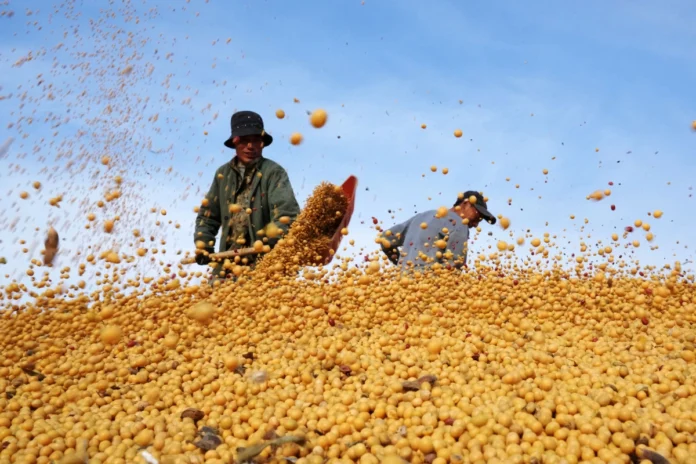
The increase is significant for an industry that remains closely connected to rural livelihoods. Groundnuts are cultivated by thousands of farming households, particularly across Senegal’s peanut basin, where the crop provides an important source of income after the rainy season.
For a farmer, however, a stronger export market is not simply a matter of trade statistics. It can mean a more reliable buyer, better prospects for selling part of the harvest and, when prices are favourable, more money available for food, school expenses and farm inputs.
The latest figures point to a broader recovery in the peanut value chain. Data for the 2025/26 marketing year indicate that Senegal could produce around 770,000 tonnes of peanuts, while domestic processors are expected to crush about 190,000 tonnes. Peanut exports, including raw products, are projected at roughly 260,000 tonnes.
The processing figures are particularly important because Senegal has long sought to capture more value from its groundnut production rather than relying heavily on exports of unprocessed crops. A stronger peanut oil market gives local processors an opportunity to increase their role in the chain and potentially create additional value before products leave the country.
The improvement also comes as Senegal’s wider export sector continues to expand. During the first five months of 2026, the country’s total exports reached 2,629.6 billion CFA francs, up 13.1 percent from the same period a year earlier. Although petroleum, gold and other major commodities account for much of this growth, the figures point to a generally stronger external trade environment.
For people working in the groundnut trade, the challenge now is maintaining momentum. Peanut production remains vulnerable to rainfall patterns, input costs and fluctuations in international demand. A weak harvest can quickly affect processors, traders and farmers at the same time.
The outlook for the sector is therefore cautiously positive. If processing activity remains close to the 190,000 tonnes projected for the current marketing year, Senegal could strengthen its position as a supplier of peanut-derived products while reducing some of its dependence on raw commodity exports. Continued investment in processing capacity could make that trend more durable over the next few years.
There is also room for growth if productivity improves. Better seeds, improved farming practices and stronger links between farmers and processors could help increase the supply available to local factories. That would give the country more room to expand exports of processed products without necessarily requiring a dramatic increase in cultivated land.
For rural households, the stakes are practical. A healthy peanut industry can support seasonal employment, provide farmers with a dependable market and keep more economic activity within producing communities.
Senegal’s record peanut oil exports in 2025 therefore represent more than a temporary improvement in trade. If production and processing continue to recover, the country could turn the latest increase into a longer-term opportunity for its farmers, processors and exporters.