Arabfields, Sophia Daly, Financial Analyst specialized in Agriculture and Futures Markets — The global cocoa market is entering the second half of 2026 with prices far below their record highs, but the recent correction has not removed the uncertainty surrounding supply. Traders are watching West African weather, crop conditions and demand closely as the industry prepares for another difficult season.
On August 12, the International Cocoa Organization’s daily indicator stood at about $5,681 per tonne, while New York futures were trading near $5,727 per tonne. London futures were around £4,173 per tonne. The market has changed dramatically from the extreme levels seen during the 2024 price crisis, but cocoa remains an expensive commodity by historical standards.
The decline has been significant. By August 13, cocoa prices were about 30 percent below their level a year earlier. The correction reflects expectations of improved global supplies and weaker demand in some major consuming markets. European cocoa grindings fell 7.8 percent year on year in the first quarter of 2026, while North American grindings declined 3.8 percent.
For chocolate manufacturers, the change in prices offers some relief after two years of exceptionally high raw material costs. But companies remain cautious. Consumers have already faced higher chocolate prices, and weaker demand could limit how quickly processors rebuild inventories.
In producing countries, the situation is more complicated. Farmers are dealing with the opposite problem, lower market prices arriving at a time when production costs remain high. A cocoa grower in Côte d’Ivoire or Ghana still has to pay for labour, fertiliser, pesticides and transport regardless of what futures markets are doing in London or New York.
Supply is also far from guaranteed. The International Cocoa Organization estimates that global production for the 2024/25 season rose by 8.3 percent to around 4.72 million tonnes, helping the market move away from the severe shortages that had pushed prices to historic levels.
The outlook for the next season is less comfortable. Ghana’s cocoa regulator expects production to fall by at least 16 percent in 2026/27, with weather conditions, disease, ageing farms and low fruit development affecting the crop. Côte d’Ivoire is also facing expectations of lower production, increasing the risk that the current supply improvement could prove temporary.
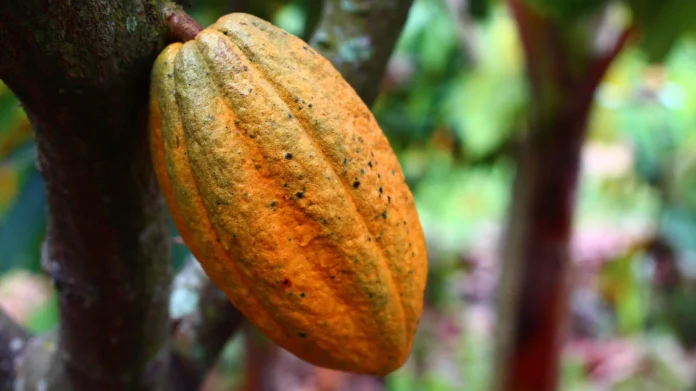
Weather is becoming one of the most important variables in the market. The possibility of renewed El Niño conditions has already encouraged traders to reassess the outlook for West African crops. If prolonged heat or irregular rainfall damages flowering and pod development, prices could recover quickly even if demand remains relatively weak.
At the same time, Asian processing is showing signs of resilience. Malaysian cocoa processor Guan Chong expects grinding activity to improve in 2026 as demand recovers from last year’s slowdown. A recovery in processing would provide some support to prices, particularly if bean supplies begin tightening again.
The balance between supply and demand will therefore determine the direction of the market over the coming months. Some forecasts point to another global surplus in 2026/27, although estimates have already been revised lower as weather risks have increased. A smaller surplus would make the market more sensitive to any disruption in West Africa.
The most likely scenario is continued volatility rather than a return to the extraordinary prices seen in 2024. If production improves and consumer demand remains restrained, cocoa could trade at lower levels through the rest of 2026. However, a significant deterioration in Ghanaian or Ivorian production could quickly push prices back above current levels.
For farmers, the next few months will be especially important. Lower cocoa prices may discourage investment in ageing plantations just when producers need to spend more on rehabilitation, disease control and climate adaptation. That could create a new supply problem several seasons from now.
The global cocoa industry is therefore facing a delicate transition. The immediate shortage has eased, but structural problems have not disappeared. By 2027, prices are likely to depend increasingly on whether West African producers can recover yields while responding to changing weather patterns and whether consumers return to stronger chocolate consumption.
For the millions of people whose livelihoods depend on cocoa, the numbers on the futures exchanges are not abstract. They determine whether a harvest can cover the cost of maintaining a farm, supporting a family and planting again for the following season.