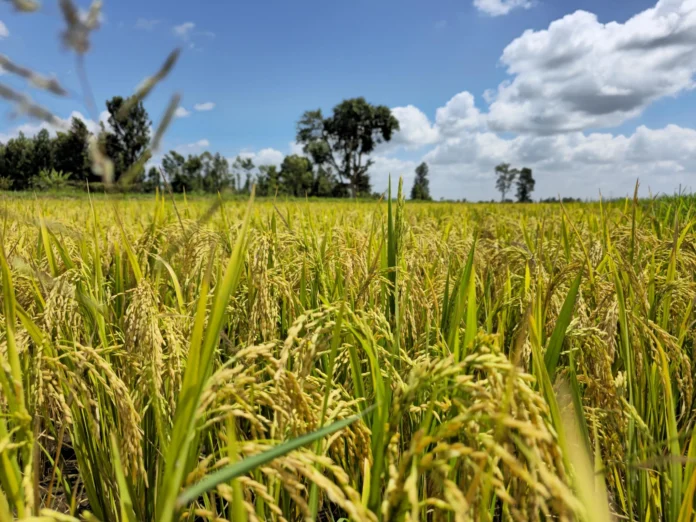
Arabfields, Naïla Mokhtari, Correspondent, São Paulo, Brasil — Brazilian farmers have begun planting the country’s new soybean crop, with fieldwork gaining pace in Paraná and starting in parts of Mato Grosso as producers take advantage of rainfall to prepare fields for the 2026/27 season.
Planting had reached 0.4% of the area expected for soybeans by Sept. 10, according to AgRural, up from 0.05% a week earlier and 0.1% at the same point last year. Paraná is currently driving the early pace, with farmers moving machinery into fields during breaks between rainfall.
For growers, the first weeks of the season are closely tied to weather conditions. Farmers need sufficient soil moisture to establish the crop, but excessive rain can also disrupt field operations and delay planting. In Mato Grosso, some irrigated fields have already been planted, while a smaller number of rain-fed areas have received enough precipitation to allow sowing to begin.
The start of the season comes after a strong 2025/26 soybean harvest. Brazil’s national food supply agency Conab estimates that the previous crop produced about 180.4 million tonnes, an increase of 5.2% from the preceding season. Soybean exports are expected to reach about 116.2 million tonnes, also a record level.
The outlook for the new season remains positive, although the pace of expansion is expected to moderate. Conab’s latest projection puts 2026/27 soybean production at about 181.6 million tonnes, only 0.7% above the previous crop. The planted area is expected to reach roughly 49.3 million hectares, an increase of 1.4%.
The slower expansion reflects a more cautious approach among producers. Higher production costs and tighter margins are making farmers more selective about expanding planted areas, even as Brazil maintains its position as the world’s leading soybean producer and exporter.
In the countryside, the numbers translate into practical decisions. A farmer deciding when to put machinery into the field must weigh soil moisture, the official planting window and the risk of disease, while also considering the timing of the following crops.
Planting dates vary across Brazil because of the country’s large agricultural regions and different climate conditions. In some parts of Paraná and São Paulo, sowing was authorized from the beginning of September. Mato Grosso opened its planting window on Sept. 7, while Mato Grosso do Sul is scheduled to begin on Sept. 16. Goiás follows on Sept. 25, while Minas Gerais and the Federal District are scheduled to open their windows in October.
Disease management is another concern as the new cycle gets underway. Brazil recorded 379 cases of Asian soybean rust during the 2025/26 season, compared with 124 cases in the previous cycle, according to data cited by agricultural monitoring groups. The increase has encouraged producers to pay closer attention to field sanitation, planting dates and crop monitoring from the beginning of the season.
The weather will remain one of the key variables for the months ahead. A regular distribution of rainfall would allow planting to accelerate across the major producing regions, while prolonged dry periods could slow fieldwork and affect the establishment of early crops.
The current production forecast suggests that Brazil could set another soybean production record in 2026/27, but the relatively modest expected increase indicates that future gains will depend increasingly on productivity rather than a rapid expansion of planted land.
For farmers, the next few weeks will therefore be less about how quickly the entire country can plant and more about how effectively each region can match sowing with rainfall, soil conditions and the crop calendar. As machinery moves deeper into the fields, those decisions will help determine whether Brazil converts another large production forecast into another record harvest.