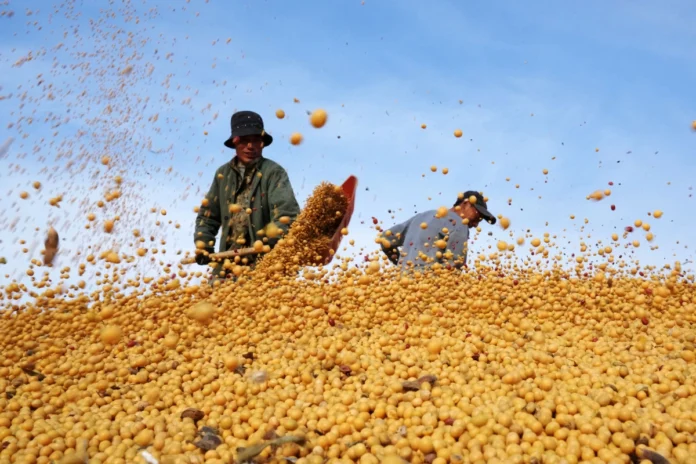
Arabfields, Naïla Mokhtari, Correspondent, São Paulo, Brasil — Soybean prices at Brazil’s Paranaguá port have come under renewed pressure after a period of relatively firm trading, as international markets weakened and buyers assessed the outlook for supplies from the United States and the new Brazilian crop.
The Cepea/Esalq benchmark for soybeans traded at Paranaguá stood at around 161 reais per 60-kilogram bag during the latest sessions, after reaching R$161.65 on Sept. 23. The movement remains modest in percentage terms, but it highlights the uncertainty facing producers and exporters as the global soybean market enters a period of changing supply expectations.
For farmers in Paraná, where soybean production is an important source of income, even small price movements can influence decisions over when to sell stored grain. Producers are also closely watching rainfall and field conditions as preparations for the 2026/27 crop gain pace.
“I am watching the market before committing a larger volume,” said a soybean producer in the region, reflecting the cautious approach adopted by many growers who are balancing current prices against expectations for the months ahead.
Brazil has entered the second half of 2026 with strong export flows. Between January and August, the country shipped 89.86 million tonnes of soybeans abroad, a record for the period. Strong international demand has helped support domestic prices, although the arrival of the U.S. crop has increased competition in global markets.
Market conditions could remain volatile in the final months of the year. Demand from Asia, weather conditions in Brazil and the United States, currency movements and changes in global trade flows are expected to remain key factors for prices at Paranaguá.
Recent trading data suggest that prices may remain close to current levels in the near term if export demand stays firm and Brazilian producers continue to hold part of their stocks. A stronger flow of soybeans from the United States, however, could limit gains and increase pressure on Brazilian prices.
The outlook for early 2027 will depend increasingly on the development of Brazil’s new crop. Favorable weather and a larger harvest could increase domestic availability and weigh on prices, while adverse conditions could have the opposite effect by tightening supply expectations.
For producers, the current market therefore offers a delicate balance between securing today’s revenue and waiting for potentially stronger prices. At Paranaguá, that uncertainty is likely to keep soybean trading sensitive to every change in global demand and crop conditions.