Arabfields, Naïla Mokhtari, Correspondent, São Paulo, Brasil — Brazil is seeking to strengthen its position in the global cocoa market as manufacturers look for more reliable sources of supply and increasingly demand products that meet environmental and traceability requirements.
The country has an opportunity to expand its role in the international chocolate industry, supported by its agricultural resources, established processing facilities and capacity to produce cocoa and manufacture finished chocolate products. However, industry participants say domestic infrastructure, production costs and limited access to financing remain significant obstacles.
The challenge comes at a time when global cocoa supply chains are adjusting to changing production patterns and more demanding sustainability standards. Brazil, which has historically been a relatively small player in international cocoa exports, is attracting renewed attention from multinational chocolate companies seeking to diversify sourcing beyond West Africa.
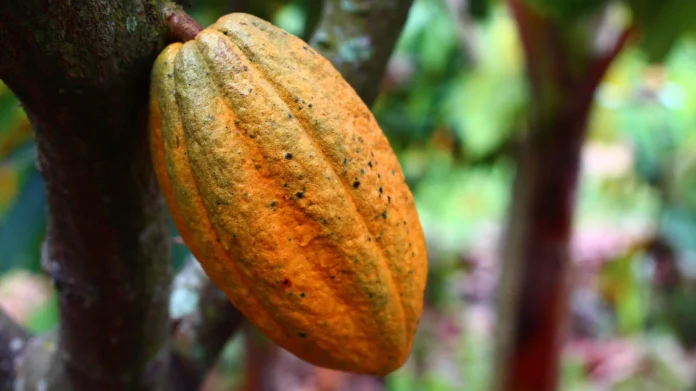
Nestlé has been expanding its cocoa sourcing activities in Brazil, working with hundreds of farms to improve agricultural practices, increase yields and reduce reliance on conventional fertilisers. The initiative reflects growing interest in Brazilian cocoa as companies seek to improve supply chain resilience following recent disruptions in global markets.
For farmers, however, the industry’s changing prospects have brought both opportunities and uncertainty. Paulo Gonçalves, a cocoa producer and founder of Espírito Cacau, has highlighted the difficulties of maintaining profitable operations despite higher international prices in recent years.
Farmers continue to face high input costs, shortages of skilled labour and inadequate infrastructure, making it difficult to plan investments and expand production. In some regions, low productivity and insufficient farm income prevent producers from adopting new technologies or renewing ageing plantations.
The volatility of international cocoa prices has added to those pressures. After reaching record levels above $11,000 per tonne in 2024, prices subsequently declined sharply, with the market moving towards levels closer to $3,000 per tonne in 2026.
The correction has affected investment decisions, particularly among companies planning large-scale cocoa plantations in northeastern Brazil. Some projects have been delayed or reconsidered as producers reassess expected returns and the cost of irrigation, machinery and farm development.
Despite the setbacks, Brazil’s production outlook remains significant. Government projections indicate that national cocoa output could reach approximately 400,000 tonnes annually within five years, roughly double current production levels.
Achieving that target will depend on improvements in productivity, access to agricultural technology and the expansion of cultivation in established and emerging production areas. Bahia and Pará remain the principal cocoa-producing states, with traditional cultivation systems operating alongside newer farms using irrigation and more intensive agricultural practices.
Sustainability and traceability are also becoming central to the industry’s expansion strategy. European regulations requiring stronger controls on deforestation and supply chain origins are increasing the need for georeferenced farm data and environmental documentation.
For smaller producers, meeting those requirements can involve additional administrative and financial costs. Industry representatives have called for stronger partnerships between farmers, processors and buyers to ensure that compliance expenses do not fall disproportionately on agricultural producers.
Brazil’s integrated cocoa and chocolate industry could provide an advantage in this environment. The country has the capacity to produce cocoa, process beans and manufacture finished products, allowing companies to develop value-added exports rather than relying exclusively on raw commodity sales.
The coming years are likely to be decisive for the sector. If investment in farm productivity, infrastructure and traceability advances alongside more stable financing arrangements, Brazil could increase its contribution to global cocoa supplies and strengthen its position as a sustainable sourcing destination by 2030.
For producers, the central issue remains whether expanding international demand and sustainability commitments will translate into reliable farm income. Without improved profitability at the agricultural level, the industry’s ambitions for long-term growth could remain difficult to achieve.