Arabfields, Meriem Senouci, Correspondent, Hanoï, Vietnam — Vietnam’s rice export industry is entering the final months of the year under pressure from weaker prices and softer demand in some traditional markets, even as rapidly growing sales to China and Iraq offer exporters new opportunities.
Vietnam exported around 6.4 million tonnes of rice worth $3.11 billion during the first nine months of 2026, according to government data. Export volume fell 6.1% from a year earlier, while export value dropped 10.9%. The average export price declined 5.1% to about $484.8 per tonne.
The figures highlight a difficult year for one of Vietnam’s most important agricultural commodities. Farmers and exporters have faced lower international prices at a time when production, transport and energy costs remain elevated.
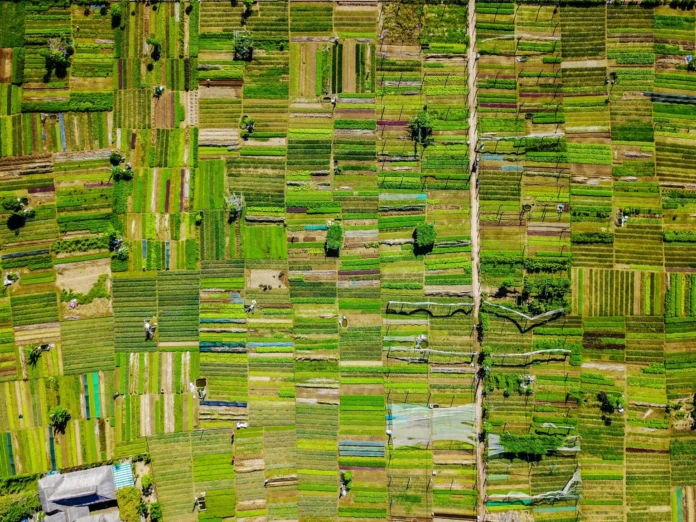
For producers in the Mekong Delta, the impact is felt well beyond export statistics. Lower prices can quickly translate into tighter margins for farming households, particularly when fertiliser, irrigation and transportation costs rise. Many growers are therefore increasingly looking toward higher-quality varieties and more efficient production methods to protect their incomes.
The Philippines remains Vietnam’s largest rice market, accounting for 40.9% of exports. However, shipments to the country declined 16.8% during the first nine months of the year, highlighting the risks created by Vietnam’s dependence on a limited number of major buyers.
China has emerged as a much stronger destination. Vietnamese rice exports to the Chinese market increased 76% during the period, pushing China into second place with a 17.4% share of Vietnam’s rice export market. Demand has been particularly strong for broken rice, which is increasingly used in animal feed.
The most dramatic increase came from Iraq, where the value of Vietnamese rice exports was almost 99 times higher than a year earlier. Although the Iraqi market remains relatively small in absolute terms, its rapid expansion demonstrates the potential for Vietnam to diversify away from its traditional buyers.
The shift is becoming increasingly important as competition intensifies across Asia and Africa. India remains a major force in international rice trade, while Thailand and Cambodia are strengthening their positions in premium and fragrant rice markets.
African markets are also becoming more price-sensitive. Vietnam has recorded significant declines in shipments to countries such as Côte d’Ivoire, where exporters face stronger competition from lower-priced supplies from India and Pakistan.
Still, the outlook for the final months of 2026 is not entirely negative. The Vietnam Food Association expects total rice exports for the year to reach around 7.74 million tonnes, generating approximately $3.94 billion in revenue. That would represent a decline of about 4% in export value compared with 2025, largely reflecting weak prices earlier in the year.
Prices have already begun showing signs of improvement. The international price of Vietnamese 5% broken rice reached around $437.3 per tonne in August, above India’s level but below Thailand’s. A continued recovery in prices could help narrow the gap between export volumes and export revenues during the final quarter.
Global market conditions could also become more favourable. Supply and demand are expected to tighten during the 2026-27 crop year, while international rice trade could reach a record level. Weather risks, including the possibility of a strong El Niño, may encourage major importing countries to increase strategic food reserves.
The Philippines is expected to remain an important source of demand. The country has indicated that it will continue importing rice during 2026 to strengthen its reserves, while China’s growing appetite for broken and specialty rice could provide Vietnamese exporters with additional opportunities.
Higher-value rice may offer an even more promising path. Vietnamese low-emission and certified premium rice has already achieved prices above $1,000 per tonne in markets such as Japan, the European Union and Australia. The figures suggest that moving away from the lower-priced commodity segment could significantly improve export earnings without requiring a proportional increase in volume.
The industry nevertheless faces risks heading into 2027. Potential trade restrictions in the Philippines, weak demand from Indonesia and competition from Thailand, Cambodia, India and Pakistan could limit growth. At the same time, climate conditions could complicate production in Vietnam’s Mekong Delta, where drought and saltwater intrusion are possible during the winter-spring crop.
For Vietnamese farmers, the next stage of the export strategy is therefore likely to be less about simply selling more rice and more about selling better rice. Higher quality, traceability, lower emissions and greater market diversification could become increasingly important as global buyers become more selective.
If international prices continue to recover and demand from China, the Philippines and emerging markets remains firm, Vietnam could stabilise export revenues despite lower overall volumes. But the longer-term outlook will depend on whether the country can move further into premium rice while reducing its exposure to a small group of highly competitive markets.
For an industry employing millions of people across the country’s farming regions, that transition could determine whether Vietnam’s rice sector merely maintains its position in global trade or succeeds in generating significantly more value from each tonne produced.