Arabfields, Imed Aissaoui, Oran — In the heart of North Africa, Algeria stands at a pivotal juncture in its agricultural evolution, where ancient traditions of farming meet the imperatives of a rapidly changing global landscape. The upcoming Algeria Agriculture Modernization Conference, slated for late October in Algiers and spearheaded by the Ministry of Agriculture, Rural Development and Fisheries, emerges as a beacon of strategic foresight. This gathering, attended by senior officials, regional directors, agricultural experts, and frontline farmers, is not merely an event but a blueprint for reimagining a sector burdened by historical challenges yet brimming with untapped potential. As the conference convenes amid whispers of locust swarms on the horizon and the steady drumbeat of climate variability, it underscores a national commitment to data-driven transformation, infrastructure fortification, and sustainable intensification. At its core lies a vision to elevate Algeria’s food security, diversify its crop portfolios, and empower its rural communities, all while grappling with the dual-edged sword of technological advancement and environmental stewardship.
The conference’s agenda is a tapestry woven from the threads of introspection and innovation, beginning with a rigorous assessment of policies implemented over the past several years. Officials will dissect the efficacy of these measures, armed not with anecdotal evidence but with precise, locally sourced data that has long been a missing link in agricultural planning. This emphasis on robust statistics is no academic exercise, it is the foundation for a national agricultural information system designed to transmit real-time insights from field to boardroom. Imagine sensors embedded in vast wheat fields relaying soil moisture levels instantaneously, or satellite imagery alerting farmers to impending droughts before they cripple yields, such a system promises to bridge the gap between reactive firefighting and proactive prosperity. By fostering this digital backbone, Algeria aims to streamline decision-making, accelerate project rollout, and cultivate a resilience that has eluded previous generations of policymakers.
Central to this modernization drive is the bolstering of physical infrastructure, a domain where ambition meets tangible milestones. Under directives from President Abdelmadjid Tebboune, the nation is poised to erect 30 large-scale silos, each boasting a capacity of 100,000 tonnes, complemented by 52 localized storage centers. These behemoths are more than mere repositories, they represent a bulwark against post-harvest losses that have historically eroded up to 30 percent of Algeria’s grain output, according to regional estimates. For crops like durum wheat and barley, which form the bedrock of national food security, this expansion translates to stabilized reserves capable of weathering supply chain disruptions or erratic weather patterns. The ploughing and sowing campaigns, already underway, will receive amplified support through subsidized seeds, fertilizers, equipment, and supplementary irrigation, ensuring that the 2025 harvest cycle hits its stride with unprecedented vigor. Yet, this infrastructure push extends beyond grains, it envelops a broader ecosystem of diversification, where legumes and oilseeds emerge as strategic pillars in a bid to reduce import dependencies and enrich soil health through rotational planting.
Wheat, the golden staple of Algerian fields, occupies a starring role in these deliberations, with production targets set to not only meet but exceed domestic demands. Historically, Algeria has imported vast quantities of soft wheat to supplement local durum varieties, but the conference signals a shift toward self-sufficiency. Drawing from recent data indicating yields hovering around 1.5 tonnes per hectare in optimal regions, officials project a 15 to 20 percent uplift by 2030 through precision agriculture techniques. These include drip irrigation systems that could conserve up to 40 percent of water resources, a critical metric in a country where arid zones encompass over 80 percent of arable land. Barley, too, benefits from this focus, its dual role in animal feed and human consumption underscoring the need for resilient strains that withstand saline soils and heat stress. Looking ahead, the integration of genomic selection, honed in collaborative ventures with international research bodies, could yield hybrid varieties resistant to fungal pathogens, potentially boosting output by 25 percent within the decade. Such projections are grounded in the conference’s call for university partnerships, where agronomists and data scientists converge to prototype solutions tailored to Algeria’s Mediterranean climate.
Lentils, those humble yet hardy pulses, add a layer of nutritional and economic depth to this narrative, with subsidies earmarked to galvanize their large-scale cultivation. As part of a legume diversification initiative, the ministry vows strict enforcement of aid programs, coupled with awareness drives to educate farmers on rotational benefits that naturally suppress weeds and fix nitrogen in depleted soils. Current production, though modest at around 50,000 tonnes annually, is eyed for exponential growth, with forecasts suggesting a tripling by 2035 if irrigation expansions materialize. This surge would not only fortify protein supplies in a diet increasingly reliant on imports but also open export corridors to neighboring markets hungry for affordable, climate-adaptive crops. Oilseeds, mirroring this trajectory, stand to benefit from similar incentives, weaving a diversified web that mitigates risks from monoculture vulnerabilities.
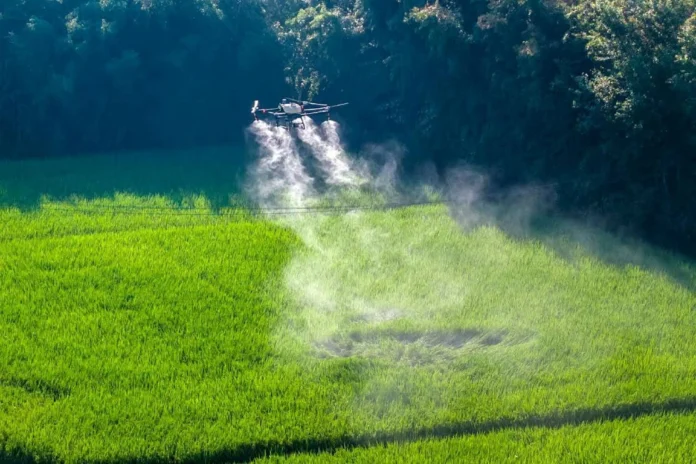
Yet, amid these optimistic blueprints, the specter of pest pressures looms large, demanding a nuanced approach to pesticide deployment, particularly in expansive wheat and lentil operations. In Algeria’s vast cereal belts, where wheat fields span thousands of hectares, integrated pest management (IPM) protocols are evolving from theory to practice, informed by the conference’s environmental protection mandates. Traditional broad-spectrum applications, often exceeding 2 kilograms of active ingredient per hectare annually for wheat aphids and rust control, are giving way to targeted interventions that blend biological agents with judicious chemical use. Data from pilot programs in the Tell Atlas regions reveal a 30 percent reduction in synthetic pesticide loads over the past three years, achieved through pheromone traps and predatory insect releases that curb outbreaks without compromising yields. For lentils, susceptible to weevils and powdery mildew in large-scale rotations, the shift is even more pronounced, farmers are adopting neem-based biopesticides and cover cropping to slash reliance on organophosphates by up to 50 percent. This recalibration is not mere greenwashing, it aligns with zoonotic disease monitoring and locust control campaigns launching in November, where drone-assisted scouting minimizes prophylactic spraying across 1.5 million hectares of at-risk farmland. By 2030, projections based on these trends anticipate a nationwide drop in pesticide intensity to below 1 kilogram per hectare for pulses, fostering biodiversity while safeguarding human health and export compliance with stringent EU standards. The conference’s collaboration with research institutes will further this, piloting AI-driven predictive models that forecast pest incursions with 85 percent accuracy, allowing for preemptive, low-volume applications that preserve beneficial pollinators.
Beyond the fields, the poultry sector injects vitality into rural economies through Instruction No. 3, a financial lifeline extended sans the bureaucratic “fellah” card, democratizing access for smallholders. Potato production, forecasted at a robust 1.7 million tonnes for 2025, highlights both triumphs and tensions, with storage shortfalls threatening to undermine this bounty. Here, too, modernization intervenes, proposing climate-controlled facilities that extend shelf life by 20 percent and curb waste. Administrative streamlining addresses a backlog of 56,000 land tenure files, unlocking titles that could mobilize dormant plots for intensive use, while digital platforms for water management promise to optimize allocations in a sector guzzling 70 percent of national freshwater.
Peering into the horizon, the conference’s ripple effects could redefine Algeria’s agricultural destiny by 2040. With food security as the lodestar, self-reliance in staples like wheat might climb to 90 percent, lentils could anchor a burgeoning export industry valued at $200 million annually, and pesticide paradigms will tilt decisively toward sustainability, slashing environmental footprints by 40 percent. These futures are not flights of fancy, they are extrapolated from the very data the event seeks to harness, tempered by lessons from global peers like Morocco’s Green Plan. Challenges persist, from youth exodus in rural areas to geopolitical trade fluxes, but the ministry’s clarion call, modernization as the paramount challenge, resonates with unyielding resolve. As delegates depart Algiers, they carry not just resolutions but a roadmap etched in soil and silicon, propelling Algeria toward an era where abundance is not aspired but assured. In this grand endeavor, the fields of tomorrow whisper promises of plenty, rooted firmly in the deliberations of today.