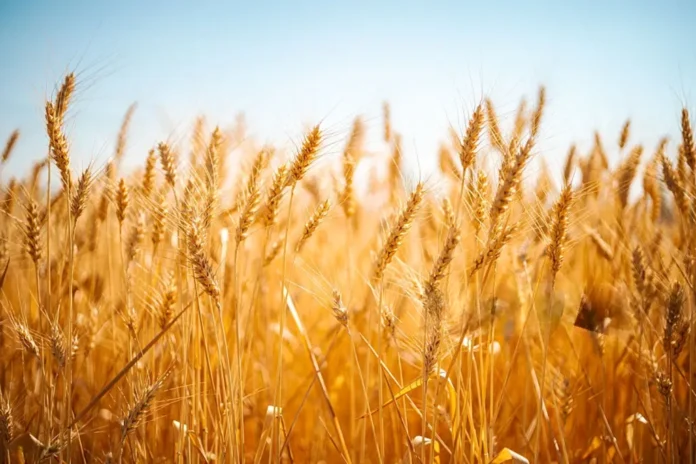
Arabfields, Algiers, Algeria – Across the sweeping plains of northern Algeria, where golden waves of durum wheat ripple under a mild autumn sun, agriculture has transcended its role as a mere means of survival: it has become a cornerstone for food sovereignty and economic diversification. In 2025, defined by record-breaking yields and sweeping investments, the sector is witnessing unparalleled growth. With production having tripled over the past decade, Algeria is emerging as an African beacon of agricultural resilience while setting its sights on European markets.
The 2025 season represents a defining moment for cereals, the lifeblood of Algerian agriculture. Agricultural authorities project a “robust output” of 3 to 4 million quintals in the central and western regions, with unprecedented yields surpassing 70 quintals per hectare in select irrigated zones. In Oran, no fewer than 25,000 hectares are dedicated to cereal cultivation for the 2025-2026 campaign, with an unequivocal focus on durum wheat—a national goal of self-sufficiency set for year-end. “This is a yield explosion, the result of years of investment in irrigation and tailored seeds,” explains a senior official from the Ministry of Agriculture, who oversees a pilot project in Timimoun, in the south, where cereal and legume production is advancing steadily.
These strides are no coincidence. The government has expanded cultivated areas in the Sahara to 500,000 hectares, leveraging cutting-edge technologies such as drones and drip irrigation systems to combat recurrent droughts. The outcome: a historic wheat harvest, celebrated as a milestone toward full food independence. According to World Bank projections, agricultural output will remain resilient despite limited rainfall, underpinning a GDP growth of 3.3% this year.
The 2025-2030 five-year plan, unveiled earlier this year, places agriculture at the heart of the national strategy. With a budget dedicated to developing 122,000 hectares of state-owned land, the National Office of Agricultural Land (ONTA) is granting concessions to transform fallow fields into productive farmland. “Food security depends on strengthening agriculture and agro-industry,” asserts an official report, which forecasts expanded financing through public banks starting in 2025.
Innovation is the guiding principle: widespread adoption of precision agriculture, partnerships with startups for organic fertilizers, and a strong emphasis on agro-industry. Valued at $33.5 billion in 2025, the Algerian agricultural market is projected to grow by 4.1% annually through 2030, propelled by processing facilities like Cevital’s oilseed plants. On the global stage, Algeria shines: hailed as a model of “food security and sustainable agriculture” at the 2025 Intra-African Trade and Investment Forum (IATF), it secured $11.4 billion in contracts, though agriculture was not the primary focus of these agreements.
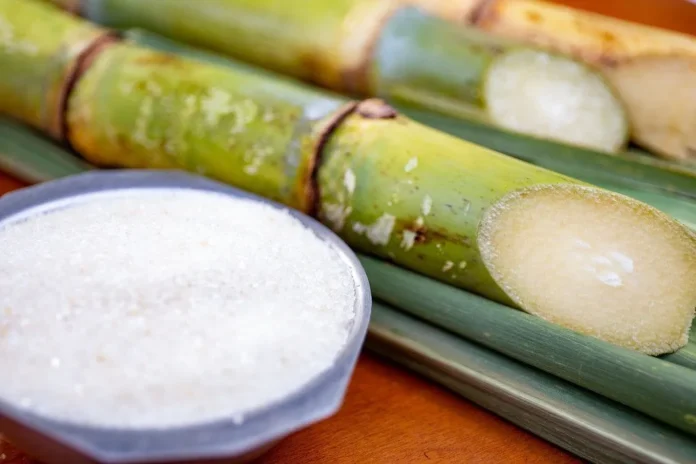
Looking to 2026, the prospects for Algerian agriculture are even more promising, with a consolidation of 2025’s gains and heightened diversification of strategic crops. Specialized analyses suggest the sector is primed for sustained growth, driven by government initiatives targeting self-sufficiency in staple goods. A particular emphasis will be placed on the “sugar revolution,” with Algeria banking on sugar beet to reclaim food sovereignty in this area. Long dependent on imports, the country is ramping up investments in sugar beet cultivation, transforming arid lands into productive fields through large-scale pilot projects. Described as a “bold wager” by experts, this strategy could significantly cut sugar imports by 2026, pushing the boundaries of domestic production while promoting crop diversification to mitigate climate vulnerabilities.
Beyond sugar, projections point to a 10-15% expansion of irrigated areas in the Sahara, targeting stable cereal output of 4 to 5 million quintals, even in drought conditions. Agro-industrial partnerships, such as those with Cevital, are expected to boost exports of processed products to Africa and Europe, with an estimated annual growth of 5%. Yet challenges persist: reliance on rainfall and the need for a shift to sustainable practices will demand increased investment in green technologies. In essence, 2026 could mark a year of maturity for these ambitions, positioning Algeria as a net exporter of essential agricultural goods.
Despite these achievements, obstacles loom. Dependence on rainfall remains a vulnerability, with drought episodes threatening irrigated yields. The shift to large-scale commercial agriculture, moving away from small family farms, sparks debate: how can rural employment, accounting for 20% of the national workforce, be preserved?
Climate change intensifies these challenges. Initiatives like water retention basins and salt-resistant crops are underway, but experts urge faster progress. “Scaling up innovative projects is critical,” emphasizes a sector analyst.
Exports signal a promising shift. At the Fruit Attraction international trade show in Madrid in October 2025, Algeria secured ten contracts for fruits and vegetables, aiming to capture European markets with its dates, olives, and citrus fruits. In Africa, Algiers is poised to lead the 2025 rankings in food security and agricultural production, trailing only Egypt and Nigeria. “We’re tripling our volumes to meet global demand,” declares an export operator.
2025 establishes Algerian agriculture as a sector in the midst of transformation: from a net importer to an emerging exporter, Algeria is betting on its land to forge a resilient future. With optimistic projections for 2026, particularly in sugar sovereignty, the challenge remains to translate these ambitions into a sustainable reality, ensuring today’s harvest sustains the generations of tomorrow.