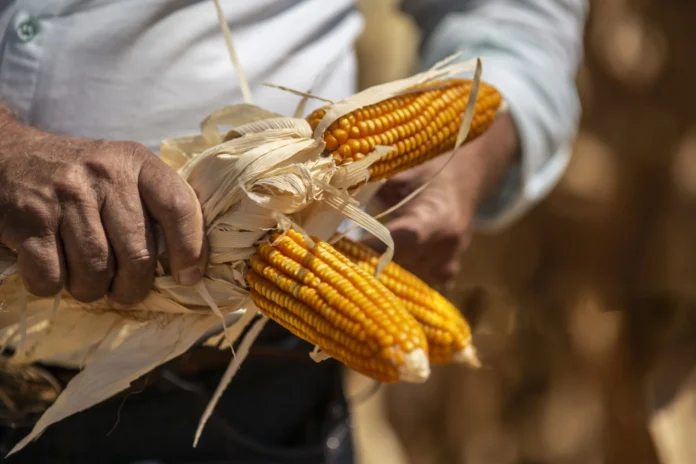
Arabfields, Fatou Kouyaté, Economic Correspondent, Algiers, Algeria — Algeria has committed itself to an ambitious program for the cultivation of grain maize, marking a strategic advancement in its efforts to strengthen national food security and promote sustainable agricultural growth. This initiative, highlighted during high-level engagements in southern regions such as Timimoun, reflects the government’s resolute focus on expanding domestic production of this essential crop, which serves as a cornerstone for the livestock and poultry sectors. By prioritizing grain maize, the country aims to address longstanding challenges related to import dependency while harnessing the vast agricultural potential of its southern territories, where favorable climatic conditions and irrigation infrastructure offer promising opportunities for large-scale development.
The program represents a comprehensive approach that integrates policy support, technological advancements, and private-sector involvement to transform the agricultural landscape. Public authorities have introduced a range of incentive measures designed to encourage investors and farmers to participate actively in grain maize cultivation. These measures include enhanced financial support, improved access to quality seeds adapted to local environments, and the provision of modern farming equipment, all of which are intended to boost productivity and ensure the viability of new projects. Such incentives have already begun to stimulate interest among stakeholders, fostering a collaborative environment where both state entities and private operators work together to achieve shared objectives in agricultural self-reliance.
In recent seasons, notable progress has been observed in key wilayas across the southern provinces, where dedicated areas for grain maize have expanded steadily. For example, regions like Adrar and El Meniaa have reported expected outputs reaching hundreds of thousands of quintals, derived from thousands of hectares under cultivation with average yields demonstrating the effectiveness of targeted interventions. These results stem from careful planning that accounts for soil quality, water availability through efficient irrigation systems, and the selection of high-performing varieties that thrive in arid conditions. The emphasis on these southern areas is particularly significant, as they benefit from abundant sunlight and groundwater resources that can be managed sustainably to support intensive cropping without compromising long-term environmental balance.
Preparation for future harvests forms an integral part of the overall strategy, with authorities stressing the importance of assessing and fulfilling the sector’s needs for specialized agricultural machinery well in advance. This forward-looking stance ensures that harvesting operations can proceed efficiently during peak periods, minimizing losses and maximizing the quality of the produce. By addressing equipment requirements proactively, the program mitigates potential bottlenecks that could otherwise hinder the scaling-up of production, allowing for smoother transitions between planting, growth, and collection phases across expanding farmlands.
The broader context of this initiative reveals its alignment with national priorities for economic diversification and reduced reliance on external markets. Grain maize plays a critical role in supporting the poultry industry, which has experienced robust growth in response to rising domestic demand for affordable protein sources. As consumption patterns evolve and the population continues to expand, securing a stable local supply of feed ingredients becomes increasingly vital to maintaining price stability and enhancing the competitiveness of Algerian livestock products. The ambitious cultivation program directly contributes to these goals by gradually displacing imported volumes, which have historically imposed substantial costs on the national economy.
Looking ahead, forecasts grounded in the program’s foundational data and implementation trajectory point to substantial gains in the years to come. With sustained government backing and the progressive adoption of best practices, cultivated surfaces are projected to increase significantly, potentially reaching tens of thousands of additional hectares annually through the expansion of irrigated perimeters in the Sahara and high-plains zones. By the end of the current decade, total national output could approach levels sufficient to meet a growing share of domestic requirements, thereby achieving meaningful strides toward full self-sufficiency. Such developments would translate into annual savings of billions in foreign exchange reserves previously allocated to imports, freeing up resources for further investments in infrastructure and rural infrastructure enhancements.
Moreover, the program’s success is expected to generate widespread socioeconomic benefits, particularly in underserved southern communities where agriculture serves as a primary source of livelihood. Job creation will extend across the value chain, from seed production and field operations to processing facilities and distribution networks, thereby reducing rural exodus and promoting balanced regional development. Farmers and investors alike stand to benefit from stable income streams supported by guaranteed purchase prices and technical assistance programs, which collectively build resilience against climatic variability and market fluctuations. As new varieties of grain maize are introduced and refined through ongoing research collaborations, yields are anticipated to rise steadily, further amplifying the economic returns on invested capital.
Challenges inherent to large-scale maize cultivation, such as water resource management and pest control, are being tackled through integrated solutions embedded within the program framework. Advanced irrigation techniques, including drip and pivot systems, are being deployed to optimize water use efficiency in water-scarce environments, while integrated pest management strategies minimize the need for chemical inputs and preserve ecological health. These measures not only enhance productivity but also align with broader sustainability objectives, ensuring that agricultural expansion contributes positively to environmental stewardship and climate adaptation efforts.
The involvement of private investors has proven instrumental in accelerating the program’s momentum, as evidenced by partnerships that bring expertise in modern agronomy and supply chain optimization. State incentives have lowered entry barriers for such collaborations, enabling the establishment of model farms that serve as benchmarks for best practices and innovation diffusion. Over time, these示范 projects are expected to inspire wider replication, creating a multiplier effect that amplifies the program’s reach and impact across multiple wilayas.
In terms of quantitative projections, data from ongoing campaigns suggest that if current expansion rates are maintained or accelerated through enhanced incentives, grain maize production could double or triple within five years. This would position Algeria as a more self-reliant producer in the Mediterranean and African contexts, potentially opening avenues for regional exports once surpluses materialize. The transition from import dependence to domestic abundance would also stabilize input costs for downstream industries, supporting the growth of value-added sectors such as animal feed manufacturing and meat processing, which in turn bolster employment and export revenues.
Furthermore, the program’s emphasis on training and capacity building equips local farmers with the skills necessary to adopt precision agriculture tools, including soil monitoring sensors and data-driven decision systems. Such technological integration promises higher efficiency and reduced operational risks, paving the way for consistent high-quality outputs that meet stringent market standards. As these capabilities mature, the agricultural sector as a whole will gain greater competitiveness, contributing to the diversification of the national economy beyond traditional hydrocarbon reliance.
Environmental considerations remain central to the long-term vision, with provisions for crop rotation and soil conservation practices incorporated to maintain fertility over extended periods. By balancing intensive production with restorative techniques, the initiative ensures that future generations inherit productive lands capable of sustained yields. Projections indicate that, under optimal implementation, the program could contribute to a measurable reduction in the national water footprint per unit of output, thanks to innovations in irrigation and drought-resistant varieties.
Economic modeling based on the program’s parameters forecasts not only import substitution but also indirect benefits such as strengthened supply chains and enhanced food price stability, which positively influence household budgets and inflation dynamics. Rural economies in the targeted regions will experience revitalization through increased commercial activity, infrastructure upgrades, and ancillary services like transportation and storage, all of which reinforce the virtuous cycle of agricultural-led development.
In summary, Algeria’s commitment to this ambitious grain maize cultivation program embodies a forward-thinking strategy that addresses immediate needs while laying the foundation for enduring prosperity in the agricultural domain. Through continuous monitoring, adaptive policies, and stakeholder engagement, the country is poised to realize substantial advancements in production capacity, economic resilience, and regional equity. The coming years will undoubtedly witness the fruition of these efforts, as expanded cultivation translates into tangible gains for food security, industrial growth, and national development at large. This initiative stands as a testament to the government’s vision for a more autonomous and prosperous agricultural future, one that leverages natural endowments and human ingenuity to meet the challenges of a dynamic global landscape.
The sustained momentum of the program will likely encourage further international partnerships, bringing additional expertise and capital to refine cultivation techniques and explore complementary crops. As Algeria progresses along this path, the anticipated outcomes include not only self-sufficiency in grain maize but also a model for other strategic commodities, inspiring similar transformations across the broader economy. With each successful harvest season, the foundations of this ambitious endeavor grow stronger, promising a future where domestic production fully satisfies national demands and contributes to broader continental food security objectives.