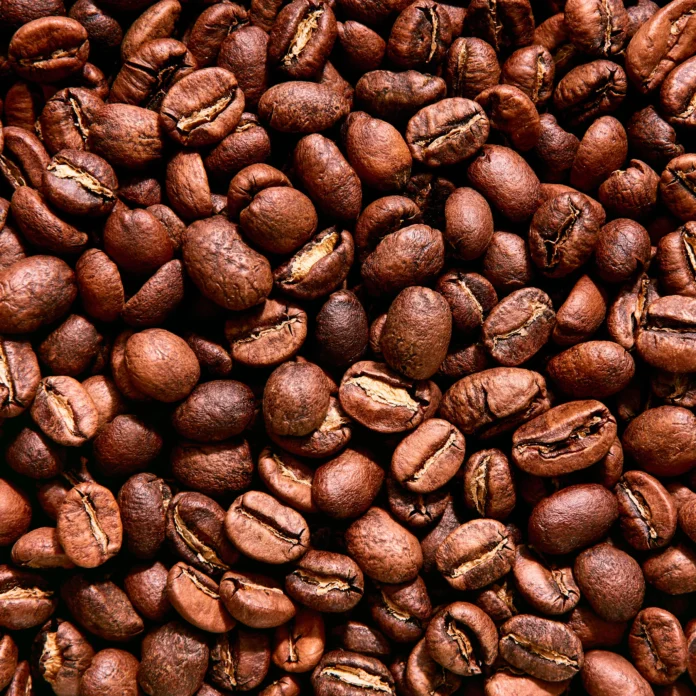
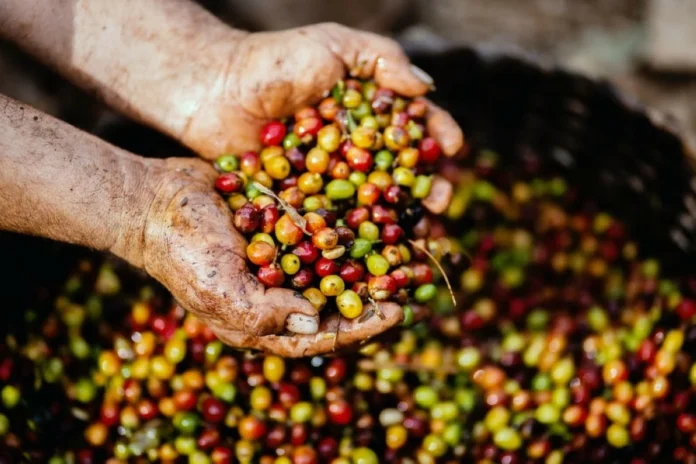
Arabfields, Sophia Daly, Financial Analyst specialized in Agriculture and Futures Markets — The global coffee market has kicked off 2026 on a decidedly bearish note, with Arabica prices tumbling to their lowest level in four months. On February 3, the benchmark Arabica contract on the Intercontinental Exchange in New York settled at $5,708 per tonne, a figure that marked the weakest performance since late September of the previous year, when prices had briefly dipped to $5,704 per tonne. This sharp decline has sent ripples through the industry, raising questions about the trajectory of one of the world’s most traded agricultural commodities in the months ahead.
At the heart of this downturn lies Brazil, the undisputed heavyweight of global coffee production. As the planet’s largest coffee grower, Brazil exerts an outsized influence on international prices, with its harvest volumes and export flows often serving as the primary barometer for market sentiment. The current slide in Arabica values stems directly from growing confidence in an exceptionally robust Brazilian harvest for the 2026/2027 season. Analysts now widely anticipate a bountiful crop that promises to flood the market with supply at a time when demand growth remains steady but unspectacular.
Leading forecasts paint a picture of substantial production gains. The most detailed projection comes from Itaú BBA, Latin America’s largest investment bank, which estimates Brazil’s total output at approximately 69.3 million 60-kilogram bags for the coming cycle, representing a solid 10.1 percent increase over the prior season. Within this total, Arabica production, the variety that dominates premium and specialty coffee segments, is expected to surge by a noteworthy 18 percent to reach 44.8 million bags. Robusta, the hardier bean more commonly used in instant coffee and espresso blends, is projected to see a modest contraction of around 2 percent, settling at 24.5 million bags. These numbers underscore a clear shift toward greater Arabica availability, which directly pressures the variety’s pricing.
Yet even this optimistic outlook may prove conservative. Other market participants are betting on an even larger haul. The trading house Sucden has penciled in a total Brazilian harvest of 72.5 million bags, while Cardiff Coffee Trading, drawing on industry intelligence, suggests the final tally could land anywhere between 70 and 75 million bags. Such variance in estimates reflects the inherent uncertainty that accompanies agricultural forecasting, particularly in a country where weather patterns during the crucial flowering and fruit-setting stages can dramatically alter outcomes. Nevertheless, the consensus leans firmly toward abundance, a development that has weighed heavily on trader sentiment and contributed to the recent price retreat.
This supply-side optimism arrives against a backdrop of broader market dynamics that point toward an impending global surplus. Late last year, analysts at the Dutch banking group Rabobank projected that the 2026/2027 coffee cycle could generate an oversupply ranging from 7 to 10 million bags worldwide. When combined with Brazil’s expected production jump, this surplus threatens to create a classic scenario of too much coffee chasing too few buyers, a situation that historically exerts relentless downward pressure on prices. The current four-month low in Arabica quotations appears to be the market’s first tangible response to these looming fundamentals.
Looking back at recent performance provides additional context for understanding the present weakness. The year 2025 proved far less buoyant than its predecessor. After enjoying a spectacular 70 percent rally in 2024, Arabica managed only a modest 9 percent gain throughout 2025. Robusta followed a similar pattern in reverse, surrendering 19 percent of its value after an equally impressive 72 percent advance the year before. These contrasting trajectories highlight the volatile nature of coffee pricing, where alternating cycles of shortage and plenty can produce dramatic swings from one season to the next.
The implications of the current trend extend far beyond trading screens in New York. For producers in Brazil and across Latin America, lower prices translate into thinner margins and reduced revenues at a time when input costs for fertilizer, labor, and transportation remain elevated following recent inflationary pressures. Many farmers who expanded planting during the high-price environment of 2024 may now face difficult decisions about whether to maintain or even increase output in the face of softening returns. In the longer term, persistently low prices could discourage investment in farm maintenance and renovation, potentially setting the stage for tighter supplies several seasons down the line as older trees become less productive.
Consumers, on the other hand, stand to benefit from cheaper raw materials that should eventually filter through to lower retail prices for their daily brew. Specialty roasters and large commercial buyers alike may enjoy improved margins in the near term, though the coffee industry’s notorious volatility means that any relief could prove temporary. Historical patterns suggest that extended periods of oversupply often sow the seeds of their own correction, as reduced planting and adverse weather in subsequent cycles swing the pendulum back toward deficit conditions.
Looking ahead, the data strongly suggest that Arabica prices will face continued headwinds throughout much of 2026 and potentially into 2027. With Brazil’s harvest entering its critical phases in the coming months, any confirmation of the projected bumper crop will likely reinforce bearish sentiment and push quotations lower still. A sustained global surplus of the magnitude currently anticipated would make significant price recovery challenging absent major disruptions elsewhere, such as drought in Vietnam (the leading Robusta producer) or frost damage in Brazil itself. Absent such shocks, the path of least resistance appears downward, with the possibility that Arabica could test levels not seen since earlier phases of the current bear cycle.
Market participants will watch closely for updates to harvest estimates as the Brazilian season progresses. Should actual production approach or exceed the upper end of current forecasts, the resulting inventory buildup could drive prices toward multi-year lows, forcing a painful adjustment across the supply chain. Conversely, any downward revision triggered by unfavorable weather would offer swift relief and potentially spark a sharp rebound. For now, however, the weight of evidence points toward an extended period of soft pricing, one that will test the resilience of producers while offering temporary respite to consumers worldwide.
The coffee market’s cyclical nature ensures that today’s abundance will eventually give way to tomorrow’s scarcity, but the timing and severity of that shift remain uncertain. What is clear is that Brazil’s forthcoming harvest will play the defining role in shaping the industry’s fortunes over the next eighteen months, continuing a pattern that has held true for decades. As traders digest the latest signals from South America’s coffee belt, the message is unmistakable: the era of elevated Arabica prices that characterized much of the past half-decade appears, for the moment, to be drawing to a close.