Arabfields, Naïla Mokhtari, Correspondent, São Paulo, Brasil — Brazil is stepping up efforts to expand mango exports to Japan and South Korea, two high-value Asian markets where strict phytosanitary requirements have long limited access for foreign suppliers.
The strategy centres on improving the technical infrastructure needed to meet Asian import standards, including the use of hydrothermal treatment to eliminate quarantine pests before fruit is shipped overseas.
For Brazilian mango growers, access to these markets could open an important new chapter. Brazil has traditionally relied heavily on Europe and other established destinations for its fresh fruit exports, but exporters are increasingly looking towards Asia as competition intensifies and buyers demand greater diversification.
Japan and South Korea offer attractive opportunities because of their purchasing power and their demand for high-quality imported fruit. They are also among the world’s most demanding markets when it comes to food safety, traceability and phytosanitary controls.
The hydrothermal treatment process has become a central part of Brazil’s export strategy. The technique involves exposing mangoes to carefully controlled hot water temperatures to eliminate fruit flies and other pests that could threaten agricultural production in importing countries.
For growers in Brazil’s main producing regions, particularly the Sao Francisco Valley, meeting those requirements involves far more than installing new equipment. Exporters must coordinate production, harvesting, treatment, packaging and transport while maintaining strict controls throughout the supply chain.
The challenge is also a human one.
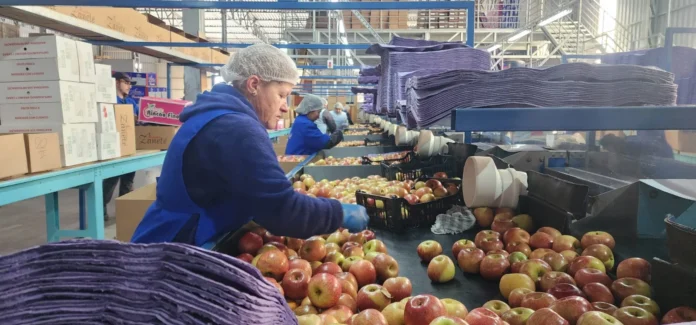
Workers in orchards and packing facilities are increasingly required to follow detailed procedures to ensure that fruit meets international standards. A mistake in handling, temperature control or traceability can put an entire shipment at risk.
Brazil’s fresh fruit export sector has been expanding rapidly. The country recorded approximately $1.45 billion in fruit exports in 2025, according to industry data, with mangoes remaining among the products benefiting from Brazil’s strong production base and advanced irrigation systems.
The Sao Francisco Valley has become the centre of the country’s mango export industry. Its combination of warm temperatures, irrigation and technical farming expertise allows producers to supply international markets during different periods of the year.
That flexibility gives Brazilian exporters an advantage in global markets where seasonal supply can change rapidly.
The push towards Japan and South Korea reflects a broader effort to reduce dependence on traditional markets. Asian consumers are increasingly interested in premium imported fruit, but exporters must compete on quality rather than volume alone.
Japan is particularly attractive because imported fruit can command higher prices when it meets demanding standards for appearance, flavour, safety and presentation. South Korea also represents a growing opportunity for exporters capable of complying with strict plant health regulations.
Brazilian producers are therefore investing more heavily in post-harvest technology, traceability systems and sanitary controls.
The trend is expected to continue through the coming years. As Brazil strengthens its technical capacity, mango exporters could gradually increase shipments to premium Asian destinations and build more stable commercial relationships with importers in the region.
The expansion could also benefit rural communities. Greater access to high-value export markets can create additional demand for farm workers, technicians, packaging specialists and logistics operators.
For growers, however, the transition will require investment.
Hydrothermal treatment facilities and international certification systems can be expensive, particularly for smaller producers. Industry cooperation and shared infrastructure may therefore become increasingly important if Brazil wants a wider range of farmers to benefit from access to Asian markets.
The outlook remains promising. Brazil’s experience in supplying demanding European markets has already given its fruit industry a foundation in quality control and international logistics.
If exporters can successfully meet the phytosanitary requirements of Japan and South Korea, Asia could become a more important destination for Brazilian mangoes during the next decade.
For the farmers working in the orchards of the Sao Francisco Valley, the opportunity is simple but significant. A mango grown in Brazil could increasingly travel not only across the Atlantic to Europe, but across the Pacific-facing trade routes towards some of Asia’s most valuable consumer markets.