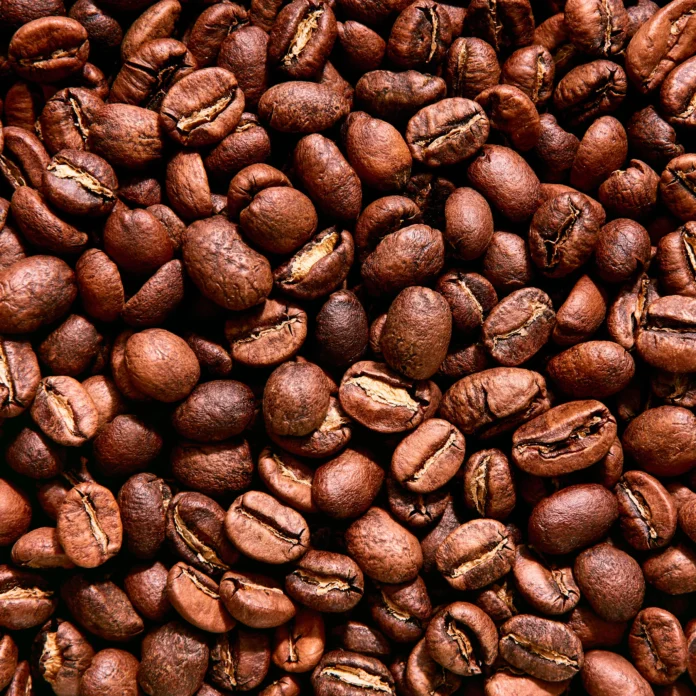
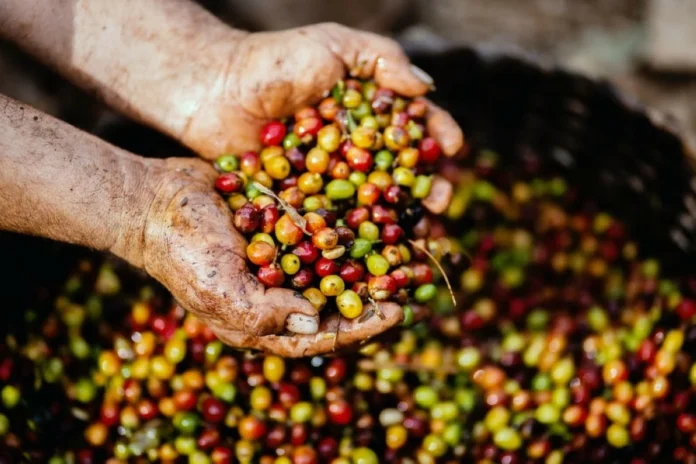
Arabfields, Sophia Daly, Financial Analyst specialized in Agriculture and Futures Markets — As the aroma of freshly ground coffee fills kitchens around the world each morning, few realize that the fate of this daily ritual hinges on the vast, sun-drenched plantations of Brazil, the undisputed titan of global coffee production. In a year marked by climatic unpredictability and economic headwinds, Brazil’s agricultural authorities have unveiled a forecast that defies the odds, predicting a modest yet significant 4.3 percent uptick in the 2025 coffee harvest to reach 56.5 million 60-kilogram bags, positioning it as the country’s third-largest yield on record, trailing only the bumper crops of 2018 and 2020. This projection, released by the National Supply Company and analyzed in recent reports, comes at a time when the biennial production cycle for coffee plants typically dips into a lower-yield phase, underscoring the sector’s remarkable adaptability through improved productivity and strategic crop shifts.
The biennial cycle, a natural rhythm in coffee agriculture where trees alternate between high and low bearing years, has long been a double-edged sword for Brazilian farmers, dictating not just yields but entire market dynamics. For 2025, classified as a “negative biennium,” the outlook might have spelled disappointment, yet a combination of enhanced average productivity has more than compensated for a slight 1.2 percent contraction in cultivated area to about 4.5 million acres. This resilience is no accident, rather the result of decades of investment in better farming techniques, irrigation systems, and selective pruning that boost output per plant even when nature withholds its full favor. Coffee, after all, is not merely a crop in Brazil, it is an economic lifeline, employing millions and contributing billions to the nation’s GDP, so such innovations are as much about survival as they are about surplus.
Delving deeper into the varieties that define the market, the forecast reveals a tale of two coffees: the elegant arabica and the hardy robusta, each navigating their distinct paths through the challenges of weather and demand. Arabica, the premium bean cherished for its nuanced flavors in specialty brews from espresso to pour-over, is slated for a nearly 10 percent decline to 35.7 million bags, a setback rooted in the variety’s inherent low-yield cycle this year, compounded by a reduction in planted acreage and erratic rainfall patterns that have parched key growing regions. In the heartlands of Minas Gerais and São Paulo, where arabica dominates the landscape, farmers report yields hampered by prolonged dry spells, with some estates seeing drops as severe as 15 percent in preliminary assessments. Yet, pockets of optimism emerge from the Cerrado Mineiro and select areas of Bahia, where microclimates and proactive water management have yielded localized gains, hinting at a patchwork recovery that could stabilize supply chains for high-end roasters.
In stark contrast, robusta, the robust workhorse favored for its bold profile in instant coffees and blends, is poised for a spectacular 42 percent leap to a record-breaking 20.8 million bags, propelled by unusually favorable weather and a surge in plantings over the past half-decade. Brazilian growers have increasingly turned to robusta as a bulwark against the escalating threats of drought and rising temperatures, species that arabica, with its finicky thirst for consistent moisture, simply cannot withstand. This strategic pivot, initiated in response to the punishing heatwaves of the early 2020s, has transformed marginal lands into thriving robusta hubs, particularly in Espírito Santo and Rondônia, where yields have ballooned thanks to hybrid varieties that mature faster and resist pests more effectively. The result is not just a numerical windfall but a diversification that insulates Brazil’s coffee sector from the arabica’s cyclical woes, ensuring that the overall harvest climbs despite the premium bean’s slump.
These production shifts carry profound implications for exports, a cornerstone of Brazil’s trade arsenal that has weathered recent storms with surprising fortitude. Through the first ten months of the current year, coffee shipments dipped 17 percent in volume compared to the prior period, a reflection of cautious farmer holdbacks amid volatile prices, yet the value tells a different story, soaring to US$12.9 billion and already eclipsing the full-year tally from 2024. This revenue boom stems from elevated global prices, which have held firm as consumers grapple with inflation and supply jitters, allowing Brazilian exporters to command premiums even with slimmer cargoes. Looking ahead to 2025, the anticipated harvest increase could reverse the volume decline, potentially flooding ports with an additional 2.3 million bags destined for roasting facilities in Europe, the United States, and Asia, where demand for Brazilian beans remains insatiable.
To forecast the ripples of this harvest into the mid-2030s requires peering through the lenses of climate science, trade geopolitics, and consumer evolution, all while grounding predictions in the tangible data of today’s fields. With arabica’s dip likely to persist into 2026 before rebounding in the next high-yield cycle, prices for premium coffees could spike by 8 to 12 percent in the interim, squeezing margins for baristas and boutique roasters but rewarding those who stockpile now. Robusta’s explosive growth, however, may temper this pressure, as its abundance filters into blended products, stabilizing retail costs for everyday consumers and bolstering Brazil’s market share against competitors like Vietnam, whose own robusta dominance faces scrutiny over quality inconsistencies. By 2028, I project Brazil’s total output could swell another 15 percent cumulatively, reaching 65 million bags annually, driven by accelerated adoption of climate-resilient hybrids, projected to cover 40 percent of new plantings by then, according to agronomic models from the Brazilian Coffee Research Institute.
Regionally, the divergence between arabica strongholds and robusta frontiers will likely sharpen, fostering a dual-economy within the sector that could redefine rural Brazil. Minas Gerais and São Paulo, grappling with arabica’s vulnerabilities, may see a 20 percent shift toward intercropping with robusta or even cacao over the next five years, diversifying incomes and mitigating flood risks from increasingly erratic La Niña patterns, which simulations suggest will intensify through 2030. Meanwhile, the robusta belts in the north and east could emerge as export powerhouses, channeling gains into infrastructure upgrades like solar-powered drying facilities, potentially cutting post-harvest losses by 25 percent and enhancing bean quality to rival premium arabicas. This internal rebalancing, while challenging for traditionalists, promises to fortify Brazil’s position as a net exporter, with shipments projected to hit 45 million bags by 2032, up from current levels, assuming no major trade barriers arise from ongoing U.S.-China tensions.
On the global stage, Brazil’s 2025 surge arrives at a precarious juncture, with world coffee inventories languishing at their lowest in 25 years, a mere 21.8 million bags as per U.S. Department of Agriculture estimates, exerting upward force on prices that shows little sign of abating. This scarcity, exacerbated by droughts in East Africa and frost events in Central America, could propel futures contracts to new highs, averaging $2.50 per pound for arabica by mid-2026, a 30 percent climb from today’s benchmarks, while robusta’s affordability keeps instant coffee aisles steady. For consuming nations, the forecast spells a bifurcated market: luxury lattes commanding café surcharges that nudge urban spending patterns toward home brewing, potentially boosting sales of single-serve pods by 18 percent in Europe alone, while in developing Asia, robusta’s rise could fuel a caffeinated boom in ready-to-drink beverages, with per capita consumption forecasted to double by 2035.
Yet, these bright projections are tempered by shadows on the horizon, chief among them the relentless march of climate change, which has already shaved 5 percent off potential yields in drought-prone zones over the past decade. If global warming exceeds the 1.5-degree threshold by 2030, as IPCC models warn, arabica’s habitable zones in Brazil could contract by 50 percent, forcing a painful migration northward and inflating adaptation costs to $5 billion annually for the industry. Geopolitical wildcards, such as escalated tariffs from a protectionist U.S. administration or supply chain snarls from Red Sea disruptions, might shave 10 percent off export volumes in outlier years, though Brazil’s scale affords it a buffer that smaller producers lack. Consumer trends, too, will shape the narrative, with a rising tide of sustainability demands, propelled by millennial and Gen Z preferences, likely pressuring farmers to certify 70 percent of acreage as organic or fair-trade by 2030, a transition that could add 15 percent to production costs but unlock premium pricing tiers.
In the broader economic tapestry, Brazil’s coffee resurgence could catalyze rural revitalization, channeling export windfalls into education and healthcare in producing states, potentially lifting 500,000 families out of poverty by 2027 through targeted subsidies. This, in turn, might ease urban migration pressures, stabilizing the workforce for a sector that employs over 1.5 million directly. Globally, the stability injected by Brazil’s output could dampen inflationary spikes in food baskets, offering a modicum of relief to households worldwide as energy and grain prices fluctuate. By the early 2030s, envision a coffee market where Brazil not only supplies the beans but pioneers the tech, from AI-driven yield predictors that forecast harvests with 95 percent accuracy to blockchain-tracked supply chains that assure ethical sourcing, cementing its role as the steward of the world’s favorite stimulant.
Ultimately, the 2025 forecast is more than a statistical footnote, it is a testament to human ingenuity triumphing over nature’s whims, a harbinger of a coffee future that, while fraught with uncertainties, brims with potential for abundance and innovation. As Brazil’s fields ripen under the southern sun, they remind us that in the grind of global agriculture, resilience is the true roast, and the next cup, poured from these beans, may just taste a little bolder.