Arabfields, Ngab Niyonzima, special correspondent, Gitega Province, Burundi — Domitille Ndayishimiye used to pray for rain the way other people pray for miracles. Three years ago, when the sky stayed stubbornly blue for months, the president of Coopérative Ipyana would walk her parched sugarcane field at dawn, touching the cracked soil and whispering apologies to her children for the evening meal that would again be little more than weak porridge.
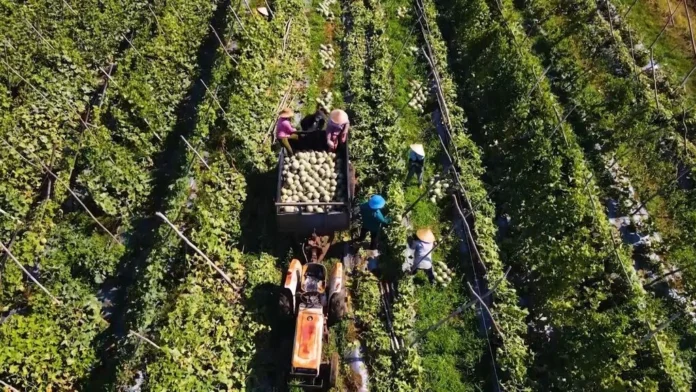
Today, the same woman stands on the edge of a shimmering 500,000-litre pond, watching a solar pump push water through black pipes that snake across 85 hectares of brilliant green. Children chase each other between rows of tomato plants heavy with fruit. Somewhere in the distance, a truck loaded with freshly cut cane rumbles toward the SOSUMO sugar factory, the cooperative’s first-ever formal contract.
“We used to farm to survive,” Domitille says, shading her eyes against the morning sun. “Now we farm to thrive.”
The transformation sweeping through the hills of Gitega and Kayanza is the clearest proof yet that the RAINChallenge project, a €4.2 million Irish Aid-funded initiative, is working. Three years after it targeted 1,300 of Burundi’s most vulnerable women smallholders, the numbers tell a story most aid workers only dream of.
Sugarcane yields have jumped from 45 to 78 tonnes per hectare. Vegetable farmers who once managed a single harvest now pull in three. Household income from farming has almost quadrupled, from roughly $240 to $830 a year. Perhaps most importantly, the “hunger season” that used to stretch from January to April has virtually disappeared: families now report an average of 11.1 months of adequate food, up from 7.8 before the project began.
At the heart of the miracle are two large hillside ponds, a handful of solar panels, and a stubborn belief that women, given the right tools, can change everything.
“When we started digging, people laughed,” recalls Vestine Niragira, a 41-year-old mother of six who became one of the project’s 52 lead farmers. “They said, ‘Women building dams? You’ll be carried away by the first flood.’”
Instead, the women terraced the hills, planted vetiver grass to hold the soil, and filled the ponds in the 2023 long rains. When the inevitable dry season arrived, the laughter stopped. While neighbouring fields turned brown, Ipyana’s stayed green. The ripple effects reach far beyond the irrigation canals.
In the shade of a mango tree, a village savings group counts crisp banknotes into neat piles. The 14 savings groups created under the project have saved the equivalent of $63,000, an astronomical sum in a country where the average rural income barely tops $200 a year. Women who once begged husbands for salt money now decide for themselves whether to buy school uniforms or iron roofing sheets.
Perhaps the most telling scene plays out every weekday morning at the local primary school, where children queue for a hot lunch of beans, vegetables, and, on good days, a slice of fresh pineapple. The produce comes straight from Ipyana’s fields.
“Before, many children came to school hungry,” says headteacher Emmanuel Ntakirutimana. “Now look at them. You can see it in their eyes.”
Even the cooperative’s name, Ipyana, meaning “gift” in Kirundi, feels newly appropriate. In 2025 alone, the women sold vegetables and sugarcane worth $136,000, most of it paid directly into mobile money accounts they control themselves.
Not everything is perfect. Land remains scarce, credit is still hard to come by, and climate change continues to throw curveballs; the current planting season started three weeks late because of erratic rains. But the women of Ipyana have stopped waiting for perfect conditions.
On a ridge overlooking the valley, 25,000 tree seedlings wait in the cooperative’s new nursery: avocado, grevillea, calliandra, ready to be planted against the next drought. Down below, a group of teenagers learns to read water meters and repair drip lines, skills that will outlast any donor project.
Domitille surveys it all with quiet pride. “The water in those ponds will dry up one day,” she says. “But what we’ve built in our heads, in our hearts, in our children’s futures, that will never run dry.”
In the hills of Burundi, 1,300 women have turned a prayer for rain into a downpour of possibility.