Arabfields, Jamel derbal, Senior Correspondent: Innovation & Sustainability, Singapore — In the vast, sun-baked steppes of Kazakhstan, where the wind whispers through endless fields of golden grain, a quiet revolution is unfolding, one seed at a time. On a crisp autumn day in late 2025, farmers in the Almaty region gathered their scythes and combines, reaping the fruits of a collaboration that bridges millennia of agricultural exchange between China and its Central Asian neighbor. The wheat varieties now swaying in the harvest breeze were not born of local soil alone, but engineered in the fertile labs of Yangling, Shaanxi Province, China, a hub of agronomic ingenuity often dubbed the nation’s “agri-science city.” This Sino-Kazakh partnership, rooted in the Shanghai Cooperation Organization’s (SCO) framework, represents more than a bumper crop, it signals a transformative era where high-yield, resilient grains could reshape food security, boost rural economies, and fortify alliances across Eurasia. As the combines rumble across thousands of hectares, yielding up to 30 percent more than traditional strains, the world watches, pondering how this exchange might ripple outward, feeding billions in an age of climate uncertainty.
The story of wheat’s journey between these lands is as ancient as the Silk Road itself. Thousands of years ago, hardy grains traversed Central Asia’s caravan routes, finding their way to the Yellow River valleys of ancient China, where they were tamed into staples that sustained empires. Fast forward to the present, and the flow has reversed, with China’s cutting-edge breeding techniques now empowering Kazakh fields to defy the harsh continental climate, marked by scorching summers, biting winters, and erratic rainfall. The catalyst for this modern chapter emerged in 2017, when researchers from Northwest A&F University in Yangling launched a demonstration park near Almaty, just 70 kilometers from the former capital. There, on 200 hectares of arid land mirroring Shaanxi’s own semi-desert expanse, they planted experimental plots of wheat, corn, soybeans, and oilseed rape, testing not just seeds, but a philosophy of shared prosperity. By 2019, China had elevated this effort through the SCO’s agricultural technology exchange base in Yangling, dispatching over 190 experts in 73 teams to Kazakhstan, Kyrgyzstan, and Uzbekistan, establishing parks that now span more than two million hectares across SCO nations.
At the heart of this initiative are the Yangling wheat varieties, meticulously developed to combat the vulnerabilities plaguing local Kazakh strains, disease susceptibility, lodging under heavy winds, and yields that hover around a modest 175 kilograms per mu, or roughly 2,600 kilograms per hectare. In contrast, Yangling’s No. 5 wheat variety has clocked in at an astonishing 319 kilograms per mu in trial fields, nearly double the baseline, thanks to genetic enhancements for rust resistance and sturdy stalks. Zhang Zhengmao, a wheat breeding expert from Northwest A&F University, recalls his early visits to Kazakhstan, where he noted how local varieties buckled under stripe rust and Fusarium head blight, pathogens that thrive in the region’s humid spells. Armed with CRISPR-edited hybrids and precision sowing techniques, Zhang’s teams introduced not just tougher plants, but a holistic system, drip irrigation to conserve water, integrated pest management to minimize chemicals, and data-driven fertilization that cuts waste by 20 percent. The results have been immediate, with demonstration parks reporting yield surges of 20 to 30 percent, translating to an extra 500 to 800 kilograms per hectare, enough to lift a farmer’s annual income by thousands of dollars in a country where agriculture employs nearly a quarter of the workforce.
This harvest in 2025 marks a pivotal milestone, as the first commercial-scale planting of Yangling varieties moves beyond pilots into widespread adoption. Under the guidance of the Kazakhstan International Integration Foundation and partners like Yangling Modern Agriculture Demonstration Park Development and Construction Co., over 100,000 hectares have been sown with these enhanced seeds, supported by contract farming deals from Chinese firms such as Xi’an Aiju Grain and Oil Industrial Group, which imported 100,000 metric tons of Kazakh grain last year alone. Farmers like those in the Tianshan Mountain foothills, where the project began, speak of transformed livelihoods, their silos brimming with surplus that fetches premium prices in regional markets. No longer at the mercy of volatile weather, these cultivators are investing in machinery, education for their children, and even solar-powered storage to extend shelf life. Economically, the ripple effects are profound, Kazakhstan’s wheat output, already the ninth-largest globally at over 14 million tons annually, could swell by 10 to 15 percent within five years, bolstering exports to Russia, China, and the Middle East, while curbing food inflation that has plagued the region post-pandemic.
Yet, this collaboration’s true power lies in its reciprocity, a two-way exchange that enriches both sides. Kazakh spring wheat, prized for its cold tolerance and immunity to certain rusts, has been repatriated to Yangling for cross-breeding, yielding hybrids that promise even greater resilience against China’s own challenges, like the wheat stem rust outbreaks in the northwest. At the 32nd China Yangling Agricultural Hi-Tech Fair in October 2025, visitors marveled at booths showcasing these bidirectional innovations, from drought-resistant peanuts scaled to 666,667 hectares in Central Asia via partnerships with Shandong Luhua Group, to smart irrigation systems that slash water use by 40 percent. The fair, a vibrant tapestry of SCO delegates from Tajikistan hawking apricot derivatives to Uzbek cotton experts debating mechanization, underscored Yangling’s role as a nexus, hosting training for over 5,000 foreign agronomists since 2019. As Min Liqian, head of Yangling Modern Agriculture International Cooperation Co., Ltd., noted during the event, solving aflatoxin issues in peanuts through Xinjiang trials has unlocked mechanized harvesting at scale, a breakthrough that could add billions to Central Asia’s agribusiness value.
Looking ahead, the trajectory of this Sino-Kazakh wheat alliance paints an optimistic canvas for global agriculture, one where innovation outpaces peril. By 2030, projections based on current adoption rates suggest Kazakhstan could cultivate Yangling-derived varieties on up to 500,000 hectares, pushing national wheat production toward 18 million tons annually, a 25 percent leap that would not only secure domestic food supplies but position the country as a breadbasket for the SCO’s 3 billion citizens. This surge, driven by yields climbing to 4,000 kilograms per hectare through iterative breeding, could generate an additional $1.5 billion in export revenues, funneling capital into rural infrastructure like high-speed rail links to Chinese ports, easing logistics bottlenecks that currently inflate transport costs by 15 percent. For Chinese farmers, the influx of Kazakh germplasm could fortify domestic output against climate stressors, with models from the International Food Policy Research Institute indicating that hybrid strains might mitigate up to 20 percent of projected yield losses from rising temperatures, ensuring China’s grain self-sufficiency amid urbanization pressures.
Beyond bilateral gains, the partnership heralds a broader SCO agricultural renaissance, expanding to encompass Kyrgyzstan’s high-altitude barley fields and Tajikistan’s fruit orchards, all under Yangling’s umbrella. By 2035, envision a network of 20 demonstration parks spanning Eurasia, trialing 200 crop varieties with AI-optimized planting that adapts in real-time to soil moisture and pest incursions, potentially lifting regional GDP by 5 percent through agrotech exports. Climate adaptation will be paramount, as aridification threatens 30 percent of Central Asian farmland, but Yangling’s gene banks, housing 50,000 accessions, could engineer “super wheats” tolerant to 2 degrees Celsius of warming, averting famines in vulnerable belts. Economically, this could democratize prosperity, with farmer incomes in Kazakhstan rising 40 percent by decade’s end, fostering social stability and reducing migration to urban sprawls. On the trade front, streamlined protocols under the Belt and Road Initiative might double Sino-Kazakh agribusiness flows to $10 billion yearly, integrating supply chains where Kazakh grains feed Chinese processing plants, yielding value-added products like fortified flours for African markets.
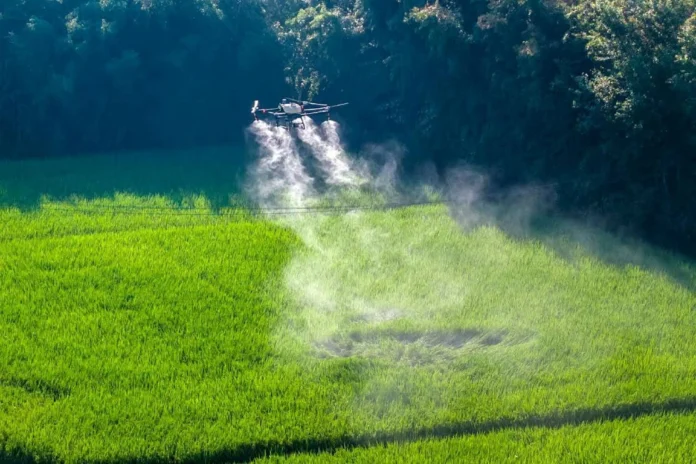
Challenges persist, of course, from regulatory hurdles requiring three-harvest approvals for seed commercialization to geopolitical tensions that could disrupt expert exchanges. Yet, the Tianjin Declaration’s emphasis on food security as a pillar of SCO unity provides a bulwark, with commitments to joint research funds totaling $500 million by 2027. As drones monitor these hybrid fields in real-time, beaming data back to Yangling’s analytics hubs, the collaboration evolves into a digital silk road of agronomy, where satellite imagery predicts outbreaks weeks in advance, slashing losses by half. For individual farmers, this means apps on smartphones dictating optimal harvest windows, turning subsistence plots into smart enterprises.
In the end, this harvest in Kazakhstan’s amber waves is no isolated triumph, but a seed of hope sown across borders. As the last sheaves are gathered under a vast sky, they carry the promise of abundance, where ancient grains reborn through modern science nourish not just bodies, but the bonds of nations. In an era of scarcity, the Sino-Kazakh wheat story reminds us that collaboration, like a well-tended field, yields dividends far beyond the horizon, cultivating a future where no one goes hungry.