Arabfields, Naïla Mokhtari, Special Economic Correspondent, São Paulo, Brazil — Coffee futures settled higher on Monday, as concerns over below-average rainfall in Brazil pushed arabica prices to a two-week peak. Traders closely monitored weather patterns across key growing regions, where insufficient precipitation has raised questions about the development of the upcoming harvest.
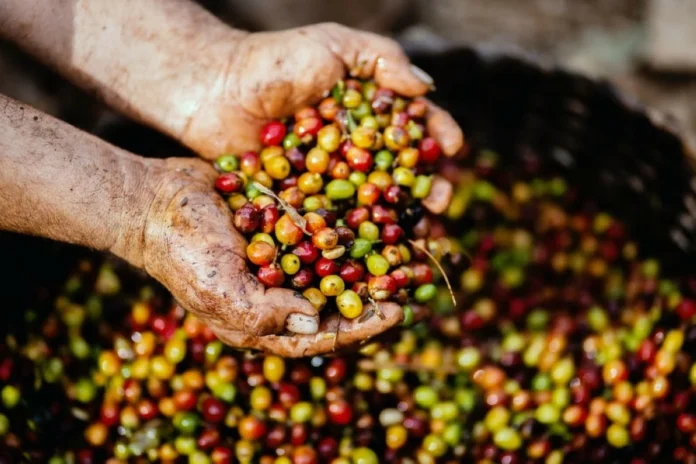
Farmers in Minas Gerais, Brazil’s largest arabica-producing area, reported receiving only a fraction of the typical rainfall in recent weeks. This dryness has added upward pressure on the market, even as broader forecasts point to a potential recovery in supply over the coming season. One veteran grower in the region described the erratic conditions as a familiar challenge that demands constant vigilance to protect yields.
Market participants noted that arabica contracts climbed noticeably during the session, reflecting immediate worries about moisture levels. At the same time, robusta prices showed mixed movements, influenced by developments in other producing countries.
Analysts have incorporated the latest weather data into their assessments for 2026. Brazil’s national crop agency projects the country’s coffee output to reach a record 66.2 million bags in the 2026 harvest, representing a 17.2 percent increase from the previous year. Within that total, arabica production is expected to rise by 23.2 percent to 44.1 million bags, while robusta output grows by 6.3 percent to 22.1 million bags. These figures suggest that, should favorable conditions materialize, global supplies could ease the tight balance that has persisted in recent years.
Global coffee production for the 2026/27 season is anticipated to hit a record 180 million bags, according to projections from Rabobank, an increase of roughly 8 million bags compared with the prior period. Such growth would mark a significant shift after consecutive seasons of deficits driven by adverse weather.
Yet experts caution that the outlook remains sensitive to ongoing climate patterns. Rising temperatures and shifting rainfall have become structural risks for coffee cultivation across the bean belt. In Brazil alone, an average of 70 additional days of excessive heat above thresholds harmful to coffee plants have been recorded in recent years, compounding the effects of drought on flowering and bean development.
Looking ahead, the World Bank forecasts a moderation in prices during 2026, with arabica expected to decline by approximately 13 to 15 percent from the elevated levels seen in 2025, though values are likely to stay above pre-surge averages. Robusta prices are similarly projected to ease by around 9 percent. These adjustments would depend on the realization of larger harvests in Brazil and recovering output in Vietnam and Indonesia.
For consumers and businesses, the implications are tangible. Roasters and cafe owners continue to navigate higher input costs, with some already adjusting menus or portion sizes in response to sustained volatility. A small business operator in a European capital remarked that the recent swings have forced tighter budgeting, while still striving to maintain quality for loyal patrons.
The interplay between current dryness and longer-term production forecasts underscores the delicate balance in the coffee market. While immediate weather concerns have supported prices this week, the anticipated expansion in Brazilian output offers a pathway toward greater stability in the months ahead, provided rainfall patterns improve and no new extremes disrupt the cycle.
Industry observers will keep a close watch on upcoming meteorological updates, as even modest changes in precipitation could influence the final size of the 2026 harvest and, by extension, the trajectory of global coffee prices.