Enhancing Post-Harvest Conservation Technologies to Reduce Agricultural Export Costs in Vietnam

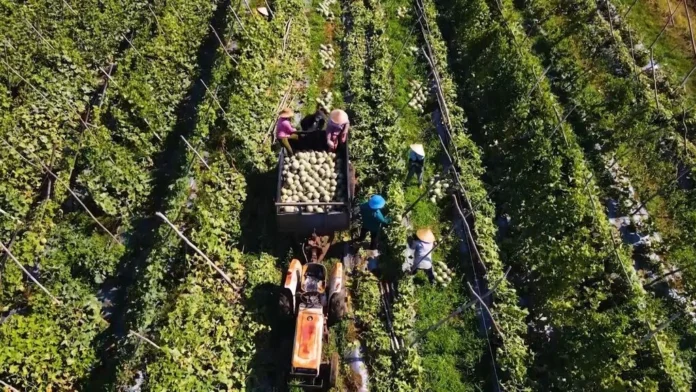
Arabfields, Meriem Senouci, Correspondent, Hanoï, Vietnam — In the context of an increasingly competitive global agricultural trade environment marked by fluctuating logistics expenses, post-harvest conservation has emerged as a critical challenge for Vietnam’s agricultural sector. As the country advances its position in international markets during 2026, the adoption of advanced preservation methods stands out as a strategic priority that directly addresses inefficiencies and enhances overall competitiveness. Official assessments from relevant authorities indicate that substantial post-harvest losses continue to affect multiple categories of produce, underscoring the urgent need for technological intervention to safeguard quality and minimize financial burdens associated with exports.

Current data for 2026 reveal that fruits and vegetables experience losses ranging from 20 to 30 percent when post-harvest storage practices remain inadequate, while seafood products face wastage between 15 and 25 percent and rice production registers declines of 13 to 15 percent. These percentages reflect systemic shortcomings within the existing preservation infrastructure, where a considerable share of agricultural output still relies on traditional, fragmented approaches. Many production areas lack sufficient refrigerated facilities, advanced processing units, or integrated logistics networks, leaving harvested goods vulnerable to spoilage throughout harvesting, transportation, and distribution phases. Consequently, exporters frequently resort to expensive air freight for perishable items such as fruits and seafood to preserve freshness over short durations, a practice that inflates overall export expenses and diminishes profit margins for producers and traders alike.

The integration of sophisticated conservation technologies offers a transformative pathway to extend product viability and facilitate more economical transportation options. Experts affiliated with agricultural mechanization and post-harvest research institutes emphasize that the application of modern techniques can extend the shelf life of various commodities by a factor of 1.5 to 2 times. This extension enables a shift from costly air transport to sea freight for numerous fresh items, including fruits, vegetables, and seafood, thereby substantially lowering logistics expenditures. Air freight, which can prove 5 to 7 times more expensive than maritime alternatives, imposes a heavy financial strain on exporters, yet improved preservation methods allow products to withstand longer journeys without compromising quality or nutritional integrity. In practical terms, this technological progress supports the broader transition within Vietnamese agriculture from a focus on sheer volume expansion toward an emphasis on quality enhancement, value addition, and long-term sustainability.

Illustrative cases from key export sectors demonstrate the tangible advantages of these innovations. For instance, shipments of fresh lychees previously destined for European markets required air transport to maintain optimal condition upon arrival. Following the implementation of targeted post-harvest treatments, combined with specialized packaging and controlled refrigerated storage, the shelf life of these lychees has nearly doubled, permitting reliable sea transport in refrigerated containers and yielding significant cost reductions. Similarly, mango producers in the Mekong Delta have invested in modern refrigerated warehouses and processing lines, enabling the fruit to retain superior quality over extended periods. Such developments have opened access to demanding distant markets in Europe and North America while ensuring adherence to stringent international quality and safety standards. These examples highlight how targeted investments in conservation infrastructure can directly translate into enhanced market reach and improved economic returns for participating cooperatives and enterprises.

A particularly promising avenue lies in the development of an intelligent cold supply chain, which represents a cornerstone of contemporary preservation strategies. This integrated system maintains precise control over temperature, humidity, and microclimate conditions across the entire journey from harvest through storage and maritime transport to final ports of destination. Complementary innovations, including functional packaging materials, biomaterials derived from natural sources, and real-time sensor networks that monitor environmental parameters, contribute to prolonging shelf life while safeguarding the sensory attributes and nutritional profiles of agricultural goods. Furthermore, seamless data exchange throughout the supply chain empowers stakeholders to anticipate potential disruptions, mitigate risks, and fulfill rigorous traceability requirements imposed by importing countries. In parallel, attention to advanced processing techniques complements preservation efforts by converting agricultural by-products into higher-value outputs. Vietnam generates approximately 156.8 million tons of such by-products each year, primarily from crop cultivation and livestock activities, and these resources hold considerable potential for transformation into functional foods, biomaterials, animal feed supplements, or organic fertilizers when processed efficiently.

The extraction of bioactive compounds, such as polyphenols, proteins, cellulose, and natural antioxidants from these by-products, unlocks opportunities across food, pharmaceutical, and cosmetic industries, thereby elevating the overall added value generated by the agricultural sector. This approach not only reduces waste but also advances the principles of a circular economy by minimizing emissions and optimizing the utilization of biomass resources. Enterprises that incorporate these processing methods benefit from diversified revenue streams and greater resilience against market volatility, while the national economy gains from strengthened integration into global value chains. Nevertheless, the proportion of companies actively pursuing technological upgrades in processing remains relatively modest, with many products still exported in raw or minimally processed forms that command lower prices and exhibit limited competitive strength.

Government initiatives coordinated through the Ministry of Agriculture and Environment have prioritized the strengthening of quality management, food safety protocols, processing capabilities, and market development strategies, all of which converge on the imperative to overcome post-harvest bottlenecks. Conferences and technical discussions convened by these authorities have consistently highlighted the role of conservation technologies in addressing evolving international demands related to product quality, traceability, and environmental impact, including carbon footprint considerations. By fostering an intelligent cold chain and promoting innovation in both preservation and processing domains, Vietnam positions its agricultural sector to meet these standards more effectively and to capitalize on opportunities in premium markets.

Looking toward the future, projections grounded in the prevailing 2026 statistics and observed technological trends indicate substantial potential for further gains. With accelerated adoption of shelf-life extension methods that multiply durability by 1.5 to 2 times, post-harvest losses for fruits and vegetables are anticipated to decline to between 10 and 15 percent by the close of 2026, assuming continued infrastructure investments and wider dissemination of best practices across production regions. Seafood and rice sectors could similarly achieve reductions in wastage to 8 to 12 percent and 7 to 10 percent, respectively, under the same conditions. These improvements would enable an estimated 40 to 60 percent decrease in logistics costs for affected export categories by facilitating a broader transition to sea freight, which remains 5 to 7 times less expensive than air alternatives. Consequently, overall export competitiveness is projected to rise markedly, with potential increases in market share for high-value fresh produce in Europe, North America, and other distant destinations reaching 15 to 25 percent over the subsequent two years.

The valorization of 156.8 million tons of annual by-products is expected to generate additional economic value equivalent to several billion dollars through processed derivatives, supporting the creation of new industries in functional foods and biomaterials while contributing to emission reductions aligned with national sustainability objectives. As the intelligent cold chain expands and sensor-driven monitoring becomes standard, supply chain efficiency will improve, traceability compliance will strengthen, and risks associated with spoilage during transit will diminish further. In the longer term, these developments will facilitate a structural shift from reliance on raw-material exports toward a model centered on high-value, processed agricultural goods, thereby deepening Vietnam’s participation in global value chains and enhancing resilience against external pressures such as fluctuating commodity prices and stringent regulatory environments.

Ultimately, the strategic enhancement of post-harvest conservation and processing technologies constitutes not merely a technical adjustment but a foundational element for the sustainable evolution of Vietnam’s agricultural economy. By systematically addressing current loss rates documented in 2026 data and projecting forward on the basis of proven shelf-life extensions and cost differentials, the sector stands poised to achieve lower export expenditures, superior product quality, and expanded international presence. Continued collaboration among research institutions, government bodies, producers, and enterprises will be essential to realize these forecasts, ensuring that Vietnamese agricultural products maintain their competitive edge and deliver lasting benefits to stakeholders across the value chain.

spot_imgspot_imgspot_imgspot_img
spot_imgspot_imgspot_img
spot_imgspot_imgspot_imgspot_img

More like this

China Opens Door to South African Fruit

Arabfields, Sana Dib, Financial Correspondent, Johannesburg, South Africa — South African apple and pear exporters are expecting...

Citrus Industry Faces Flood Pressure

Arabfields, Sana Dib, Financial Correspondent, Johannesburg, South Africa — South Africa’s citrus industry is facing growing uncertainty...

Ethiopia Regains Ground in Global Coffee Race

Arabfields, Mira Sabah, Special Economic Correspondent, Nairobi, Kenya — Ethiopia is set to overtake Indonesia in coffee...
Refresh
Home
Just In
Live
Arabfields ISE | Oran, Algeria | Current time:
Arabfields ISE