


Arabfields, Maleeka Kassou, East, West & Central Africa Agriculture Correspondent — The private sector in Guinea-Bissau has reached a pivotal milestone in the enhancement of its agricultural resources with the formal establishment of the Société de Cajou de Guinée-Bissau, referred to as SOCA GB SA. The Constitutive General Assembly together with the first session of the Board of Administration convened on 10 March 2026 in Bissau, thereby officially creating the company and appointing its inaugural administrators. This undertaking receives decisive backing from the West African Development Bank through a financial contribution amounting to 9,150 million FCFA, complemented by the bank’s direct equity participation in the capital of SOCA GB SA.
The newly formed entity pursues far-reaching objectives that extend to the horizon of 2030, foremost among them the elevation of the local processing rate for cashew nut production from the present level of 10 percent to 50 percent. In parallel the project intends to expand revenues across the entire value chain while generating sustainable employment, especially for young people and women, and to fortify tax receipts in order to stabilize the rural economy. These aims reflect a deliberate strategy to shift from raw commodity exports toward higher-value industrial activity within national borders.
Presiding over the Constitutive General Assembly was Mister Mamadu Mudjetaba DJALO, Minister of Economy, Planning and Regional Integration, acting on behalf of the State of Guinea-Bissau. The gathering also included Mister Toussaint BADOLO, Director of the Department of Agriculture and Agro-Industry, Mister Mamadu DJALO, Director General of MAVEL SA, Mister Mussa SAMBI, Director General of the Economy, and Mister Youssouf TOURE, Resident Mission Chief of the West African Development Bank in Guinea-Bissau. The presence of these senior figures from government, private enterprise and the regional financial institution illustrates the breadth of institutional commitment to the venture.
In his address the Minister of Economy underscored the government’s clear determination to capture a larger share of value added domestically, declaring that the ambition is to transform locally half of national production by 2030 so that the resulting wealth flows directly into the domestic economy. Mister Toussaint BADOLO, speaking on behalf of the bank, emphasized that the West African Development Bank remains fully mobilized to support the structuring of strategic sectors and that the true measure of success lies in the lasting improvement of living conditions for rural populations coupled with the reinforcement of public finances. Mister Mamadu DJALO of MAVEL SA welcomed the initiative as an essential mechanism to revitalize the cashew sector, to strengthen local value addition and to raise the incomes of producers.
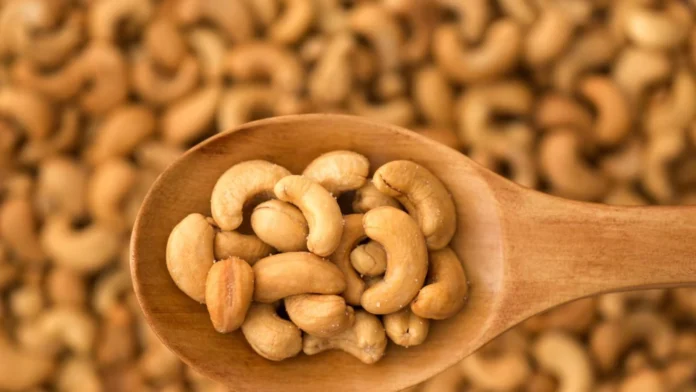
Guinea-Bissau exported more than 250,000 tonnes of raw cashew nuts in 2025, a volume that demonstrates the country’s substantial productive capacity and positions it among the leading producers on the continent. At present only 10 percent of output undergoes local transformation, which means that the overwhelming majority leaves the country in unprocessed form and therefore yields limited economic returns for national actors. The launch of SOCA GB SA, underpinned by the substantial support of the West African Development Bank and its partners, now equips the nation to evolve into an emerging industrial participant within the global cashew value chain.
Forecasts grounded directly in the 2025 production and export data, combined with the progressive implementation schedule of the new company, indicate that the local processing rate is projected to reach approximately 18 percent during 2026. On the basis of an estimated total production of roughly 278,000 tonnes, derived by adjusting the 250,000 tonnes of raw exports for the prevailing 10 percent processing baseline, this advance would translate into the local transformation of about 50,000 tonnes of cashew nuts in 2026. Such an increment represents the first tangible step toward the 2030 target and is expected to generate additional revenues for value-chain participants, to initiate the creation of hundreds of sustainable jobs focused on youth and women, and to contribute measurably to fiscal receipts while supporting the stabilization of rural communities.
The financial commitment of 9,150 million FCFA from the West African Development Bank not only supplies the capital necessary to establish processing infrastructure but also signals long-term confidence in the viability of Guinea-Bissau’s cashew sector. By taking an equity stake the bank aligns its interests with those of local shareholders and ensures ongoing technical and strategic guidance. This partnership model is designed to accelerate the transition from raw export dependency to integrated industrial processing, thereby retaining a greater proportion of the economic value created by cashew cultivation within the country’s borders.
As SOCA GB SA commences operations following the March 2026 assemblies, the company is positioned to serve as a catalyst for further private investment and technological upgrading in cashew processing facilities. The initial focus will be on building capacity to absorb increasing volumes of raw nuts, to improve product quality standards and to develop markets for processed kernels and by-products. These efforts are expected to produce multiplier effects across the rural economy, where cashew farming constitutes a primary source of livelihood for many households.
The unified stance expressed by government and private-sector representatives during the Constitutive General Assembly further reinforces the likelihood that the projected 2026 gains will materialize. With ministerial leadership providing policy continuity and with experienced operators such as MAVEL SA contributing operational expertise, the institutional framework is now in place to support steady expansion of local processing activities. The West African Development Bank’s dual role as financier and shareholder adds an additional layer of credibility that should attract complementary funding from other development partners.
Beyond the immediate processing targets, the initiative carries broader implications for economic diversification and resilience. By raising the share of value added captured domestically, Guinea-Bissau can reduce its vulnerability to fluctuations in international raw-nut prices and can generate more stable income streams for producers and processors alike. The emphasis on employment creation for young people and women addresses important social objectives, channeling the benefits of agricultural growth toward inclusive development and rural poverty reduction.
Projections for the remainder of the decade build upon the solid foundation established in 2025 and the early momentum anticipated in 2026. If the annual increase in the processing rate continues at a pace consistent with the 2030 goal, subsequent years will see progressively larger volumes transformed locally, with corresponding rises in employment, tax revenue and overall sector contribution to gross domestic product. The establishment of SOCA GB SA therefore constitutes not merely an isolated corporate event but a structural shift that reorients the cashew industry toward higher productivity and greater national benefit.
In summary, the launch of SOCA GB SA, backed by the strategic engagement of the West African Development Bank, marks the beginning of a new chapter for Guinea-Bissau’s agricultural economy. With more than 250,000 tonnes of raw cashew nuts exported in 2025 and with a clear roadmap to reach 50 percent local processing by 2030, the country stands ready to translate its natural endowment into sustained industrial growth. The projected advance to 18 percent processing and roughly 50,000 tonnes transformed in 2026 offers an early demonstration of the initiative’s potential, promising tangible improvements in incomes, employment and fiscal stability that will reinforce the resilience of the rural economy for years to come.










 # =============== Arabfields # ===============