Arabfields, Mira Sabah, Special Economic Correspondent, Nairobi, Kenya — In the lush, rain-soaked heart of West Africa, Liberia’s cocoa farms have long been a cornerstone of the nation’s agricultural heritage. For generations, smallholder farmers have toiled under the canopy of ancient cacao trees, harvesting beans that carry the promise of economic vitality. Yet, despite the sector’s potential (cocoa being one of Liberia’s top export commodities), the path to global markets has been fraught with challenges. Issues like improper harvesting, inadequate fermentation, and subpar storage have often resulted in moldy or low-grade beans, undermining the country’s competitiveness against powerhouses like Côte d’Ivoire and Ghana.
Enter the Liberia Agriculture Commodity Regulatory Authority (LACRA), the government’s vanguard in agricultural oversight. On November 17, 2025, in a move that signals a renewed commitment to excellence, LACRA launched an intensive training program for over 30 inspectors. This initiative is not just about skill-building; it’s a strategic pivot aimed at transforming Liberia’s cocoa value chain from farm to fork, or rather, from pod to processor. By empowering inspectors to become trainers themselves, LACRA is fostering a ripple effect that could reach thousands of farmers and cooperatives, ensuring that Liberian cocoa meets the stringent demands of international buyers, particularly in the European Union (EU).
This article delves deep into the training’s mechanics, the voices driving it, and the broader implications for Liberia’s economy. Drawing from recent developments, we explore how this program fits into a larger tapestry of agricultural reform, potentially unlocking billions in export revenue and bolstering food security.
Liberia’s cocoa industry is a vital economic artery, contributing significantly to the GDP and employing a substantial portion of the rural workforce. According to estimates from the International Cocoa Organization (ICCO), West Africa accounts for over 70% of global cocoa production, with Liberia producing around 15,000 to 20,000 metric tons annually (modest compared to neighbors but ripe for growth). However, the journey from Liberian fields to European chocolatiers has been hampered by quality inconsistencies.
Historical data paints a stark picture: In the early 2010s, post-Ebola recovery efforts highlighted how poor post-harvest handling led to up to 30% losses in cocoa value due to mold and contamination. The EU, a primary market enforcing rigorous standards under its Deforestation Regulation (EUDR) effective from late 2024, demands traceability and sustainability certifications that many Liberian exports fail to meet. This has resulted in rejected shipments and depressed prices, squeezing farmers’ margins to as low as $1 per kilogram.
LACRA, established under the 2019 Agriculture Commodity Regulatory Act, was born from this necessity. Tasked with regulating commodities like cocoa, coffee, and palm oil, the authority has prioritized quality assurance. The November training is the latest in a series of interventions, following a similar program in October 2025 that targeted local produce buyers and warehouse operators. These efforts underscore a proactive stance: quality control isn’t a luxury, it’s a lifeline for an industry that could double its output to 40,000 tons by 2030 with proper interventions.
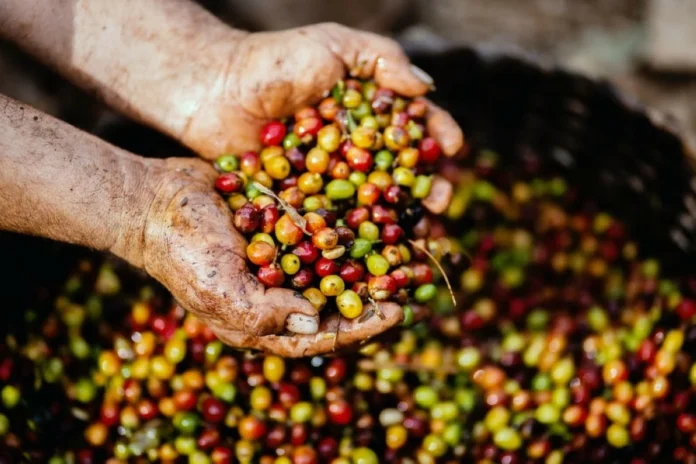
The week-long training, held at LACRA’s facilities in Monrovia, was a masterclass in pragmatism. Over 30 inspectors (seasoned field officers from across Liberia’s 15 counties) gathered for sessions that blended theory with immersion. The curriculum zeroed in on the cocoa value chain’s critical junctures: harvesting, where beans must be plucked at peak ripeness; fermentation, a delicate 5-7 day process to develop flavor precursors; drying, to prevent moisture-induced mold; and storage, where warehouses must maintain humidity below 7%.
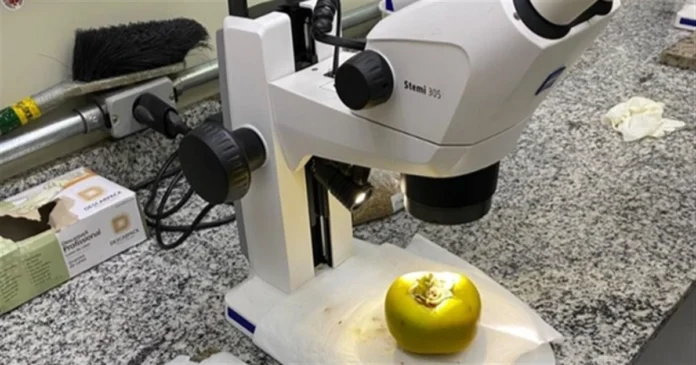
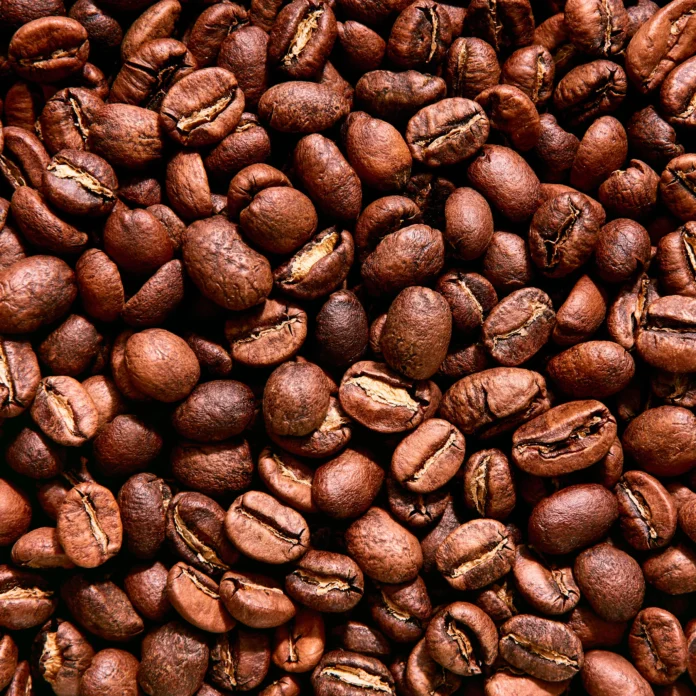
Practical exercises dominated the agenda. Trainees dissected heaps of cocoa beans under expert guidance, learning to classify them by grade (using tools like the International Cocoa Organization’s grading scales, which score beans on size, fermentation index, and defect ratios). “This training is mostly practical because we want our inspectors to be able to identify the different types of cocoa beans and learn how to conduct inspections on the warehouses,” explained Godia Alpha Kortu Gongolee, LACRA’s Deputy Director for Operations. Participants simulated farm audits, probing for compliance with Good Agricultural Practices (GAP), and warehouse walkthroughs to check for pest infestations and ventilation standards.
Godia Alpha Kortu Gongolee emphasized the foundational ethos: “Quality control begins on the farm. Inspectors must ensure that cocoa farmers and warehouse owners comply with the standards required to produce the best cocoa.” This farm-to-market lens is crucial; inspectors aren’t mere gatekeepers but educators, poised to cascade knowledge to grassroots levels.
The program culminates in a rigorous examination blending written assessments with field demonstrations. Successful graduates will fan out as “master trainers,” embedding in extension programs to upskill farmers and cooperatives. Imagine a rural cooperative in Lofa County, where a LACRA-trained inspector demonstrates solar dryers to cut drying time by 50%, or in Grand Bassa, where fermentation pits are redesigned to boost bean quality scores from C-grade to premium AA.
No endeavor of this scale operates in isolation. LACRA’s training is a collaborative triumph, spearheaded in partnership with GROW-2, a USAID-funded project dedicated to micro, small, and medium enterprises (MSMEs). GROW-2’s mandate (fostering cooperatives and job creation through agro-value chains) aligns seamlessly, providing logistical support and expertise in farmer mobilization. “This synergy allows us to scale impact,” noted a GROW-2 representative, highlighting how the project has already linked 5,000 Liberian farmers to market opportunities since 2022.
Adding international heft are the United Nations Industrial Development Organization (UNIDO) and the Swedish Government. UNIDO’s technical assistance, drawn from its global cocoa programs in countries like Ecuador and Indonesia, brings cutting-edge methodologies, including digital traceability apps that log harvest data via mobile. Sweden’s funding, part of its broader commitment to sustainable agriculture in Africa, injects resources for equipment like moisture meters and training kits. This trifecta (local regulation, bilateral aid, and multilateral know-how) exemplifies how global solidarity can amplify national ambitions.
At the helm stands Hon. Dahn Sayee, LACRA’s Director General, whose passion for farmer empowerment infuses the program. In his opening address, Sayee articulated the mission: “The training is intended to empower our inspectors, who will get involved with our extension programs, train farmers, and train cooperatives to be able to deliver quality cocoa both locally and internationally.” He doubled down on knowledge transfer: “We want to make sure that we impart quality knowledge to our staff so that they are able to provide quality training for farmers.”
Sayee’s philosophy extends beyond metrics. “Our work at LACRA is to empower farmers. This is where the empowerment starts, with staff who will engage with farmers in their villages and farms, through cooperatives, to understand the entire process of marketing cocoa, from harvesting, fermentation, and drying to getting the cocoa to the market.” His words resonate in a country where 60% of the population depends on agriculture, and women comprise 40% of cocoa farmers. By prioritizing inclusivity, LACRA is not just upgrading beans, it’s uplifting communities.
Echoing this, Gongolee stressed enforcement with empathy: Inspectors must balance audits with advisory roles, turning potential violations into teachable moments. These leaders’ insights reveal a program that’s as much about mindset as mechanics.
The ripples of this training extend far. Economically, enhanced quality could fetch 20-30% premiums on international markets, translating to an additional $50-100 million in annual exports by 2028, per World Bank projections for compliant African producers. This windfall could fund rural infrastructure, from irrigation systems to youth vocational centers, curbing urban migration and youth unemployment, which hovers at 50% in Liberia.
Sustainability is another boon. By curbing mold (often from improper drying), farmers reduce chemical pesticide use, aligning with EU green mandates and appealing to eco-conscious buyers like Mars and Hershey. Climate resilience factors in too; trained inspectors can promote shade-grown cacao, mitigating deforestation in Liberia’s 43% forest cover.
Challenges persist: Scaling to remote farms requires robust transport, and climate variability threatens yields. Yet, precedents abound, Ghana’s COCOBOD model lifted quality scores by 25% through similar trainings. Liberia, with its fertile soils and untapped hybrid varieties, is poised to follow suit.
LACRA’s inspector training is more than a workshop, it’s a manifesto for agricultural renaissance. As these 30-plus graduates step into their roles, they carry the weight of a nation’s aspirations: beans that don’t just satisfy standards but sparkle with flavor, farmers who thrive as entrepreneurs, and a Liberia etched deeper into the global cocoa narrative. In a world craving ethical indulgence, this initiative positions the country not as a supplier, but as a standard-setter. The harvest is underway; the proof will be in the pudding, or rather, the chocolate.