Arabfields, Lamia Cherifa, Special Economic Correspondent, Moscow, Russia — Russia and Togo are exploring new trade and logistics opportunities that could strengthen fertilizer supplies, expand phosphate processing and turn Lomé into a more important gateway for Russian goods entering West Africa.
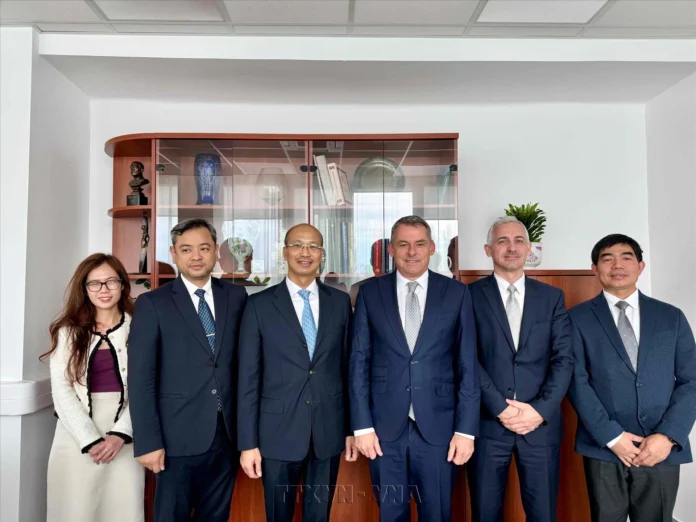
The initiative gained momentum following the first session of the Russia-Togo intergovernmental commission, held in Lomé from September 29 to October 1. Officials from both countries discussed cooperation in agriculture, mining, energy, transport and industrial development, with a particular focus on building commercial links between Russian suppliers and markets across the region.
The renewed interest comes after a sharp decline in bilateral trade. Merchandise trade between Russia and Togo reached $103.71 million in 2024 before falling to $35.65 million in 2025, according to trade data cited in recent industry reporting. The decline reflected a substantial reduction in Russian fertilizer and fuel shipments.
Fertilizers remain central to the relationship. Russian fertilizer exports to Togo were valued at $75.63 million in 2024, but fell to $23.82 million in 2025. For Togo, which relies on agricultural production to support rural livelihoods and food supplies, access to competitively priced fertilizers is an important economic concern.
For farmers facing rising input costs, reliable supply arrangements could help improve planning and reduce exposure to disruptions in international markets. However, the benefits will depend on prices, transport costs and whether imported products reach agricultural regions at the right time for planting.
The two countries are also examining the possibility of developing local fertilizer blending or production facilities using Togolese phosphate resources alongside Russian raw materials and technical expertise. Such a project could reduce dependence on imported finished products while creating opportunities in processing, engineering, storage and distribution.
Togo has an established phosphate industry, although production has remained relatively stable in recent years. Output from the state-owned Société Nouvelle des Phosphates du Togo reached approximately 1.49 million tonnes in 2024, down from 1.52 million tonnes in 2023. The country’s mineral resources could provide a foundation for deeper industrial cooperation, but any new facility would require detailed assessments of processing costs, financing and market demand.
No joint venture, investment amount or construction schedule for a Russia-Togo fertilizer plant was announced at the October commission. The proposal remains at the feasibility and partnership-development stage.
Transport infrastructure is another important part of the emerging relationship. Lomé’s deep-water port offers access to regional markets, including landlocked Mali, Burkina Faso and Niger, making it an attractive potential entry point for fertilizer shipments and industrial goods.
The port handled approximately 2.06 million twenty-foot equivalent units of containers in 2024, up from 1.91 million in 2023. Total cargo volumes reached 30.64 million tonnes that year, underlining its importance to regional commerce.
For businesses seeking to reach inland markets, the port’s value lies not only in its maritime capacity but also in its connections to road transport networks. A more organised logistics corridor linking Russian suppliers to Lomé and then to the Sahel could create additional commercial opportunities, provided customs procedures, freight costs and border coordination are addressed.
The Russian and Togolese authorities have discussed a multimodal transport route combining maritime shipping, rail links and digital cargo management. Russian transport and logistics representatives also visited the port and other infrastructure facilities during the September mission.
The proposal could eventually support trade in fertilizers, agricultural products and industrial equipment. However, the discussions have not yet produced a fully operational corridor or a confirmed financing package for major new infrastructure.
The wider economic outlook will depend on whether the two governments can turn political commitments into commercial contracts. Investment protection, customs cooperation and trade facilitation agreements could help provide businesses with greater certainty, while direct contacts between chambers of commerce may identify viable projects.
If fertilizer cooperation advances and transport arrangements become commercially competitive, bilateral trade could recover from its 2025 decline over the coming years. Local processing could also allow Togo to retain more value from its phosphate resources rather than rely primarily on exporting raw materials.
The risks remain significant. Financing constraints, shipping disruptions, regulatory uncertainty and competition from established suppliers could delay investment. A proposed railway or pipeline would require particularly substantial capital and cannot be assumed to proceed simply because it has been discussed.
For Togo, the opportunity is to combine its mineral resources and port infrastructure with foreign technology and access to international suppliers. For Russia, the country offers a potential commercial gateway to West African markets.
The next stage will be decisive. The success of the partnership will depend less on the number of agreements discussed than on whether companies begin moving goods, investing in local production and establishing supply chains that can remain profitable over the long term.