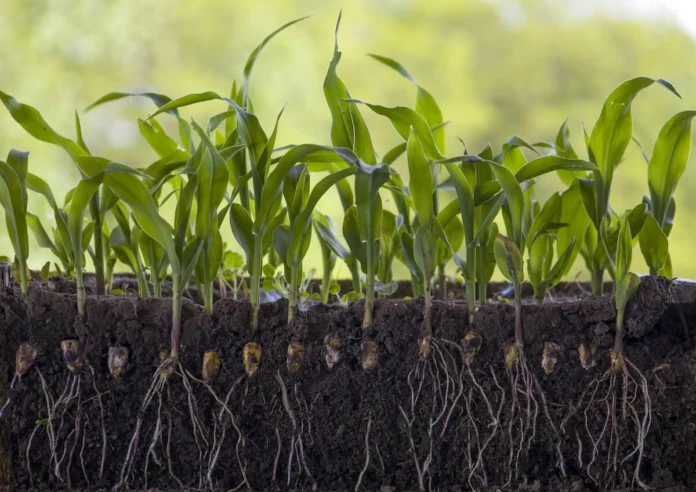
Arabfields, Sana Dib, Financial Correspondent, Johannesburg, South Africa — South Africa maintains its position as the foremost producer of maize on the African continent and serves as a central actor in the intraregional commerce of this fundamental cereal crop. As the 2025/2026 agricultural campaign progresses steadily, the earliest harvest estimates are solidifying into a coherent outlook that reveals a measured adjustment in expected output levels. The preliminary projection indicates that the country will harvest approximately 16.13 million tonnes of maize during this season. This volume reflects a reduction of 3.1 percent relative to the 16.65 million tonnes recorded in the previous campaign, thereby illustrating the natural variability inherent in large-scale cereal production even under conditions of careful planning and resource management.
This anticipated modest contraction in overall production occurs in parallel with a notable expansion of the land surface dedicated to maize cultivation. The area planted has increased by 4.6 percent to reach a total of 2.71 million hectares, which corresponds to an additional 119500 hectares compared with the preceding season. The divergence between the enlarged cultivated surface and the slightly lower projected harvest stems from expectations of moderated yields in selected production zones where soil moisture patterns or other localized agronomic conditions may prove less optimal than in the prior year. Such dynamics underscore the complex interplay between planted acreage and actual productivity per unit area, a relationship that agricultural planners monitor closely throughout each growing cycle to inform timely interventions where necessary.
Within the total anticipated harvest, the composition breaks down into 8.51 million tonnes of white maize and 7.62 million tonnes of yellow maize. White maize continues to fulfill a primary role in direct human consumption patterns across the region, while yellow maize supports extensive applications in animal feed formulation and certain industrial processes. These distinct contributions ensure that the projected volumes align effectively with the multifaceted demands placed upon the crop, ranging from household food security to the sustained operation of livestock and processing industries that depend upon reliable maize supplies.
Agricultural analysts observing the campaign express continued confidence in the broader trajectory of cereal and oilseed production for 2025 and 2026, provided that weather conditions remain supportive across the majority of cultivation areas. The current initial estimate will be succeeded by nine further monthly forecasts, each capable of introducing calibrated adjustments as field observations accumulate and climatic developments unfold with greater clarity. This iterative approach to estimation enhances the precision with which stakeholders can anticipate supply conditions and adjust their operational strategies accordingly, thereby reducing uncertainty within the agricultural value chain.
The projected production level of 16.13 million tonnes comfortably surpasses the annual domestic consumption requirement, which hovers near 12 million tonnes. When this output is considered together with the substantial carryover stocks accumulated from earlier seasons, the resulting supply position confirms that South Africa will retain its status as a net exporter of maize throughout the 2026-2027 marketing year, commencing in May. This sustained export orientation holds considerable importance for the national economy, as it secures foreign exchange inflows while simultaneously reinforcing food availability in adjacent markets that periodically face production shortfalls of their own.
Trade records covering the period from 2021 to 2025 demonstrate that South Africa has exported maize to the value of nearly 970 million dollars on average each year. These shipments have been directed predominantly toward neighboring countries within southern Africa, notably Zimbabwe, Botswana, and Namibia, where the imported grain contributes directly to stabilizing local food supplies and mitigating the effects of any domestic harvest variations. The consistency of these export flows over recent years highlights the structural reliability of South African maize production as a regional buffer and illustrates the depth of economic linkages that have developed across borders in the cereal sector.
Expanding upon the significance of these figures, the slight anticipated decline must be viewed within the context of an already robust production baseline that exceeds domestic needs by a substantial margin. Even with the projected 3.1 percent reduction, the absolute volume remains well above the threshold required to satisfy internal requirements and to permit meaningful participation in regional trade. The expansion of planted area by 119500 hectares further signals proactive engagement by producers who have responded to market signals and long-term demand expectations by committing additional land resources to maize cultivation. This strategic increase in acreage provides a buffer against yield fluctuations and positions the sector to capitalize fully upon any improvement in growing conditions that may materialize as the season advances.
The distinction between white and yellow maize varieties merits particular attention in any comprehensive assessment of the forecast. White maize, destined largely for human consumption in the form of meal and related staples, addresses the dietary preferences of millions of consumers throughout southern Africa. Yellow maize, by contrast, underpins the growth of the livestock sector by supplying a cost-effective and nutritionally balanced feed component that supports poultry, dairy, and beef production chains. The projected split of 8.51 million tonnes white and 7.62 million tonnes yellow therefore represents a balanced allocation that corresponds closely with prevailing consumption patterns and industrial utilization trends, thereby minimizing the risk of surpluses or shortages in either category.
From an economic standpoint, the maintenance of net exporter status carries wide-ranging benefits that extend beyond immediate revenue generation. Export earnings contribute to the stability of rural incomes, support investment in farm infrastructure, and foster employment across multiple stages of the supply chain, including harvesting, transportation, storage, and processing. Moreover, the availability of surplus maize for regional markets helps to moderate price volatility in importing countries, thereby enhancing overall food security and promoting more predictable trading conditions within the Southern African economic space.
Looking toward the future, the data underpinning the 2025/2026 forecast suggest a continuation of South Africa’s capacity to meet both domestic and external obligations without strain. Should subsequent monthly estimates confirm the current projection or register only minor deviations, the country will enter the 2026-2027 marketing year with adequate reserves and production levels to sustain its established trade relationships. Continued favorable weather patterns, as emphasized by sector observers, would further reinforce this positive outlook and could potentially lead to upward revisions that enhance the surplus available for export.
The importance of maize within the broader agricultural landscape cannot be overstated. As the dominant cereal crop, it anchors food systems, influences consumer price indices for staple foods, and serves as a key input for value-added industries that generate additional economic multipliers. The projected figures for 2025/2026, while indicating a modest adjustment downward from the previous season, nevertheless reflect a sector that retains considerable strength and adaptability. Producers have demonstrated resilience by increasing planted area despite anticipated yield moderation in certain districts, a decision that reflects confidence in the long-term viability of maize cultivation under prevailing climatic and market conditions.
In addition to direct production metrics, the carryover stocks accumulated in prior years provide an essential layer of insurance against unforeseen disruptions. These reserves, when combined with the expected fresh harvest, create a supply cushion that allows for flexible responses to any sudden shifts in regional demand. Such flexibility is particularly valuable in a geographic context where weather anomalies can affect multiple countries simultaneously, thereby increasing reliance upon reliable suppliers such as South Africa.
The regional trade dimension of maize exports merits further elaboration. Over the five-year period ending in 2025, the average annual export value approaching 970 million dollars has translated into consistent support for food security programs and commercial activities in recipient nations. Zimbabwe, Botswana, and Namibia, among others, have benefited from predictable access to South African maize that complements their own production cycles and helps to bridge seasonal gaps. This trade pattern has strengthened cross-border economic ties and contributed to the development of integrated supply chains that benefit producers and consumers alike across the subcontinent.
As the campaign continues to unfold, the scheduled release of additional forecasts will provide successive opportunities to refine expectations and to guide decision-making at every level of the industry. Farmers may adjust input applications, irrigation schedules, or harvesting timelines based on updated information, while processors and traders can align inventory and contracting strategies with the evolving supply picture. This dynamic forecasting framework enhances the overall efficiency and responsiveness of the maize sector, ensuring that resources are allocated optimally in pursuit of stable and sufficient production.
In summary, the initial outlook for South African maize production in 2025/2026 points to a slight reduction in total volume compared with the preceding year, yet the absolute quantities involved remain fully aligned with both domestic consumption requirements and sustained export commitments. The combination of expanded planting, adequate stocks, and a favorable regional demand environment underpins a scenario of continued stability and positive contribution from the maize industry to national and neighboring economies. With ongoing monitoring and the potential for favorable climatic conditions to support yields, the sector stands poised to uphold its strategic importance well into the future, delivering reliable supplies that underpin food security, economic activity, and regional cooperation across southern Africa. The coming months will offer further clarity through successive updates, but the foundation established by current data already signals a resilient and productive outlook for this essential agricultural commodity.