Arabfields, Meriem Senouci, Correspondent, Hanoï, Vietnam — Malaysia and Vietnam are seeking to deepen cooperation in smart agriculture as both countries look to modernise food production, improve farm productivity and strengthen food security amid rising production costs and growing pressure on agricultural resources.
The partnership is expected to focus on agricultural technology, research and knowledge sharing, with particular attention to artificial intelligence, robotics, automated farming systems and biotechnology. The initiative reflects a broader regional effort to make agriculture more competitive while reducing dependence on traditional labour-intensive production methods.
Malaysia is accelerating its agricultural transformation under the National Agrofood Policy 2.0 (NAP 2.0), which promotes the adoption of Industry 4.0 technologies across key agricultural industries. These include palm oil, rubber, high-value fruits such as durian, indoor farming and aquaculture.
For farmers, the transition could bring significant changes to everyday operations. Sensors capable of monitoring soil conditions, automated irrigation systems and artificial intelligence-based monitoring tools could help growers identify problems earlier, reduce unnecessary resource consumption and improve crop management.
The shift is also intended to address Malaysia’s dependence on foreign agricultural workers, an issue that has become increasingly important as producers face labour shortages and rising operating expenses.
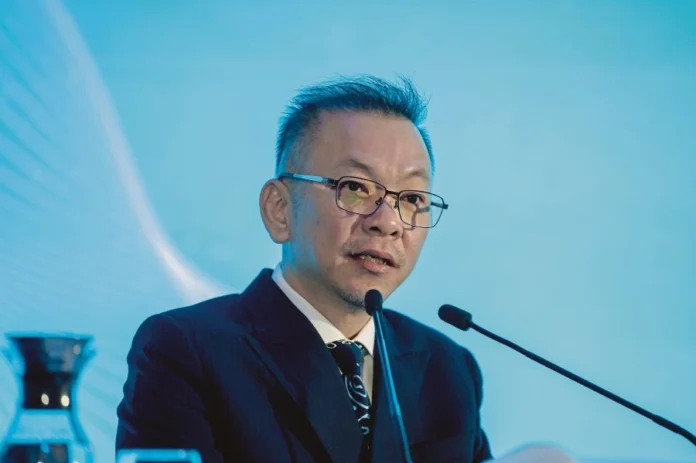
Professor Tan Jian Ping, director of the STARGAZE Sustainable Agriculture Research Centre at Xiamen University Malaysia, believes cooperation with Vietnam could accelerate this process by combining the strengths of both countries.
Vietnam has developed considerable expertise in rice cultivation, horticulture and aquaculture, while Malaysia has established capabilities in plantation technologies and biotechnology. Combining these strengths could create opportunities for research partnerships and commercially viable agricultural solutions.
Rice production is one area where Malaysia could benefit particularly from Vietnamese experience. Vietnam has developed an internationally competitive rice industry, supported by established production systems, agricultural research and extensive export networks.
Rather than attempting to replicate Vietnam’s existing model, Malaysia could adapt relevant technologies and farming practices to its own agricultural conditions. Such cooperation could help improve domestic production efficiency while supporting efforts to strengthen national food security.
However, the transition towards high-tech agriculture will not be straightforward. Small-scale farmers face significant financial barriers, particularly the initial cost of purchasing equipment and installing digital infrastructure. Limited internet connectivity in rural areas and an ageing agricultural workforce could also slow adoption.
Another concern is the difficulty of adapting technologies originally designed for large plantations to smaller farms. Without affordable equipment, accessible training and suitable financing arrangements, smaller producers risk being left behind as agricultural operations become increasingly digitalised.
Professor Tan has proposed establishing a Malaysia-Vietnam High-Tech Agriculture Innovation Centre to strengthen cooperation between universities, research institutions and private companies.
The proposed centre would initially connect researchers through joint government funding before expanding into pilot farms, agricultural data sharing and the commercial development of new technologies. Startups and agricultural businesses could also participate by testing solutions under real farming conditions.
The initiative could create opportunities for technology companies specialising in agricultural software, automated machinery, precision farming and biotechnology. It could also encourage greater investment in agricultural research and strengthen links between scientific institutions and commercial producers.
Looking ahead, cooperation between Malaysia and Vietnam could become a foundation for wider agricultural integration across Southeast Asia. If the proposed innovation centre moves forward, the two countries could eventually develop a shared platform for agricultural technologies involving other ASEAN members.
By 2030, the adoption of precision agriculture, artificial intelligence and automation is likely to become increasingly important to regional food production. Malaysia’s ability to expand these technologies will depend on investment, digital infrastructure and the availability of affordable solutions for smaller farmers.
For Vietnam, deeper cooperation offers an opportunity to expand its agricultural technology expertise beyond domestic markets while strengthening its position as a regional partner in food production and innovation.
Ultimately, the success of the partnership will depend less on the technologies themselves than on their practical application in the fields. For farmers in both countries, the real measure of progress will be whether smart agriculture can deliver higher yields, lower production costs and more reliable incomes.
If the two governments can translate research cooperation into accessible commercial solutions, their partnership could help shape a more productive and resilient agricultural sector across Southeast Asia.