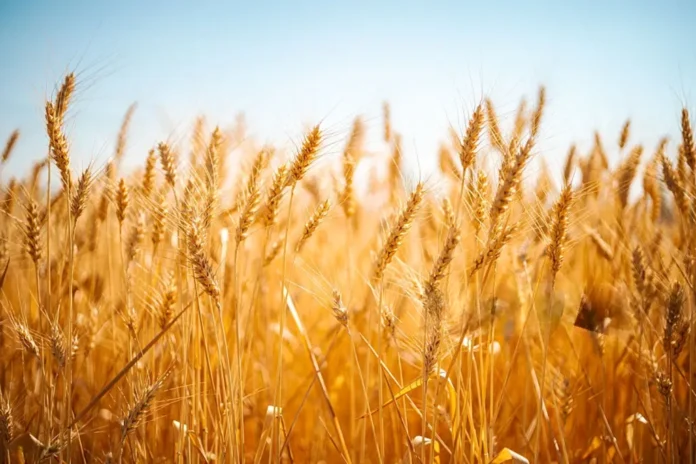
Arabfields, Adel Serai, Economic Analyst — Amid the ever-shifting sands of international commodity markets, Algeria has executed a monumental procurement strategy, snapping up an estimated 810,000 to 900,000 tonnes of soft wheat in a single international tender on December 3, 2025, marking one of the most substantial deals of the calendar year and surpassing early market expectations. This ambitious move, orchestrated to bolster national reserves well into 2026, reflects a calculated response to both domestic demands and global volatilities, with an average acquisition cost of $256 per tonne that bundles in freight expenses, ensuring economic viability in an era of fluctuating currencies and transport hurdles. Involving roughly ten trading firms, the transaction underscores Algeria’s growing prowess in negotiating favorable terms while weaving a web of supply diversity that spans the Black Sea basin, Argentine pampas, and Australian outback, a mosaic designed to shield against disruptions from any one corner of the globe.
The logistical blueprint for this influx is engineered with precision, dividing shipments into dual phases for arrival in the opening month of 2026, specifically from the first to the fifteenth of January, followed by the sixteenth to the twenty-eighth, allowing for a rhythmic distribution that dovetails with Algeria’s milling and distribution networks. Provisions for southern hemisphere origins grant an extra month’s lead time on departures, a safeguard against oceanic tempests or port congestions that have increasingly bedeviled trade lanes in recent years. This optional sourcing flexibility, far from a mere footnote, empowers Algerian importers to recalibrate in real-time, perhaps leaning heavier on Australian drought-hardy varieties if Black Sea yields succumb to geopolitical frictions, or tapping Argentine surpluses should El Niño patterns favor bountiful South American harvests. Such adaptability not only cements supply chains but also hints at a broader doctrinal shift, where Algeria transitions from reactive buyer to proactive architect of its agrarian fate, lessons drawn from the supply crunches of the early 2020s that sent wheat prices soaring and sparked bread riots in vulnerable economies.
Rooted in the imperatives of a nation where wheat forms the bedrock of sustenance, this haul addresses the arithmetic of a population cresting toward 45 million, with urban expansion and rising affluence driving up consumption of flour-based staples from tagines to baguettes. Domestic harvests, constrained by arid terrains and variable precipitation, typically satisfy less than half of annual requirements, rendering imports an indispensable artery for food security, a vulnerability that this tender mitigates by front-loading reserves ahead of potential 2026 shortfalls. Economic projections paint a canvas of moderate growth, with GDP anticipated to climb at 3 to 4 percent yearly through 2027, buoyed by energy exports yet challenged by diversification quests into renewables and tourism, scenarios that could amplify wheat demand as households allocate more to varied diets. Inflationary ghosts loom large, however, with commodity analysts forecasting wheat benchmarks to nudge upward by 5 to 7 percent in 2026 if Midwest American droughts persist or if Indo-Pacific trade pacts fragment supply blocs, prompting Algeria’s preemptive strike to lock in lower rates and avert retail price hikes that might otherwise erode subsidy frameworks already straining fiscal coffers.
Peering into the crystal ball of the coming decade, this procurement could catalyze transformative ripples across Algeria’s economic landscape, potentially stabilizing staple costs and fostering a buffer against exogenous shocks that enables bolder investments in agrotech innovations like desalination-irrigated farms in the Hoggar highlands. By 2028, envision a scenario where diversified imports depress food inflation to single digits, liberating budgetary resources for education and health initiatives that uplift a youthful populace, reducing the underemployment specter that hovers at 12 percent today. Trade pacts might blossom from these dealings, with Algerian hydrocarbons bartered for Australian grains in deals that sidestep volatile forex markets, projecting a 10 to 15 percent expansion in bilateral volumes by 2030 and insulating both parties from U.S. dollar hegemony. Yet, this optimism is tempered by climatic headwinds, as Mediterranean basin models predict a 15 to 25 percent rainfall deficit by the early 2030s, which might compel import escalations to 1.1 million tonnes annually if local yields stagnate below 2 tonnes per hectare, necessitating hybrid seed programs or precision agriculture to bridge the gap.
On the supplier horizon, Algeria’s eclectic sourcing is already reshaping export dynamics, evidenced by France’s waning grip on the market, where traditional Rouen-to-Algiers routes have dwindled, compelling Gallic traders to pivot toward Asian outlets amid a 15 percent volume erosion, as articulated by Soufflet Négoce’s Jean-François Lepy in underscoring the competitive squeeze. This realignment could intensify by 2027, with Black Sea players, rebounding from regional instabilities, undercutting bids to reclaim shares, possibly elevating Algeria’s average costs to $270 per tonne unless long-term accords are forged with emerging exporters like Kazakhstan. Domestically, the wheat windfall promises to invigorate peripheral economies, spurring a 8 to 12 percent surge in storage and processing infrastructure by mid-2026, from expanded silos in Blida to modern mills in Setif, which in turn could spawn export-oriented derivatives like couscous bound for European shelves, enhancing foreign exchange inflows projected to swell Algeria’s reserves by 5 percent yearly through the decade.
Environmentally, this strategic diversification aligns with global sustainability tides, favoring lower-emission routes from proximate southern suppliers over transoceanic hauls, potentially trimming Algeria’s carbon ledger by 10 percent in grain logistics by 2029 if electric rail integrations materialize. Socially, assured stocks might embolden nutritional reforms, blending wheat with indigenous sorghum or barley to combat dietary monotony and address anemia rates affecting a quarter of the population, paving the way for a healthier workforce that drives productivity gains in non-oil sectors. Regionally, Algeria’s playbook could inspire a Maghreb-wide consortium for collective bargaining, amalgamating tenders to commandeer better terms from exporters and avert famine echoes from Sahelian crises, forecasting a unified front by 2028 that buffers against Red Sea disruptions or Horn of Africa instabilities.
In essence, as the calendar flips to 2026 with vessels laden and granaries fortified, Algeria’s wheat initiative transcends mere transaction, embodying a forward-leaning ethos that marries prudence with ambition. This near-million-tonne masterstroke not only wards off immediate scarcities but sows the kernels for a resilient agro-economy, one poised to harvest dividends in stability, growth, and sovereignty amid the uncertainties of tomorrow’s world.