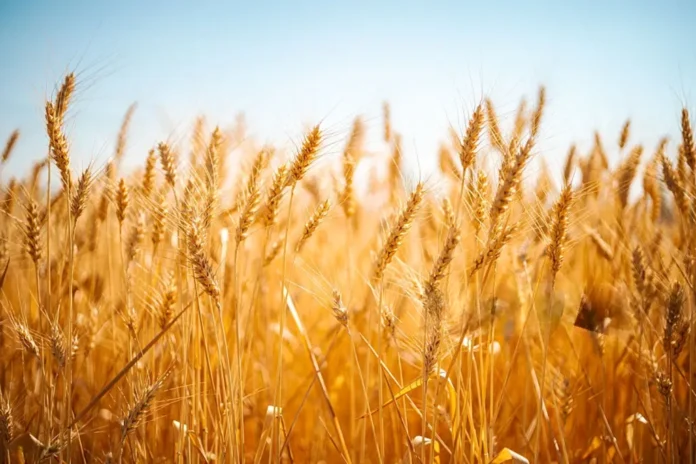
Arabfields, Adel Serai, Economic Analyst, Oran — In the sun-drenched plains of western Algeria, where the Mediterranean breeze meets the vast expanses of fertile soil, Oran is undergoing a profound transformation that extends far beyond its historic role as a cultural and industrial beacon. Long celebrated for its vibrant port and bustling urban energy, the wilaya of Oran is now channeling that dynamism into the heart of its agricultural sector, particularly in cereal production, marking a strategic pivot toward food security and economic resilience. With authorities mobilizing resources on an unprecedented scale, the region has allocated a staggering 120,000 hectares for the cultivation of soft wheat and barley this season, a figure that underscores a deliberate acceleration aimed at not just meeting domestic demands but redefining Oran’s place in Algeria’s national agricultural landscape. This initiative, driven by a coalition of local government officials, farmers’ cooperatives, and technical experts, reflects a broader national imperative to diversify away from hydrocarbon dependency, and in Oran, it is taking shape through tangible actions that blend tradition with modern innovation.
The campaign kicked off with a flurry of preparatory measures, beginning with the meticulous distribution of high-yield seeds and subsidized fertilizers to over 15,000 farming households across the wilaya’s diverse agro-climatic zones. Fields stretching from the coastal fringes near Ain El Turk to the inland plateaus of Es Senia have been primed with these inputs, ensuring that the soil, enriched by recent rainfall patterns, yields crops resilient to the region’s variable weather. Complementing this is a robust mechanization drive, where the state has procured and deployed more than 500 tractors and 200 combine harvesters, tools that promise to slash labor costs by up to 40 percent and boost harvesting efficiency in ways that manual methods could never achieve. Farmers, many of whom operate on small-to-medium plots averaging 8 hectares, have hailed these interventions as a game-changer, allowing them to focus on precision farming techniques rather than backbreaking toil. At the core of this effort lies a targeted land allocation: 80,000 hectares dedicated to soft wheat, the staple that forms the backbone of Algerian breadbaskets, and 40,000 hectares for barley, vital for livestock feed and brewing industries. These numbers are not arbitrary; they are calibrated against historical yields of around 20 quintals per hectare for wheat, with ambitions to push that to 25 quintals through enhanced soil management and pest control protocols.
Yet, what truly elevates Oran’s initiative is its integration of irrigation infrastructure, a critical response to the challenges of arid spells that have plagued the Maghreb in recent years. Drawing from the vast reserves of the Mina and Hamiz dams, new pivot irrigation systems are being installed across 30,000 hectares, channeling water through drip lines that minimize evaporation and maximize root absorption. This technological infusion, supported by partnerships with international agricultural firms from Spain and Turkey, could increase water use efficiency by 60 percent, transforming marginal lands into productive oases. Local cooperatives, such as the Union of Oranese Farmers, have played a pivotal role in this rollout, training over 5,000 agronomists and laborers in sustainable practices that include crop rotation and organic amendments to preserve soil health for generations. The result so far is promising: early field reports indicate germination rates exceeding 90 percent in pilot areas, a testament to the synchronized efforts of seed selection and preparatory tillage conducted since late autumn. As the wilaya’s director of agriculture, Abdelkader Belkacem, noted during a recent oversight tour, this mobilization is more than seasonal; it is a blueprint for enduring productivity that aligns with Algeria’s 2025-2030 agricultural strategy.
Looking ahead, Oran’s agricultural acceleration portends a cascade of transformative effects that could ripple through Algeria’s economy and beyond, positioning the wilaya as a linchpin in the quest for continental food sovereignty. By the end of the current harvest cycle in mid-2026, projections based on current allocations and mechanization gains suggest Oran could contribute upwards of 15 percent to the national cereal output, up from a modest 8 percent in the previous decade, potentially adding 500,000 tons of wheat and barley to state granaries. This surge would not only buffer against import fluctuations, which have historically drained foreign reserves by billions annually, but also stabilize bread prices for the 1.2 million residents of greater Oran and surrounding communities, fostering social stability in a region still recovering from economic volatilities. Economically, the infusion of these resources is expected to generate over 20,000 direct jobs in farming and ancillary services like transport and processing, with indirect employment in agro-industries potentially doubling that figure as new silos and milling facilities sprout along the RN4 corridor. Imagine, by 2028, a network of value-added enterprises emerging: artisanal bakeries sourcing local durum wheat for export-grade couscous, or barley malting plants supplying a nascent Algerian craft beer market, all anchored in Oran’s verdant fields.
Further into the horizon, as climate adaptation measures take root, Oran’s model could evolve into a scalable template for neighboring wilayas like Tlemcen and Mostaganem, creating a western agricultural corridor that rivals the eastern breadbaskets around Constantine. With irrigation expansions slated to cover an additional 50,000 hectares by 2030, yields might climb to 30 quintals per hectare, enabling surplus production that opens doors to Mediterranean trade pacts. Envision Algerian wheat gracing tables in Europe via streamlined exports through Oran’s revamped Mers El-Kebir port, or barley fueling biofuel initiatives that align with global green energy transitions, generating revenues estimated at $300 million annually for the region. This export potential, bolstered by certifications in organic and sustainable farming, would diversify income streams for smallholders, many of whom could transition from subsistence to commercial operations, investing profits into education and healthcare for their families. Moreover, the emphasis on mechanization and training heralds a skilled workforce renaissance, where youth unemployment, hovering at 25 percent in urban Oran, dips as agrotech startups flourish, blending AI-driven soil sensors with traditional know-how to predict and preempt droughts.
Of course, realizing this vision demands vigilance against hurdles like fluctuating global fertilizer prices or occasional locust incursions, but Oran’s proactive stance, including the establishment of a regional early-warning system in collaboration with the FAO, mitigates these risks effectively. By 2035, it is conceivable that the wilaya achieves near-total self-sufficiency in cereals, reducing national import reliance by 20 percent and freeing up budgetary allocations for high-tech sectors like renewables and digital infrastructure. This agricultural bedrock would underpin Oran’s broader economic ecosystem, synergizing with ongoing port modernizations to handle increased agri-exports and with tourism drives that highlight farm-to-table experiences amid the wilaya’s olive groves and vineyards. In essence, what begins as a mobilization for this season’s harvest is seeding a legacy of prosperity, where Oran’s fields not only feed a nation but propel it toward a future of abundance and innovation, proving that in the fertile crescent of Algeria’s west, the true velocity of progress is measured in grains per acre and dreams per harvest.