Arabfields, Meriem Senouci, Correspondent, Hanoï, Vietnam — The recent launch of the Vietnam International Financial Center in Ho Chi Minh City (VIFC-HCMC) marks a pivotal moment for Vietnam’s economic transformation, combining traditional finance with cutting-edge digital assets in a way that could reshape the nation’s role in global markets. At the heart of this ambitious project lies the creation of a multi-billion-dollar cryptocurrency fund and a groundbreaking plan to tokenize key agricultural commodities, such as coffee, pepper, rice, and carbon credits, allowing Vietnamese producers to trade directly on international platforms with unprecedented transparency and independence.
The VIFC-HCMC was officially inaugurated just before the Lunar New Year of the Horse in 2026, establishing a comprehensive economic ecosystem that integrates finance, fintech, maritime services, logistics, and aviation. This integrated framework is designed not merely to attract investment but to position Ho Chi Minh City as a leading international financial hub in Southeast Asia. The multi-billion-dollar digital currency fund, co-founded by prominent business leaders including representatives from FPT and other major Vietnamese conglomerates, will channel long-term capital into priority sectors such as technology, infrastructure, and energy, while simultaneously drawing substantial foreign inflows.
What sets this initiative apart, however, is its strategic focus on the tokenization of real-world assets, particularly Vietnam’s agricultural strengths. By digitizing ownership of commodities through blockchain technology, the center aims to create dedicated commodity exchanges where Vietnamese farmers and enterprises can buy and sell directly, bypassing traditional foreign intermediaries that have long dictated pricing. This shift promises transparent transactions, fairer profit margins, and the restoration of pricing power to Vietnam itself. Cooperation with established global exchanges, such as Nasdaq, is already envisioned as a key mechanism to integrate these tokenized assets into worldwide markets.
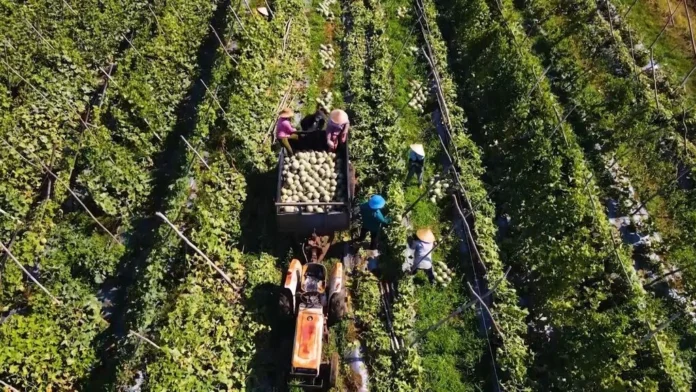
The implications for Vietnam’s agricultural sector are profound. As one of the world’s leading exporters of coffee, pepper, and rice, the country has historically been vulnerable to price volatility imposed by overseas traders and middlemen. Tokenization changes that dynamic entirely. Digital representations of physical commodities and carbon credits will enable instantaneous, secure, and low-cost transfers of ownership, opening direct access to international investors who previously faced high barriers to entry in emerging-market agriculture. Farmers in the Central Highlands growing robusta coffee, or pepper producers in the southeast, could soon see their harvests represented as tradable digital tokens, sold in real time to buyers anywhere in the world without the delays and fees associated with conventional supply chains.
Beyond commodities, the roadmap includes green securitization mechanisms and dedicated platforms for trading tokenized carbon credits. Vietnam’s growing participation in global carbon markets, combined with its vast agricultural land and reforestation potential, positions the country uniquely to capitalize on this emerging asset class. By converting environmental credits into liquid, blockchain-based tokens, the VIFC-HCMC could unlock significant new revenue streams for rural communities while supporting national sustainability goals.
Technology leaders involved in the project emphasize that digital innovation is the only viable path to sustained high growth. With Vietnam targeting annual GDP increases above ten percent for the next two decades, blockchain and tokenization are seen as essential tools for integrating the country into global value chains on more favorable terms. The readiness of existing blockchain infrastructure and international market structures means that only a well-defined pilot program now stands between concept and large-scale implementation.
Looking ahead, the successful rollout of tokenized agricultural assets could fundamentally alter Vietnam’s economic trajectory. Within the next five years, tokenized coffee and rice contracts might become standard instruments on global exchanges, attracting billions in institutional investment and stabilizing farmer incomes through transparent pricing mechanisms. As adoption grows, rural economies could experience a surge in capital access, enabling investments in modern farming techniques, irrigation systems, and climate-resilient crops. Over the longer term, Vietnam could emerge as a pioneer in real-world asset tokenization among emerging economies, setting a model for other agriculture-dependent nations in Southeast Asia and beyond.
The carbon credit component carries equally transformative potential. As global demand for verified carbon offsets accelerates, tokenized Vietnamese credits, backed by reforestation projects and sustainable farming practices, could command premium pricing on international markets. This would not only generate new income for landowners but also incentivize widespread environmental stewardship, aligning economic growth with climate commitments. By the early 2030s, the revenue from tokenized carbon assets alone could contribute meaningfully to national infrastructure funding, creating a virtuous cycle of green investment and development.
Moreover, the broader financial ecosystem fostered by the VIFC-HCMC is likely to draw increasing foreign direct investment into Ho Chi Minh City, reinforcing its status as a regional fintech leader. The multi-billion-dollar cryptocurrency fund will serve as a magnet for global capital seeking high-growth opportunities in a regulated yet innovative environment. As confidence in Vietnam’s tokenized asset framework builds, secondary markets for these digital commodities could flourish, providing liquidity that traditional agricultural finance has never achieved.
In the coming decade, Vietnam’s agricultural exporters may find themselves competing not just on volume and quality, but on the efficiency and transparency of their digital marketplaces. Farmers who once relied on seasonal harvests and opaque pricing could transition to sophisticated participants in global finance, hedging risks through tokenized derivatives and accessing credit against digital asset holdings. This democratization of market access has the potential to narrow rural-urban income gaps and accelerate poverty reduction across provinces long dependent on commodity exports.
Ultimately, the vision driving the VIFC-HCMC extends far beyond immediate financial gains. It represents a strategic bet that blockchain technology can elevate an emerging economy into a position of genuine market influence. If the pilot programs succeed and international partnerships deepen, Vietnam could regain control over the pricing of its most vital exports, secure sustainable growth trajectories well above global averages, and establish Ho Chi Minh City as an indispensable node in the next generation of global finance. The convergence of agriculture, digital assets, and environmental credits within this single initiative suggests a future where economic development, technological innovation, and sustainability reinforce one another in ways previously thought impossible.