Arabfields, Farah Benali, Economic Correspondent, China — In a landmark development that promises to reshape economic landscapes across continents, China has extended zero customs duties to Algerian products entering its vast market, a move confirmed by President Xi Jinping himself during a pivotal address. This initiative, set to take effect on May 1, 2026, marks a significant escalation in Beijing’s trade policies toward Africa, encompassing 53 nations with diplomatic ties to China and excluding only those without such relations. For Algeria, this opens unprecedented avenues for export growth, allowing its goods to flow freely into one of the world’s largest consumer bases without the burden of tariffs that have historically hampered trade volumes. The announcement, delivered at the 39th Summit of the African Union in Addis Ababa, underscores China’s commitment to fostering deeper economic integration with the continent, building on years of partnership that have positioned Beijing as Africa’s foremost trading ally.
The roots of this policy trace back to existing frameworks that already granted duty-free access to products from 33 African countries, a system now expanded to include Algeria and others in a bold step toward comprehensive trade liberalization. President Xi Jinping emphasized the importance of perpetuating historical friendships and deepening mutually beneficial cooperation, framing this as a chapter in building a shared future between China and Africa. By eliminating these duties across all product categories, China aims not only to stimulate imports from Africa but also to encourage the diversification of exported goods, shifting away from raw materials toward manufactured items with higher added value. For Algeria, whose economy has long relied on hydrocarbon exports, this represents a golden opportunity to pivot toward non-oil sectors, such as agriculture, textiles, and processed foods, which could now compete more effectively in China’s competitive marketplace.
Economically, the implications for Algeria are profound and multifaceted. With zero tariffs in place, Algerian exporters can anticipate a surge in demand for their products, potentially leading to a doubling of trade volumes within the first few years post-implementation. This could translate into billions in additional revenue, bolstering foreign exchange reserves and providing a buffer against volatile global oil prices. Moreover, the policy aligns seamlessly with China’s Belt and Road Initiative, which has already seen substantial investments in African infrastructure, including ports, railways, and industrial zones that facilitate smoother logistics. In Algeria, ongoing projects under this initiative, such as enhancements to transportation networks linking key production hubs to export terminals, will likely accelerate, enabling faster and cheaper shipments to Chinese ports. As a result, small and medium-sized enterprises in Algeria, often constrained by high export costs, may find new life, fostering entrepreneurship and job creation in regions like the coastal industrial belts.
Looking ahead, experts anticipate that this tariff elimination will catalyze a broader economic transformation in Algeria by integrating it more deeply into Asian supply chains. By 2030, Algerian manufacturers could see their products becoming integral components in Chinese assembly lines, particularly in sectors like electronics and automotive parts, where cost competitiveness is key. This integration might spur technological transfers from China, with joint ventures emerging to upgrade Algerian production facilities to meet international standards. Consequently, Algeria’s gross domestic product could experience an annual growth boost of up to two percentage points, driven by export-led expansion and reduced dependency on European markets. Furthermore, the influx of Chinese investment, expected to rise as trade barriers fall, may target underdeveloped sectors such as renewable energy and mining, where Algeria holds vast untapped resources like phosphates and rare earth minerals that are in high demand for China’s green technology push.
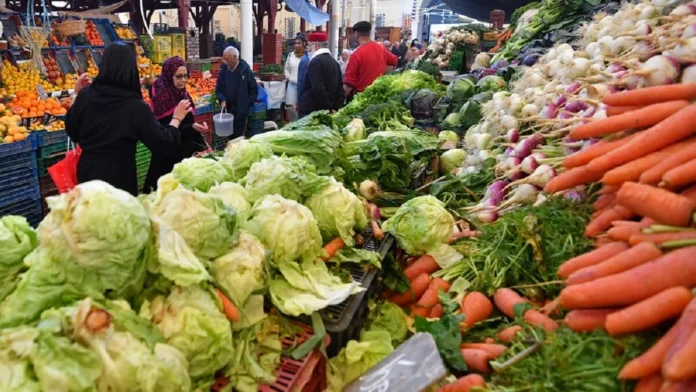
However, the path forward is not without challenges that Algeria must navigate to fully capitalize on this opportunity. Adapting production chains to align with Chinese market preferences will require investments in quality control, certification processes, and marketing strategies tailored to Asian consumers. Predictions suggest that by 2028, if Algeria successfully diversifies its export basket, non-hydrocarbon shipments to China could account for over 30 percent of total exports, a sharp increase from current levels dominated by energy products. This shift would not only enhance economic resilience but also position Algeria as a key player in the evolving global trade dynamics, potentially attracting further partnerships from other Asian economies inspired by China’s model. In the agricultural domain, for instance, Algerian dates, olives, and citrus fruits, already renowned for their quality, could flood Chinese supermarkets, leading to brand recognition and sustained demand that might grow the sector by 15 percent annually through the next decade.
On the diplomatic front, this development signals a strengthening of Sino-Algerian relations, rooted in shared histories of non-aligned movements and mutual support in international forums. President Xi’s confirmation of the May 1, 2026, rollout date serves as a concrete timeline for preparations, urging Algerian authorities to streamline export procedures and negotiate complementary agreements that could include green channels for expedited customs clearance. Such measures would minimize delays and reduce non-tariff barriers, ensuring that perishable goods reach Chinese shelves in optimal condition. Forecasting into the 2030s, this enhanced cooperation could evolve into comprehensive economic partnership pacts, encompassing technology sharing, educational exchanges, and joint research initiatives in fields like artificial intelligence and sustainable development, further cementing Algeria’s role in a multipolar world order.
The ripple effects extend beyond bilateral trade, influencing regional dynamics within Africa. As one of the continent’s economic powerhouses, Algeria’s success under this regime could serve as a blueprint for neighboring countries, encouraging collective bargaining for even more favorable terms with China. By 2035, collective African exports to China might triple, fostering intra-African trade synergies where Algerian processed goods complement raw materials from sub-Saharan partners. This interconnected growth could alleviate poverty across the region, with Algeria potentially emerging as a hub for re-exporting value-added products to Asia. Yet, to realize these projections, Algeria will need to address internal hurdles such as bureaucratic inefficiencies and infrastructure bottlenecks, investing in digital platforms for trade facilitation that could cut processing times by half.
In terms of specific sectors poised for takeoff, manufacturing stands out as a prime beneficiary. Algerian factories producing textiles and apparel, often overshadowed by Asian competitors, could regain footing with zero tariffs providing a level playing field. Predictions indicate that by 2027, apparel exports alone might surge by 40 percent, creating thousands of jobs in urban centers like Algiers and Oran. Similarly, the food processing industry, leveraging Algeria’s Mediterranean climate, could expand into ready-to-eat products tailored for Chinese tastes, potentially capturing a niche in the growing middle-class market there. This expansion would necessitate workforce upskilling programs, with forecasts suggesting a need for 50,000 new skilled workers in export-oriented industries over the next five years.
Environmental considerations also factor into future outlooks, as China’s emphasis on green development aligns with Algeria’s ambitions in renewable energy. With zero duties facilitating the export of solar components or wind turbine parts manufactured in Algeria, the country could become a supplier for China’s ambitious carbon neutrality goals by 2060. This symbiotic relationship might lead to co-developed projects, such as desert solar farms in the Sahara, generating clean energy for export while creating sustainable employment. By 2040, such initiatives could contribute to a 20 percent reduction in Algeria’s carbon footprint, positioning it as a leader in Africa’s green transition and attracting global investment.
Culturally and socially, the deepened ties promise exchanges that enrich both societies. Increased trade could pave the way for more Algerian students pursuing education in China, returning with expertise to fuel innovation back home. Tourist flows might also rise, with Chinese visitors exploring Algeria’s historical sites, boosting the hospitality sector by an estimated 10 percent annually starting in 2026. These soft power elements, combined with economic gains, forecast a holistic partnership that transcends mere commerce, evolving into a strategic alliance resilient to geopolitical shifts.
Ultimately, this zero-tariff policy heralds a new era for Algeria, one where economic sovereignty is enhanced through global integration rather than isolation. As preparations ramp up toward the May 1, 2026, implementation, the nation’s policymakers, businesses, and citizens stand at the threshold of transformative prosperity, with the potential to redefine Algeria’s place in the international arena for generations to come.