Arabfields, Nadia Fatima Zahra, Arabfields, Yamoussoukro, Ivory Coast — Côte d’Ivoire has long recognized agriculture as a cornerstone of its national economy, where the sector accounts for approximately 15 percent of gross domestic product and provides employment to about 46 percent of the active population. This vital industry underpins both rural livelihoods and overall economic stability, yet it faces persistent challenges related to the management of harvested produce. Among these, post-harvest losses represent a critical issue that diminishes available food supplies, erodes farmer incomes, and undermines efforts to achieve greater food security across the country. In response to this longstanding concern, a substantial new project has been launched to construct 80 agricultural warehouses distributed throughout the national territory, representing a total investment of 50 billion CFA francs, equivalent to 90.3 million United States dollars. This initiative, funded by an international financial consortium based in Cape Town with Australian origins, marks a determined effort to address inefficiencies in storage and preservation that have historically plagued the sector.
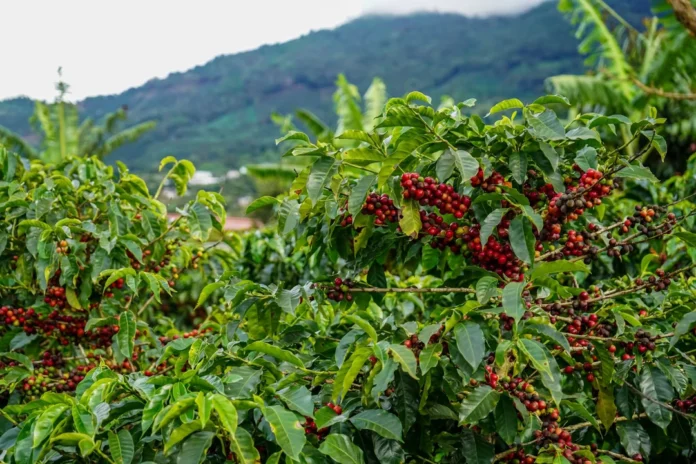
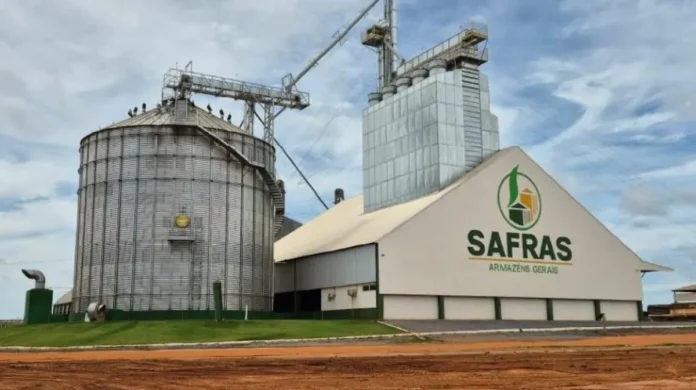
The project officially commenced on February 14 with groundbreaking activities that signal a new phase in agricultural infrastructure development. At the forefront of this endeavor stands the first warehouse, situated on a two-hectare site in Toutoubré near Gagnoa, designed with a storage capacity of 9,000 tons. This facility will focus primarily on key commodities including cocoa, coffee, cashew nuts, and various food crops, enabling improved handling from the point of harvest through to market readiness. Such dedicated spaces are essential for maintaining product quality under controlled conditions that minimize exposure to environmental factors such as humidity, pests, and temperature fluctuations, which often accelerate deterioration in traditional open-air or rudimentary storage methods.
The Union of Agricultural Cooperative Societies of Côte d’Ivoire, encompassing 157 cooperatives and serving around 70,000 producers nationwide, plays a central role in implementing this venture. As articulated by Gomé Gnohité Hilaire, Director General of the organization, these warehouses will facilitate the mobilization of financing to acquire members’ output, ensure storage in superior environments, and thereby curtail post-harvest losses. The overarching aim centers on elevating the standards of conservation, product enhancement, and commercialization for agricultural goods, thereby transforming potential waste into marketable assets that generate sustainable returns for farming communities.
This development builds upon prior governmental and partnership-driven measures to tackle the same challenges. For instance, an agreement reached in March 2024 with a Canadian technology firm outlined plans for intelligent logistics platforms powered by renewable energy sources, with an allocated budget of 178 million United States dollars. Together, these complementary actions illustrate a multifaceted strategy that integrates physical infrastructure with advanced technological solutions to create a more resilient supply chain. By addressing storage deficits at scale, the current project is positioned to yield immediate operational improvements for producers who have long grappled with the inability to preserve harvests effectively between seasons.
Post-harvest losses in sub-Saharan Africa, including Côte d’Ivoire, have been quantified through established international assessments as reaching approximately 20 percent for cereals, between 40 and 50 percent for root crops, fruits, and vegetables, 27 percent for oilseeds, meat, and milk, as well as 33 percent for fish. These figures reflect not merely quantitative reductions in volume but also qualitative declines that affect nutritional content, introduce potential health risks from contaminated or spoiled items, and result in substantial economic shortfalls when produce fails to reach consumers in acceptable condition or loses appeal in competitive markets. In the Ivorian context, where cocoa and cashew nuts serve as major export earners while food crops sustain domestic needs, even modest reductions in such losses could translate into meaningful gains in available supply and revenue streams.
The warehouses are engineered to support a range of value-adding activities, from drying and sorting to temporary holding that aligns supply with peak demand periods. For cocoa farmers, who contribute significantly to global production, enhanced storage will help preserve bean quality during the interval between harvest peaks and international shipping schedules, potentially commanding higher prices on world markets. Similarly, coffee and cashew operations stand to benefit from reduced spoilage that currently forces distress sales at lower rates. Food crops, vital for household consumption and local trade, will gain from facilities that extend shelf life and enable better distribution networks, thereby stabilizing prices and availability in both urban and rural areas.
Beyond the direct technical advantages, the initiative carries broader socioeconomic implications. With thousands of producers integrated through cooperatives, improved conservation practices are expected to strengthen collective bargaining power, allowing groups to secure better financing terms and negotiate more favorable market contracts. Construction and ongoing maintenance of the 80 sites will also generate employment opportunities in engineering, logistics, and oversight roles, injecting additional economic activity into regions often characterized by limited industrial presence. This ripple effect aligns with national goals to modernize the agricultural landscape while fostering inclusive growth that reaches smallholder farmers who form the backbone of production.
Environmental considerations further underscore the project’s relevance. By curbing waste through superior storage, the effort contributes to resource efficiency, reducing the pressure on land and inputs required to compensate for lost harvests. In an era of climate variability, where erratic weather patterns can exacerbate post-harvest vulnerabilities, such infrastructure provides a buffer that enhances overall system resilience. Producers will be better equipped to adapt to fluctuating conditions, knowing that their yields can be safeguarded rather than sacrificed to spoilage.
Looking to the future, projections grounded in the project’s scale and the documented loss rates suggest substantial transformations ahead. With the deployment of 80 warehouses serving 70,000 producers and covering major production zones, post-harvest losses in targeted commodities could realistically decline by 30 to 50 percent within the initial five years of operation, based on the capacity enhancements and improved handling protocols introduced. This reduction would effectively increase the marketable surplus by an equivalent proportion, adding thousands of tons of usable output annually without requiring expanded cultivation areas. For an economy where agriculture already supports nearly half the workforce, such gains could stabilize or even elevate the sector’s contribution to gross domestic product beyond current levels, countering anticipated relative declines as other industries expand.
By 2030, the cumulative impact is foreseen to bolster food self-sufficiency metrics, particularly for staple crops, potentially reversing emerging supply-demand imbalances projected in regional forecasts. Farmer incomes, currently constrained by losses that erode up to half the value of certain harvests, stand to rise proportionally, with cooperative members experiencing average revenue uplifts that enhance household stability and reinvestment capacity in modern inputs such as improved seeds or equipment. Export revenues from cocoa, coffee, and cashew could expand as higher-quality, consistently available volumes attract premium buyers, reinforcing Côte d’Ivoire’s position in global value chains and drawing further international investment into allied processing industries.
Over the longer term, extending to 2040 and beyond, sustained implementation across the network of warehouses is anticipated to foster a more integrated agro-industrial ecosystem. As storage infrastructure matures alongside complementary technologies from parallel initiatives, overall post-harvest efficiency may approach levels seen in more advanced agricultural nations, where losses hover below 10 percent. This evolution would support population growth demands, mitigating the risk of import dependency and associated foreign exchange pressures. Moreover, the model established here could inspire replication in neighboring countries facing analogous challenges, positioning Côte d’Ivoire as a regional leader in innovative loss-reduction strategies.
The initiative also promises advancements in nutritional outcomes and public health. With diminished spoilage, access to higher-quality produce will improve, particularly in underserved areas, contributing to better dietary diversity and reduced incidence of foodborne illnesses. Educational components likely embedded in cooperative training programs will disseminate best practices in handling and storage, empowering generations of farmers with knowledge that sustains long-term productivity.
In essence, this 90-million-dollar endeavor represents more than mere construction, it embodies a strategic investment in the foundational elements of agricultural prosperity. As the warehouses progressively come online and demonstrate their efficacy through measurable reductions in waste and increases in value retention, Côte d’Ivoire is poised to realize a future where its abundant harvests translate more fully into economic vitality, social equity, and enduring food security. The path forward, illuminated by data on current constraints and the ambitious scope of this project, points toward a resilient sector capable of meeting both domestic aspirations and international opportunities with renewed strength.