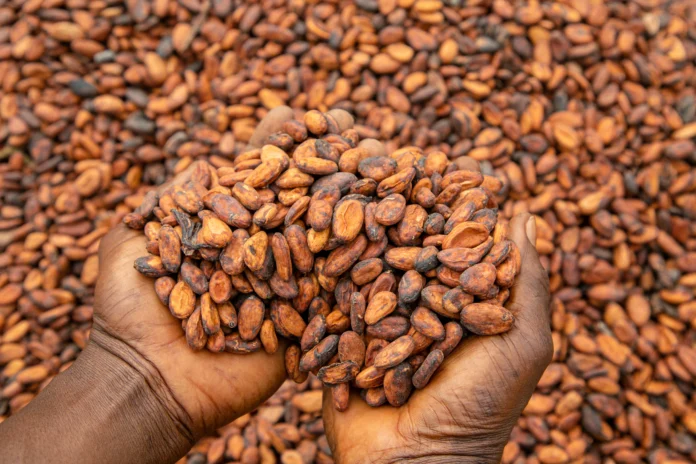
Arabfields, Sophia Daly, Financial Analyst specialized in Agriculture and Futures Markets — The recent sharp decline in global cocoa prices has struck a devastating blow to producers throughout Africa, with the effects proving particularly severe for farmers in the continent’s leading exporting countries. This downturn, which has unfolded rapidly in early 2026, represents a sledgehammer impact on the livelihoods of those who depend on cocoa cultivation for their income and survival. On March 5, Ivorian authorities announced a substantial reduction in the price paid to growers, adjusting it downward by nearly sixty percent to one thousand two hundred CFA francs per kilogram. The move came amid an oversupply crisis and falling international market values, forcing an earlier than usual launch of the mid-crop season in an attempt to stimulate sales and ease mounting stockpiles.
Global cocoa futures have dropped to approximately three thousand one hundred dollars per metric ton in March 2026, marking a loss of nearly half their value since the start of the year. This follows a dramatic surge that saw prices reach peaks above twelve thousand dollars per ton in 2024, driven by earlier supply constraints linked to unfavorable weather patterns and disease outbreaks in West Africa. The recovery in production across key regions has now reversed that trend, creating ample supplies that have outpaced demand from chocolate manufacturers. In the current 2025-2026 season, analysts estimate a global surplus of three hundred sixty five thousand metric tons, with Ivory Coast projected to output one point seven eight million tons and Ghana contributing six hundred fifty thousand tons. These figures underscore the scale of the imbalance that continues to weigh heavily on market prices and producer revenues.
The announcement by Ivorian authorities has sent shockwaves through farming communities, where the previous farmgate price of two thousand eight hundred CFA francs per kilogram had offered a brief period of optimism following the highs of recent seasons. The new rate equates to roughly two dollars per kilogram, slashing earnings for many smallholder farmers who form the backbone of the industry. With cocoa representing a critical source of household income, this adjustment translates directly into reduced purchasing power for essentials such as food, education, and healthcare. Many producers now face the prospect of unsold beans accumulating on their farms, as export volumes struggle to keep pace with the expanded harvests. The situation mirrors broader challenges across the sector, where the rapid shift from scarcity to surplus has exposed the vulnerability of economies reliant on a single commodity.
In Ghana, similar pressures have compelled regulators to implement comparable measures, including a significant cut in the fixed price paid to farmers earlier in the season. The Ghanaian cocoa board has also taken steps to tighten spending and reduce operational costs in response to revenue shortfalls from unsold stocks estimated at around fifty thousand tons. These actions reflect the shared difficulties confronting the two nations, which together account for approximately sixty percent of worldwide cocoa output. Farmers in both countries report mounting frustration as the benefits of the earlier price boom prove fleeting, with many now questioning the sustainability of their long-term reliance on the crop. The income drop not only affects immediate family needs but also ripples outward, limiting investments in farm maintenance, disease control, and new plantings that could otherwise support future productivity.
The economic implications extend far beyond individual households to the national level in these producer nations. Cocoa exports have long served as a cornerstone of foreign exchange earnings, funding infrastructure projects and public services in rural areas where alternative employment opportunities remain scarce. With prices now subdued, government budgets face strain as regulators absorb losses from unsold inventories and adjust support mechanisms for the sector. This has prompted discussions around potential reforms to the marketing system, including greater alignment of farmgate prices with international benchmarks and efforts to diversify buyer networks. Such changes aim to reduce dependence on a handful of multinational traders while encouraging more direct sales to end users, yet they arrive at a time when farmer confidence is already eroded by the ongoing volatility.
Across other African cocoa-growing regions, the price collapse has compounded existing vulnerabilities, although the scale remains most pronounced in the West African heartland. Smaller producers in neighboring countries observe the developments with concern, recognizing that any sustained low-price environment could discourage regional investment and slow the adoption of improved farming practices. The transition from the exceptional highs of 2024 and 2025 to the current realities has highlighted structural weaknesses in the supply chain, including aging plantations, limited access to financing, and exposure to climate variability. Farmers who expanded operations or revived older trees during the boom period now contend with diminished returns, forcing difficult decisions about crop diversification or even temporary abandonment of cocoa fields in favor of more stable alternatives.
Looking ahead, market data point to continued downward pressure on prices throughout the remainder of 2026 and into subsequent seasons. The projected surpluses for both the 2025-2026 and 2026-2027 periods, fueled by improved weather conditions and the lagged effects of earlier high-price incentives on planting decisions, are expected to rebuild global stockpiles and sustain the bearish trend. Analysts anticipate that cocoa futures may trade within a range of two thousand five hundred to four thousand dollars per metric ton for much of 2026, assuming normal harvests and no major disruptions from disease or extreme weather. This outlook rests on the observed recovery in West African yields, combined with softening demand as chocolate producers respond to elevated costs by reformulating recipes or seeking substitute ingredients. While some longer-term projections suggest a potential stabilization at levels above pre-2024 averages once the market rebalances, the immediate trajectory for 2026 remains one of subdued values that will likely prolong the financial strain on producers.
The interplay between supply recovery and demand moderation creates a complex environment for forecasting. Favorable rainfall patterns have supported stronger crop outlooks in Ivory Coast and Ghana, yet the risk of overproduction looms if new plantings from the boom years mature without corresponding growth in consumption. Chocolate manufacturers, having absorbed higher input costs in prior seasons, now benefit from lower prices but continue to monitor volatility closely, with some shifting toward alternative sourcing or reduced cocoa content in products. For African farmers, this dynamic translates into persistent uncertainty, as any further price erosion could accelerate the shift away from cocoa toward other agricultural activities or urban migration. Governments in the region are therefore exploring ways to buffer the impact, including targeted support programs and incentives for sustainable practices that could enhance resilience in future cycles.
In Ivory Coast specifically, the earlier commencement of the mid-crop season represents a proactive step to clear excess supply, yet it also underscores the urgency of the situation. The decision to advance the timeline by a full month allows for quicker market adjustments but places additional pressure on farmers already operating with thinner margins. Similar adaptations in Ghana illustrate a coordinated regional response to the crisis, though the effectiveness of these measures will depend on the evolution of international demand and the avoidance of further supply gluts. Broader industry observers note that the current price environment, while challenging, may ultimately encourage greater diversification and investment in value-added processing within Africa, potentially laying the groundwork for a more balanced sector over the coming decade.
The human dimension of this price plunge cannot be overstated, as entire communities tied to cocoa production grapple with the consequences of decisions made far from their fields. Families that celebrated record earnings in recent years now confront reduced harvests sold at fractions of previous rates, testing their capacity to weather the storm. Children may see educational opportunities curtailed, while health and nutrition standards slip amid tighter household budgets. These social repercussions compound the economic ones, creating a cycle that threatens to undermine progress in rural development across West Africa. Policymakers and industry stakeholders recognize the need for holistic strategies that address not only pricing mechanisms but also farmer training, climate adaptation, and market access to prevent long-term decline in the sector.
As the 2026 season progresses, the combination of ample global supplies and cautious buyer behavior is likely to keep prices under pressure, reinforcing the initial assessment of a severe setback for producers. Projections grounded in current surplus estimates and production forecasts suggest that without significant shifts in consumption patterns or unexpected supply shortfalls, the market will remain challenging through the year. This sustained environment calls for adaptive measures from both governments and farmers to safeguard the industry’s future viability. The path forward involves balancing immediate relief with structural reforms that can mitigate the boom-and-bust cycles characteristic of commodity markets. For African cocoa producers, the current downturn serves as a stark reminder of the sector’s inherent volatility and the imperative to build greater resilience against such shocks.
The situation continues to evolve, with ongoing monitoring of harvest conditions and international trade flows providing the basis for refined outlooks. In the near term, the data indicate that prices will likely hover in the lower range, placing ongoing demands on producers to optimize costs and explore supplementary income sources. Over time, the accumulated effects of these adjustments may foster a more stable equilibrium, yet the transition period in 2026 promises to test the endurance of those at the heart of the cocoa economy. Through careful management and targeted interventions, the region holds the potential to navigate this phase and emerge with a strengthened foundation for sustainable production in the years ahead.