Arabfields, Meriem Senouci, Correspondent, Hanoï, Vietnam — On April 25, traders across the Mekong Delta reported steady activity in the rice market, with prices for export-oriented raw materials showing further gains amid cautious buying patterns.
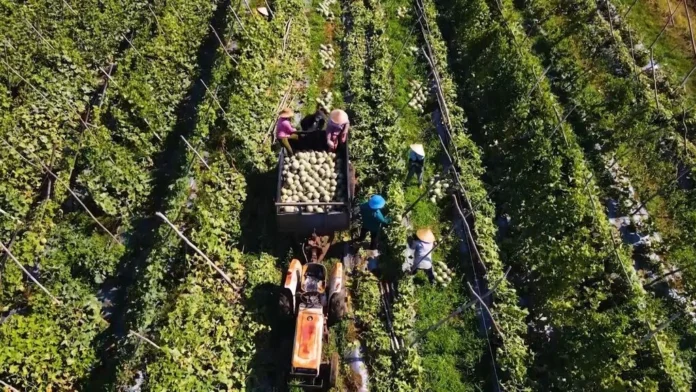
In key provinces such as An Giang and Dong Thap, merchants noted that supplies of fresh paddy remained limited as many farmers focused on ongoing harvests. Warehouse operators purchased selectively, prioritizing higher-quality lots suitable for international shipments. One trader in Sa Dec described the pace as measured, with arrivals occurring sporadically and most transactions involving established clients rather than new buyers.
Domestic rough rice prices for export varieties strengthened notably. IR 504 climbed by approximately 150 VND per kilogram, reaching a range of 8,400 to 8,450 VND per kilogram in several areas. CL 555 advanced by around 200 VND per kilogram, trading between 8,600 and 8,800 VND per kilogram. Other varieties, including OM 18 and Dai Thom 8, exhibited modest fluctuations but generally held firm or edged higher, reflecting sustained demand from processors preparing shipments abroad.
Fresh paddy prices stayed relatively stable. OM 18 paddy traded in the range of 6,000 to 6,100 VND per kilogram, while IR 50404 hovered between 5,400 and 5,500 VND per kilogram. Retail rice prices in local markets showed little movement, with premium fragrant varieties such as Nang Nhen commanding up to 28,000 VND per kilogram and standard white rice available around 16,000 VND per kilogram.
On the export front, Vietnamese rice maintained competitive positioning in Asian markets. According to industry updates, 5 percent broken fragrant rice was quoted between 490 and 500 USD per tonne, while jasmine rice ranged from 486 to 490 USD per tonne. These figures represented slight improvements compared with earlier in the month, supported by active demand from major importers.
Vietnam’s rice exports demonstrated resilience in the early part of 2026. Data from the first two months indicated shipments reached about 1.3 million tonnes, marking a 5 percent increase in volume over the same period in the prior year, even as overall value adjusted to market conditions. The Philippines emerged as a leading destination, absorbing significant volumes and contributing to upward pressure on select fragrant categories.
Looking ahead, analysts project that Vietnam could export approximately 7.73 million tonnes of rice throughout 2026, drawing from an estimated 15.46 million tonnes of marketable paddy. Roughly 75 percent of this volume is expected to consist of high-quality and fragrant rice, underscoring a strategic shift toward premium segments. Exports in the first half of the year are anticipated to exceed 4 million tonnes, with peaks aligned to major harvest cycles in the Mekong Delta. By the second half, shipments may approach 3.7 million tonnes, concentrated in the traditional high-output months of July through September.
Industry observers highlight that global factors, including supply dynamics in competing markets and logistical considerations, will continue to influence price movements. Vietnamese exporters appear well-positioned to navigate these conditions by emphasizing quality and reliability, potentially stabilizing revenues even amid moderated overall export volumes in the longer term.
Traders and farmers alike expressed measured optimism, noting that consistent demand from key partners could sustain the recent gains in raw material prices while supporting rural livelihoods in the delta region. Market participants will monitor developments closely in the coming weeks as the harvest progresses and new tenders emerge.