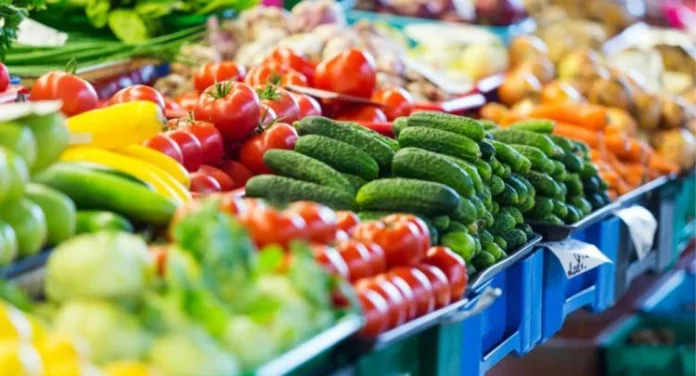
Arabfields, Maleeka Kassou, East, West & Central Africa Agriculture Correspondent — In February 2026, the cost of essential food items in Togo demonstrated marked regional variations, reflecting the fragmented nature of local markets and unequal supply chains that continue to influence household budgets throughout the country. A kilogram of tomatoes, for instance, sold for 992 CFA francs in Lomé, while the same quantity fetched only 529 CFA francs in Kara and 471 CFA francs in the Savanes region, illustrating more than a doubling of prices between the capital and northern areas. These differences underscore how geography, proximity to production zones, and transportation expenses shape daily affordability for millions of Togolese citizens, creating distinct economic realities depending on where families reside.
Cereal staples, which form the backbone of many diets, exhibited a consistent pattern whereby prices declined noticeably farther from the capital. Imported long-grain rice reached 636 CFA francs per kilogram in the Greater Lomé area, compared to just 415 CFA francs in the Plateaux-Est, a gap exceeding 50 percent that translates into substantial monthly savings for households in more remote zones. Similarly, white maize traded at 231 CFA francs per kilogram in Lomé, against 143 CFA francs in Kara and 147 CFA francs in the Savanes. Such savings become particularly meaningful for families relying on several kilograms of these grains each week, easing pressure on limited incomes in agricultural heartlands where direct farm-to-market access minimizes intermediary and logistical costs.
Fresh vegetables followed a more nuanced trajectory, with certain items reversing the urban premium observed in cereals. Green peppers commanded 1356 CFA francs per kilogram in the Plateaux-Est, far above the 919 CFA francs recorded in Lomé or the 624 CFA francs in the Savanes, highlighting localized harvest cycles and distribution networks that favor specific regions at different times. Yams, another dietary cornerstone, cost 451 CFA francs per kilogram in the capital but only 338 CFA francs in the Centrale region. These fluctuations reveal how seasonal availability and regional specialization in crop cultivation continue to dictate affordability, allowing rural consumers in production areas to benefit from fresher supplies at lower rates while urban dwellers absorb higher markups.
Traditional palm oil, known locally as zomi, presented one of the clearest examples of northward price escalation. The product sold for 1621 CFA francs per liter in Lomé yet climbed to 2382 CFA francs in the Savanes and 2364 CFA francs in Kara, a premium driven by its southern origins and the accumulating transport burdens imposed on distant markets. For households in the north that depend on this staple for cooking, the elevated cost represents an ongoing challenge that offsets some advantages gained from cheaper local grains, thereby illustrating the complex interplay between production geography and national market integration.
Proteins such as meat and fish displayed equally pronounced disparities. Beef reached its highest level in Lomé at 3003 CFA francs per kilogram, dropping to 2154 CFA francs in the Savanes and offering northern consumers a notable reduction that supports greater protein intake within constrained budgets. Smoked chinchard, or akpala, followed a different pattern, priced at 3596 CFA francs per kilogram in the capital but rising to 4269 CFA francs in the Maritime region and 3924 CFA francs in the Savanes, where extended distribution routes from coastal sources inflate final costs despite the product’s marine provenance. These variations affect nutritional choices across demographics, with urban families facing steeper expenses for animal proteins even as rural areas sometimes encounter higher charges for imported or processed varieties.
In contrast to food items, administered prices for fuels and cooking gas maintained complete uniformity nationwide, underscoring deliberate policy efforts to shield remote populations from logistical penalties. Gasoline stood at 680 CFA francs per liter, diesel at 695 CFA francs per liter, a small gas cylinder at 4740 CFA francs, and a large one at 9875 CFA francs, regardless of location from Lomé to Kara or the Savanes. This standardization prevents compounded disadvantages in landlocked or northern zones, preserving a baseline equity in energy costs that indirectly supports food preparation and transport within households.
The persistence of these regional price gaps carries profound implications for purchasing power and living standards. Salaries in the capital generally exceed those elsewhere, yet the elevated cost of staples erodes that advantage, compelling urban residents to allocate larger shares of income toward basic sustenance. In northern and rural districts, lower prices for locally produced cereals and certain vegetables enhance real income, yet reliance on distant goods such as palm oil or specific proteins can still strain resources, particularly during lean seasons. Overall, the disparities highlight how market fragmentation perpetuates uneven economic outcomes, influencing everything from dietary diversity to savings capacity and regional development trajectories.
Looking ahead through the remainder of 2026 and into subsequent years, current patterns combined with prevailing macroeconomic stability point toward continued but gradually moderating price differences. With national inflation remaining subdued and agricultural output expanding in line with recent trends, overall food costs are projected to rise by approximately 1.5 percent on average by December 2026, maintaining the core regional structure observed in February data. Rice prices, for example, could see the Lomé premium narrow modestly to around 45 percent above Plateaux-Est levels if ongoing investments in rural roads reduce transport margins by an estimated 10 percent, allowing northern producers greater direct access to southern demand centers. Maize differentials might similarly compress, with Kara and Savanes figures expected to hover near 150 CFA francs per kilogram while Lomé stabilizes around 240 CFA francs, reflecting sustained proximity benefits amid modest national demand growth.
Tomato prices are anticipated to retain their north-south gradient through 2026, albeit with a slight upward adjustment of 2 to 3 percent across zones due to seasonal factors and steady population pressures. Northern Savanes markets could average 490 CFA francs per kilogram by year-end, compared to roughly 1020 CFA francs in Lomé, preserving affordability advantages for rural consumers while urban households benefit from any improvements in cold-chain logistics that might cap further escalation. Palm oil disparities are likely to ease marginally, with northern prices projected to decline toward 2250 CFA francs per liter by late 2026 as enhanced supply coordination and potential southern production increases alleviate transport overheads, thereby improving equity without fully eliminating geographic influences.
Protein categories are expected to follow parallel trajectories. Beef in Lomé may edge toward 3100 CFA francs per kilogram by December 2026, while Savanes levels stabilize near 2200 CFA francs, supporting gradual convergence if livestock distribution networks expand. Smoked fish variations could persist but soften, with Maritime prices moderating to approximately 4150 CFA francs per kilogram as coastal-to-interior efficiencies improve, offering broader access at more balanced rates nationwide. Vegetable items such as green peppers and yams are forecasted to exhibit ongoing localized fluctuations, yet overall volatility is projected to diminish by 15 percent year-over-year, driven by better harvest forecasting and market information systems that align supply more closely with demand across regions.
These forward-looking estimates rest on the foundation of observed February 2026 benchmarks and assume continuation of low inflationary pressures alongside targeted infrastructure enhancements. Should agricultural productivity gains accelerate beyond current rates, regional price gaps could contract further, potentially by an additional 10 percent through 2027, fostering greater national cohesion in food affordability. Conversely, any unforeseen logistical disruptions might widen existing spreads, particularly for southern-origin goods reaching northern consumers. In either scenario, the data underscore the importance of sustained policy focus on market integration to ensure that economic growth translates into equitable improvements in household welfare across all zones.
By embedding these dynamics within a broader context of stable energy pricing and gradual supply chain maturation, Togo stands poised to address longstanding fragmentation. Families in every region would experience enhanced purchasing power, with urban centers maintaining reasonable access to staples and rural areas gaining easier reach to diverse proteins and oils. The cumulative effect over the coming months of 2026 promises a more balanced landscape, where geographic location exerts less influence on daily nutrition costs and where the benefits of national progress reach households more uniformly. Continued monitoring of these trends will remain essential to refine projections and guide interventions that capitalize on the strengths of local production while mitigating persistent distributional challenges.