Arabfields, Farah Benali, Economic Correspondent, China — China is stepping up efforts to modernize its agricultural sector and improve living conditions in rural communities as policymakers seek to strengthen food security and support balanced economic development across the country.
The renewed focus comes at a time when agriculture remains a strategic priority for the world’s second-largest economy. During a recent inspection tour in Shandong Province, Chinese leaders emphasized the importance of increasing agricultural productivity, improving efficiency and ensuring stable supplies of key food products.
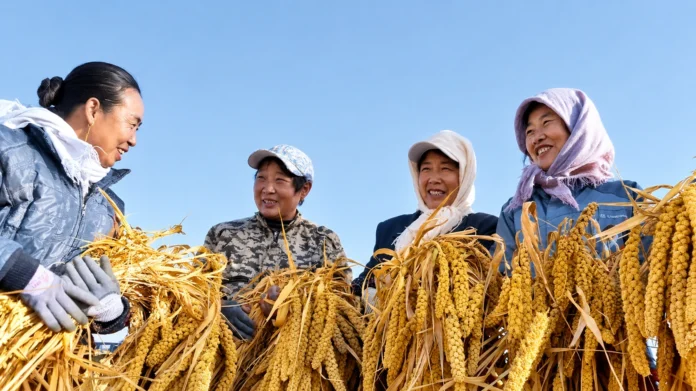
In farming regions across eastern China, local producers say investments in modern equipment, irrigation systems and agricultural technology are already changing the way crops are cultivated. Wheat growers in particular have reported improved yields thanks to the wider adoption of mechanized farming techniques and precision agriculture tools.
“We have seen significant improvements in harvesting efficiency over the last few years,” said Liu Wei, a grain farmer in Dezhou. “Modern machinery allows us to manage larger areas with fewer labor shortages during peak seasons.”
Agriculture continues to play a major role in China’s food security strategy. According to 2026 industry estimates, the country is expected to maintain grain production above 700 million metric tons for a fourth consecutive year, supported by favorable weather conditions and continued investment in rural infrastructure.
Government-backed modernization programs have also accelerated the development of rural services. New roads, upgraded logistics networks and expanded digital connectivity are helping farmers gain faster access to markets and agricultural information. Analysts note that these improvements are narrowing the gap between urban and rural areas while creating new economic opportunities outside major cities.
The emphasis on rural revitalization is increasingly visible in local communities. In several provinces, agricultural cooperatives have expanded training programs that teach farmers advanced cultivation methods, sustainable land management practices and the use of digital technologies to monitor crop performance.
Economists believe these initiatives could have a significant impact over the coming years. Forecasts suggest that continued investment in smart agriculture, rural infrastructure and agricultural research could raise overall farm productivity by between 10% and 15% by the end of the decade. Such gains would help strengthen domestic food supplies while improving incomes in rural regions.
Challenges remain, including climate-related risks, rising production costs and demographic pressures linked to an aging rural workforce. However, sector specialists argue that ongoing technological adoption and policy support are likely to offset part of these constraints.
For many rural residents, the modernization drive represents more than an economic initiative. Improved public services, better transportation links and greater employment opportunities are contributing to higher living standards and encouraging younger generations to participate in local development projects.
As China continues its long-term transformation of the countryside, agricultural modernization is expected to remain at the center of national development priorities, with policymakers aiming to build a more productive, resilient and prosperous rural economy in the years ahead.