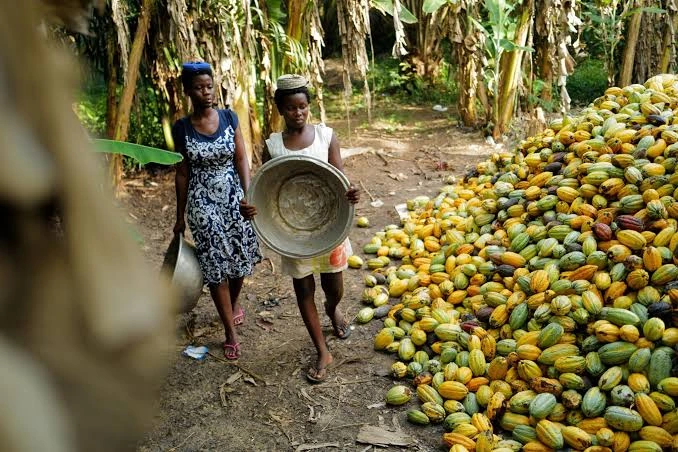
Arabfields, Maleeka Kassou, East, West & Central Africa Agriculture Correspondent — Some licensed cocoa buying companies in Ghana are facing increased scrutiny after the country’s cocoa regulator said that officials diverted government purchasing funds to buy cocoa beans smuggled from neighboring Côte d’Ivoire. The practice has raised fresh concerns about farmer incomes, market integrity and the long term stability of one of the world’s most important cocoa producing nations.
According to the regulator, the activity was detected in four regions along the Ghana, Côte d’Ivoire border, where differences in producer prices have encouraged illegal cross border trade. Officials say the diverted funds were intended to purchase cocoa from Ghanaian farmers but instead financed lower priced smuggled beans, reducing legitimate sales and weakening confidence in the country’s regulated cocoa marketing system.
For many farmers, the allegations come at a difficult moment. Several growers have already experienced payment delays during the 2025,26 crop season, limiting their ability to invest in farm maintenance, fertilizers and labor. Buying clerks have also described growing frustration as producers increasingly question why payments remain outstanding despite repeated assurances that funds have been released.
The financial strain extends beyond farming communities. Licensed cocoa buying companies are estimated to owe between 7 billion and 8 billion Ghanaian cedis, roughly 650 million to 750 million U.S. dollars, to commercial banks in 2026, while additional debts to farmers continue to pressure the sector’s liquidity. Industry representatives warn that rising borrowing costs are making it harder for buyers to operate efficiently.
Ghana remains the world’s second largest cocoa exporter, making developments in its cocoa industry closely watched by global chocolate manufacturers and commodity traders. Any disruption to the country’s supply chain can influence international cocoa availability and contribute to continued market volatility.
Looking ahead, analysts expect Ghanaian authorities to strengthen border surveillance, tighten oversight of licensed buyers and improve payment systems to reduce incentives for illegal trading. If financial reforms succeed and outstanding farmer payments are cleared, confidence in the domestic cocoa market could gradually recover over the next few harvests. However, if smuggling networks and funding shortages persist, production and exports may remain under pressure, with broader implications for global cocoa supplies and prices.