Arabfields, Naïla Mokhtari, Special Economic Correspondent, America — Sinaloa farmers are entering the next planting season with more water in storage and a difficult question ahead: whether to continue relying heavily on corn or shift part of their land toward beans.
The state’s reservoirs are holding more than 5.6 billion cubic meters of water, equivalent to about 35 percent of their combined capacity. That is a major improvement from the same period in 2025, when storage stood at roughly 2.24 billion cubic meters. The recovery has given producers more room to consider their planting choices for the autumn-winter 2026-2027 cycle.
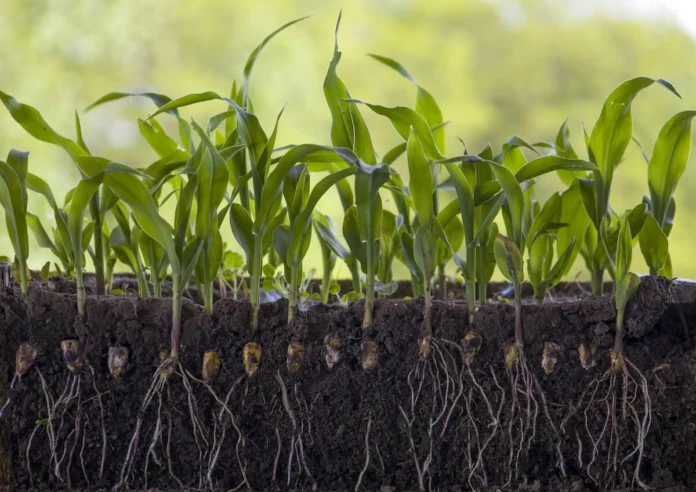
For farmers, however, the decision is not simply about how much water is available. Corn prices have remained under pressure, making profitability a growing concern for producers who have traditionally depended on the crop.
The contrast is already visible in the proposed planting plan. Sinaloa is considering as much as 813,599 hectares for the coming cycle, including about 335,333 hectares of corn and 55,500 hectares of beans. The plan also includes significant areas for sorghum, chickpeas and wheat.
For a farmer preparing his fields, the calculation is practical. Better reservoir levels mean greater irrigation security, but planting a crop that offers a stronger economic return can be just as important. Beans are therefore attracting renewed attention as producers assess alternatives to corn.
The water situation is still uneven across Sinaloa. Some reservoirs, including Aurelio Benassini and Eustaquio Buelna, have been reported above 70 percent of capacity, while Miguel Hidalgo was near 19 percent and Josefa Ortiz de Domínguez around 14 percent. Those differences matter because agricultural conditions vary significantly between regions.
The next few weeks could determine how much of the proposed planting program becomes possible. Rainfall during August and September is expected to play an important role in establishing the final amount of irrigated land available for the new season.
Based on current figures, the outlook is considerably more favorable than it was a year ago. Reservoir storage is now more than twice the level recorded in August 2025, giving growers a larger margin to plan their operations. If rainfall continues to replenish the reservoirs, the state could enter the planting period with substantially greater flexibility.
That does not necessarily mean a dramatic shift away from corn. The proposed figures still place corn well ahead of beans in terms of planted area. But the combination of stronger water availability and weak corn prices could encourage some producers to diversify, particularly in areas where bean production is already established.
The coming months will therefore be less about choosing between corn and beans in absolute terms and more about balancing water, prices and production risks. If reservoir levels continue improving and bean markets remain attractive, beans could gradually capture additional acreage during the new agricultural cycle.
For Sinaloa’s farmers, the water has returned in greater volume. The harder question now is how to turn that water into a profitable harvest.