Arabfields, Staff Correspondent, Europe — Algeria is taking center stage at Slovenia’s AGRA International Fair of Agriculture and Food, opening a new window for its agricultural and food companies to reach European markets and build partnerships beyond the region.
The 64th edition of AGRA runs from August 22 to 26 in Gornja Radgona, with Algeria participating as the fair’s guest of honor. The event brings together producers, exporters, investors, agricultural machinery manufacturers and food industry professionals, giving Algerian businesses an opportunity to present their products while exploring investment and export opportunities.
For many Algerian exhibitors, the significance of the event goes beyond the exhibition floor. It offers direct contact with buyers and industry specialists at a time when agricultural producers are under growing pressure to improve productivity, reduce costs and adapt to changing consumer expectations.
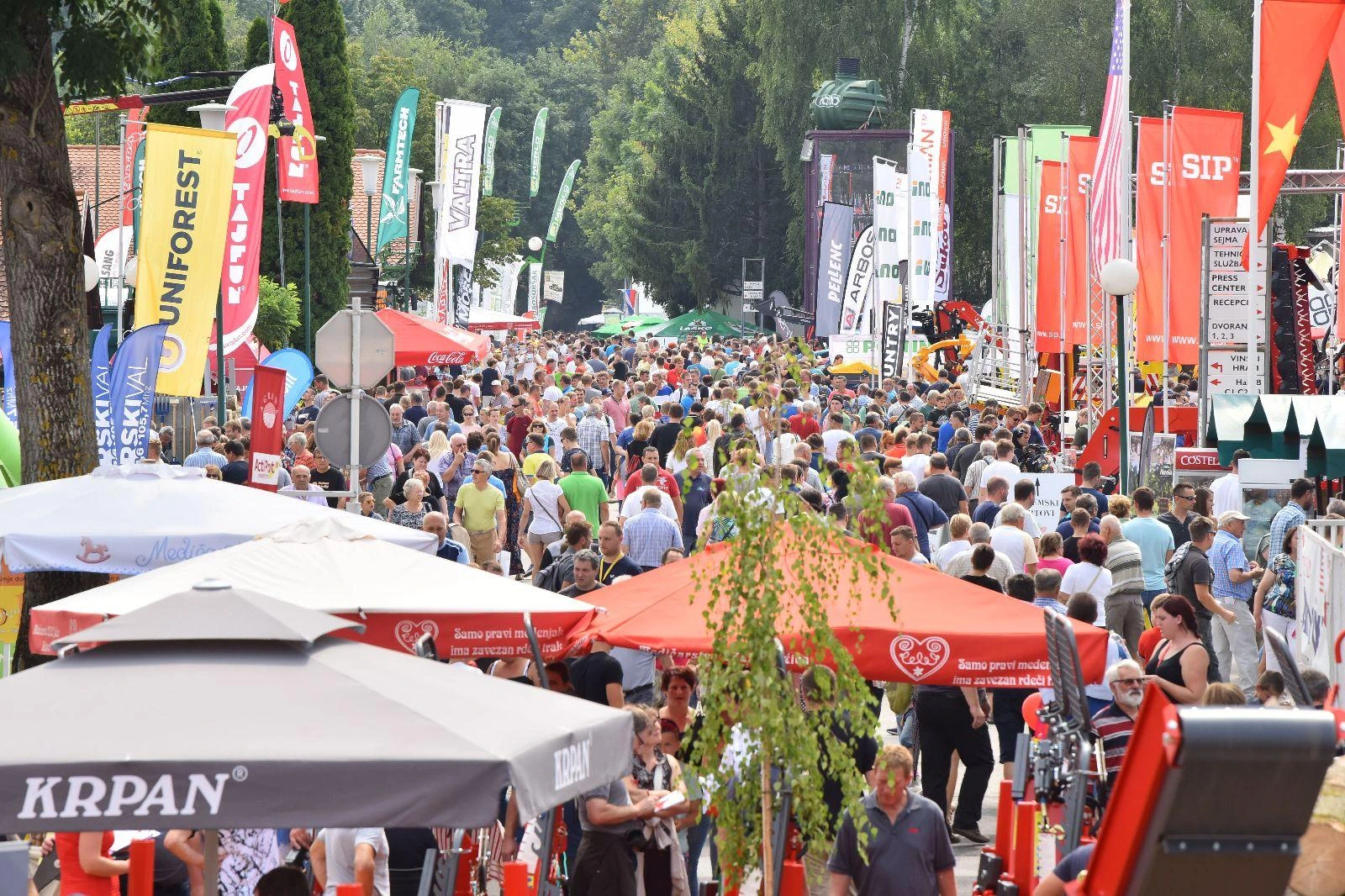
AGRA’s scale helps explain why the Algerian participation matters. The 2026 fair is expected to build on an edition that recorded around 105,000 visitors, 1,710 exhibitors and participants from 35 countries in 2025. The previous edition covered about 71,100 square metres, including exhibition halls, outdoor areas, sample gardens and animal exhibition spaces.
The figures point to a sizeable international audience for Algerian products. A company arriving with olive oil, dates, processed foods or other agricultural goods is not simply displaying a product, but testing how that product performs in front of buyers from different markets.
That human element is likely to be one of the most important features of Algeria’s presence. Behind every export discussion is a producer looking for a customer, an entrepreneur searching for a partner or a family business hoping to turn a local product into an international brand.
The fair is also increasingly focused on technology. Its 2026 programme highlights digitalisation and artificial intelligence in agriculture, organic farming, efficient forest management, climate change and water resources, sustainable food processing and space technologies applied to agriculture. For Algerian companies, exposure to these areas could help accelerate the adoption of technologies aimed at improving efficiency and responding to water and climate pressures.
The immediate opportunity is commercial, but the longer-term implications could be broader. If Algerian businesses use the event to establish durable relationships with European distributors and investors, participation in AGRA could contribute to a gradual expansion of agricultural and agri-food exports in the years ahead.
The data from the fair also suggests that the international dimension of AGRA is likely to remain strong. With more than 100,000 visitors and over 1,700 exhibitors recorded in 2025, even a modest increase in commercial contacts generated through the Algerian pavilion could translate into a meaningful pipeline of partnerships.
The outlook will ultimately depend on what happens after the fair closes. Meetings in Gornja Radgona will need to become contracts, distribution agreements and investment projects for the participation to produce measurable economic results. But Algeria’s role as guest of honor gives its companies an unusually visible platform, and the combination of a large international audience with growing interest in agricultural technology creates favorable conditions for deeper cooperation.
As the gates open in Slovenia, the challenge for Algerian businesses is therefore clear. They have five days to turn visibility into relationships, and relationships into business.