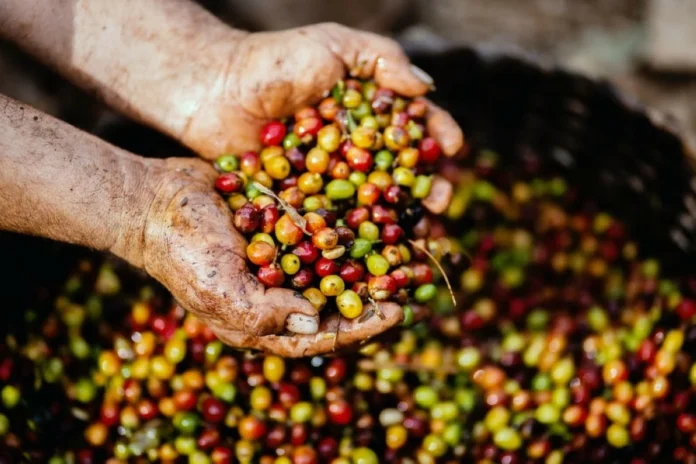
Arabfields, Sophia Daly, Financial Analyst specialized in Agriculture and Futures Markets — Brazil increased its coffee export volumes in September, but lower export earnings highlighted the pressure facing the world’s largest coffee producer as international prices and global demand continue to shape the market.
The country shipped 3.894 million 60-kilogram bags during the month, a 3.1% increase from September 2025, according to industry figures. However, export revenue fell 7.1% year on year to $1.282 billion, showing that higher shipment volumes have not translated into stronger earnings.
The figures underline a challenge for Brazilian coffee growers and exporters: moving more beans into international markets while securing better prices for their produce.
For farmers, the difference between export volumes and revenue can have direct consequences. Coffee production requires substantial spending on labour, fertilisers, transport and processing. When international prices weaken, growers may receive less income even when more coffee reaches overseas buyers, leaving them with tighter margins for the next planting and harvesting cycle.
The recovery in shipments was partly supported by renewed trade with the United States following changes to tariffs affecting Brazilian coffee. In September, US imports of Brazilian coffee across all categories reached 625,192 bags, an increase of 86.4% compared with the same month a year earlier.
The United States regained its position as Brazil’s largest coffee destination over the first nine months of 2026, overtaking Germany. American buyers purchased 3.805 million bags during that period, although the volume remained 12.8% below the level recorded a year earlier.
Germany imported 3.307 million bags between January and September, down 11.4%. Italy, Belgium and Japan were also important destinations, with shipments to Belgium increasing sharply as demand shifted across international markets.
Brazil exported 29.095 million bags in the first nine months of 2026, broadly unchanged from the same period last year. Revenue, however, declined 8.6% to $10.113 billion, reflecting weaker average prices and changes in the mix of coffee sold abroad.
Arabica remained the country’s dominant export, accounting for 20.739 million bags, or 71.3% of total shipments during the period. Yet exports of the variety fell 10.7% year on year. By contrast, shipments of conilon and robusta coffee rose 68.3% to 5.162 million bags, reflecting the growing contribution of these varieties to Brazil’s export trade.
The changing product mix matters because different coffee varieties command different prices. A greater share of lower-priced robusta and conilon can increase overall shipment volumes without generating a comparable rise in export revenue.
The arrival of the new crop has also helped improve supply. After weather-related delays affected harvesting earlier in the year, new coffee became increasingly available for export from August, allowing exporters to resume shipments at a stronger pace.
Industry representatives expect the improvement to continue, with the potential for cumulative export volumes to exceed last year’s level by the end of 2026. That outlook depends on the continued availability of coffee, stable logistics and sustained demand from major importing countries.
The coming months will also depend on international prices and the direction of trade policy. A sustained recovery in US demand could provide support, while weaker prices or renewed trade restrictions could limit the benefits of higher shipments.
For Brazil’s coffee industry, the immediate priority is to turn improved supply into more consistent export earnings. If shipments continue to recover through the final quarter, the country could finish the year with stronger volumes. Whether that translates into higher revenue will depend largely on prices, the composition of exports and the strength of demand in key markets.
The latest figures suggest that Brazil’s coffee trade is recovering in volume, but the financial benefits remain uncertain. For growers and exporters alike, the final months of the year will be crucial in determining whether a stronger flow of beans can deliver a more profitable season.