Arabfields, Naïla Mokhtari, Correspondent, São Paulo, Brasil — Chinese agricultural machinery manufacturers are expanding their presence in Brazil, with imports of Chinese tractors rising sharply this year as domestic equipment sales weaken and farmers face mounting financing costs.
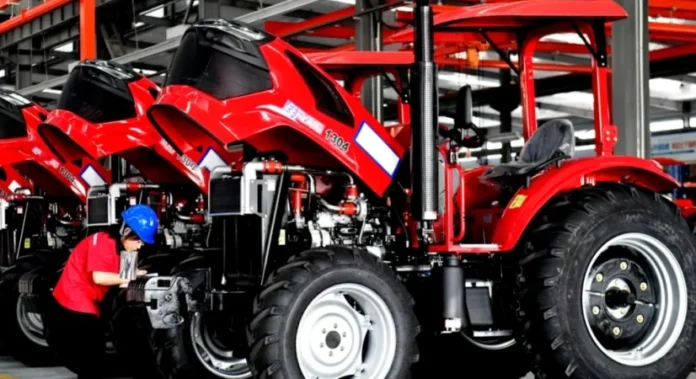
Imports of tractors from China climbed 117% between January and September 2026, reaching approximately 5,200 units, according to industry data. India supplied a similar number, with the two Asian countries together accounting for 93% of Brazil’s imported tractors.
The increase comes at a difficult time for Brazil’s domestic machinery industry. Retail sales of agricultural equipment fell 15.8% between January and August, while tractor sales declined 14.1%. Sales of combine harvesters dropped even more sharply, falling 39.4% over the same period.
For farmers, the growing availability of imported machinery offers an alternative as they weigh the cost of replacing ageing equipment against uncertain agricultural returns. More affordable tractors can help smaller producers mechanise their operations, but purchase prices are only one part of the decision. Access to spare parts, maintenance services and technical support can determine whether a machine remains economical over its working life.
The expansion of Chinese imports also reflects a broader shift in Brazil’s agricultural equipment market. Imports of agricultural machinery increased by 42% during the first nine months of 2026, reaching approximately 11,200 units. Brazilian exports rose by 9% to around 5,000 units, leaving the country importing more than twice as many machines as it exported.
Lower-powered tractors are at the centre of the trend. Around 90% of imported tractors had an engine output of up to 100 horsepower, a segment widely used by smaller farms and agricultural businesses that need versatile equipment without the expense of high-capacity machinery. Imports in the 50-to-100-horsepower category reached 6,412 units, an increase of 56% from the same period last year.
Chinese equipment has also gained ground in public procurement. In 2025, Chinese-made machinery accounted for 33.5% of the units included in a broader group of public tenders for self-propelled agricultural and road machinery, representing 26% of their total value, according to industry estimates. The contracts covered approximately 10,600 machines valued at 3.7 billion reais.
For Brazilian manufacturers, the combination of weaker domestic demand and stronger import competition presents a growing challenge. Producers are contending with high borrowing costs, pressure on farm profitability and rising expenses for some industrial inputs. Farmers facing debt obligations and lower commodity prices are increasingly likely to postpone equipment purchases or seek less expensive alternatives.
The financial environment remains particularly important. Brazil’s benchmark interest rate stood at 13.75% in September, while delinquency among individuals borrowing through rural credit reached 9.7% in August, according to figures cited by the industry. Expensive financing makes large machinery purchases harder to justify, especially for farmers whose cash flow depends on seasonal harvests and volatile commodity prices.
Industry representatives have warned that public procurement decisions should consider more than the initial purchase price. A tractor may operate for many years, requiring replacement parts, servicing and technical assistance throughout its lifespan. Manufacturers with established local service networks could therefore retain an advantage even as imported equipment becomes more competitive.
The outlook for the remainder of 2026 will depend largely on credit conditions, farm income and the pace of investment in agricultural equipment. If financing remains expensive and producers continue to delay fleet renewal, domestic sales could face further pressure. Chinese and Indian suppliers may consequently gain additional opportunities, particularly in the lower-powered tractor segment.
A recovery in agricultural profitability or improved access to financing could support renewed demand for machinery, although it would not necessarily reverse the shift towards imported products. Local manufacturers will also need to compete on productivity, technology, operating costs and after-sales service.
For Brazil’s agricultural machinery industry, the central question is whether the current surge in imports represents a temporary response to difficult market conditions or a more lasting change in purchasing patterns. The answer will depend not only on the price of imported tractors but also on how effectively domestic manufacturers respond to farmers’ changing financial needs.