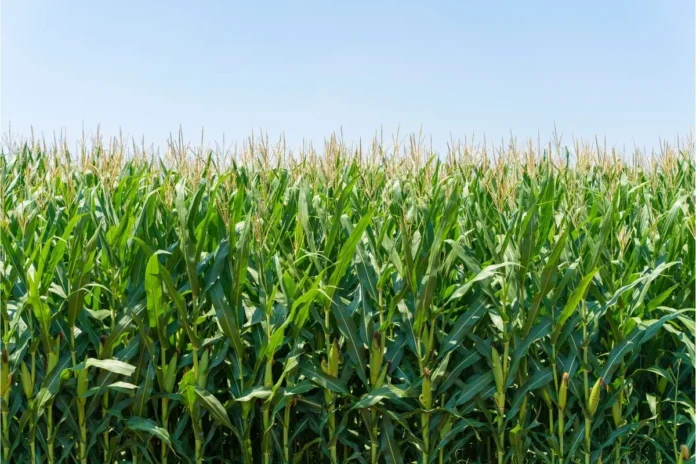
Arabfields, Naïla Mokhtari, Correspondent, São Paulo, Brasil — Recent market estimates indicate that Brazilian farmers still have approximately 67 million tonnes of corn available for sale. Export shipments gained momentum in October, approaching 4.2 million tonnes during the month. Cumulative exports for 2026 reached approximately 23.9 million tonnes, compared with 28.3 million tonnes over the same period in 2025.
The figures underline the importance of export demand in determining the direction of domestic prices. Although the weaker real improves Brazil’s competitiveness, international competition and the availability of grain from other major producing countries remain significant factors.
The outlook for soybeans is also influenced by developments in the United States. By late October, American farmers had completed harvesting approximately 79% of their soybean acreage, slightly above the five-year average of 77%. This progress has helped maintain expectations of substantial global supplies, limiting the potential for a sustained recovery in international prices.
In Brazil, planting of the 2026/27 soybean crop reached 53% of the expected area by October 29, representing an increase of 13 percentage points in one week. The pace was ahead of the 47% recorded during the corresponding period a year earlier. Meanwhile, first-crop corn planting in the country’s south-central region reached 63%, compared with 59% at the same point in 2025.
Weather conditions will remain an important consideration in the coming weeks. More widespread rainfall in Mato Grosso has improved conditions for soybean planting, while excessive moisture in parts of southern Brazil has slowed field operations. In some areas of the Northeast, insufficient rainfall continues to delay agricultural activity.
Looking ahead, the combination of exchange-rate movements, international demand and weather conditions is expected to determine whether the recent improvement in grain sales can be sustained. If the dollar remains relatively strong against the real, Brazilian producers could continue benefiting from more attractive domestic prices, particularly for export-oriented crops.
However, the outlook is not without risks. A correction in international grain prices, weaker demand from major importing countries or a reduction in export premiums could limit further gains. Producers may therefore remain selective, selling portions of their available stocks when prices meet their financial requirements rather than committing their entire harvest at once.
For Brazil’s agricultural sector, the latest market movement offers some relief after a period of uncertainty. But as the new planting season advances, farmers, traders and exporters will be watching currency fluctuations and global supply estimates closely.
The coming weeks could prove decisive in determining whether the recent increase in commercial activity marks the beginning of a more sustained recovery or simply a temporary response to favourable exchange-rate conditions.