Arabfields, Farah Benali, Economic Correspondent, China — China’s slower-than-expected purchases of American agricultural products are raising questions about the future of a $17 billion trade commitment, creating fresh uncertainty for US farmers and exporters already facing pressure from high production costs and shifting global demand.
The agreement, announced in May 2026 following discussions between Washington and Beijing, предусматривает Chinese purchases of $17 billion worth of US agricultural goods annually, excluding soybeans. However, recent trade figures suggest that deliveries of several major commodities are falling well short of expectations.
According to an analysis of Chinese customs data, the country imported just $7.2 billion worth of US agricultural products other than soybeans between January and September 2026. This represents the lowest level for the period since 2019, highlighting the difficulties facing exporters hoping for a rapid recovery in bilateral agricultural trade.
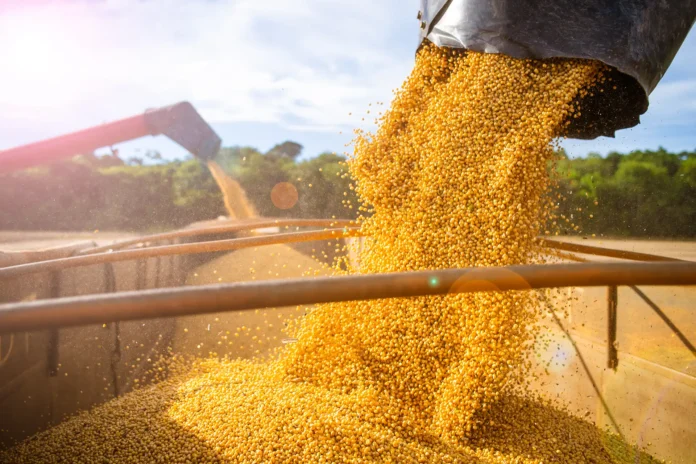
Soybeans have followed a different trajectory. China is on course to meet its separate commitment to purchase American supplies, supported largely by buying activity from state-owned trading companies. The contrast between soybean purchases and other agricultural imports has become a central issue in assessing the broader trade agreement.
For American farmers, the uncertainty is more than a diplomatic concern. It affects planting decisions, storage costs and the ability to secure reliable buyers for their harvests.
In the US Midwest, producers are entering another marketing season while managing expensive fuel, machinery and agricultural inputs. Tim Lust, chief executive of National Sorghum Producers, described the frustration among growers, noting that farmers have grain available but are waiting for stronger export demand.
The situation is particularly difficult for commodities such as corn, sorghum and meat, where China has alternative suppliers or sufficient domestic production to limit its reliance on American imports.
China’s corn market illustrates the challenge. Domestic oversupply has reduced the need for additional foreign purchases, while Brazilian supplies remain competitive. COFCO Futures, a brokerage affiliated with China’s state trading sector, has projected US corn imports of approximately 900,000 tonnes for the 2026/27 marketing year, which began in September.
That estimate suggests limited room for a substantial recovery in American corn exports unless Chinese demand improves or purchasing policies change.
Sorghum exporters face a different competitive environment. Brazil has strengthened its position in the Chinese market since gaining access in September 2025. Brazilian shipments reached approximately 1.7 million tonnes during the first part of 2026, with additional cargoes scheduled for delivery.
American sorghum exports initially recovered after bilateral trade tensions eased, but sales have weakened in recent months. The growing presence of Brazilian suppliers has made it more difficult for US producers to regain their previous market share.
Meat exports are also facing structural obstacles. China’s domestic pork and poultry markets are well supplied, while elevated US beef prices have reduced the competitiveness of American products. Regulatory restrictions affecting some US processing facilities have added another complication, despite efforts to restore access for approved exporters.
The situation raises questions about how Beijing intends to fulfil its broader purchasing commitment. Analysts believe the involvement of Chinese state-owned companies could become increasingly important if private buyers remain reluctant to purchase American commodities at current prices.
Darin Friedrichs, co-founder of China-focused agricultural consultancy Sitonia Consulting, has pointed to the importance of state-directed purchases in determining whether the target can be achieved. Without stronger intervention from government-linked buyers, reaching the commitment for products other than soybeans could prove difficult.
Another unresolved issue concerns the timetable of the agreement. Although the $17 billion annual commitment was announced in May, the precise starting point for calculating the 2026 target remains unclear. Proposed Chinese tariff reductions have also yet to be fully implemented, adding uncertainty to the commercial outlook.
Looking ahead, US agricultural exports could improve if trade barriers are reduced and Chinese state buyers expand their orders. However, the available figures suggest that a rapid increase in purchases cannot be assumed.
Brazil is likely to remain a major competitor, particularly in soybeans, corn and sorghum. Its established export infrastructure and growing commercial relationships with Chinese importers give Brazilian suppliers an important advantage.
For American producers, diversification will therefore remain essential. Expanding sales to other international markets and strengthening domestic demand could help reduce exposure to fluctuations in Chinese purchasing policies.
The coming months will be important in determining whether the trade commitment translates into actual shipments or remains largely a diplomatic objective. Until clearer purchasing arrangements emerge, farmers and exporters on both sides of the Pacific will continue to face uncertainty over the scale and direction of agricultural trade.
For growers holding unsold grain in storage, the central question is no longer simply whether China has promised to buy more, but whether those promises will generate enough commercial demand to support prices and restore confidence in the export market.