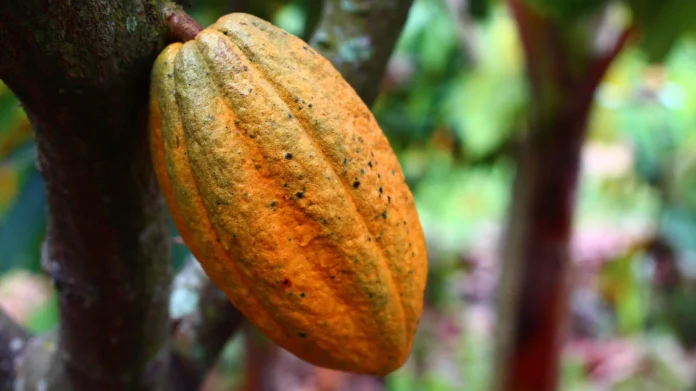
Arabfields, Nadia Fatima Zahra, Arabfields, Yamoussoukro, Ivory Coast — The cocoa sector in Côte d’Ivoire, the world’s leading producer and exporter of the precious brown beans that fuel the global chocolate industry, stands at a precarious crossroads in early 2026. After years of soaring prices that brought unprecedented wealth to farmers but strained chocolate manufacturers worldwide, a sharp reversal has plunged the industry into crisis. Global cocoa prices, which peaked at over 12,000 dollars per ton in late 2024 amid severe shortages driven by poor harvests, disease, and adverse weather in West Africa, have since plummeted to around 4,300 dollars per ton by late January 2026. This dramatic fall has left vast stocks unsold, farmers unpaid, and the government in Abidjan facing a high-stakes intervention that could either stabilize the sector or deepen financial woes.
Côte d’Ivoire’s dominance in cocoa is undeniable, accounting for more than 40 percent of global supply and supporting the livelihoods of roughly one in four citizens. The crop contributes around 14 percent to the nation’s gross domestic product, making it the backbone of the economy. For decades, the government has tightly regulated the market through the Coffee and Cocoa Council, known as the CCC, setting a fixed farmgate price to shield producers from volatile international fluctuations. Unlike more liberalized markets in neighboring countries, this system relies heavily on advance sales, with 80 to 85 percent of each season’s anticipated harvest contracted to buyers months ahead. It has long been hailed as a protective mechanism, ensuring stable income for millions of smallholder farmers even when world prices dip.
The current turmoil traces back to the extraordinary boom of the 2023-2024 and 2024-2025 seasons. Back-to-back poor harvests, exacerbated by swollen shoot virus, black pod disease, and erratic rainfall linked to climate change, combined with robust global demand, pushed prices to historic highs. By early 2025, a ton of cocoa fetched more than 10,500 euros on the London exchange, enriching Ivorian farmers who saw their incomes soar. In response, the government, under President Alassane Ouattara, announced a record farmgate price of 2,800 CFA francs per kilogram at the start of the 2025-2026 season in October 2025, up significantly from previous levels. This decision, made public by the president himself just weeks before his re-election, sparked widespread celebration among producers, who viewed it as a just reward after years of hardship.
Yet the euphoria proved short-lived. As improved weather conditions in West Africa and expanding production in regions like South America eased supply concerns, international prices began a steady decline from mid-2025 onward. By January 2026, they had settled near levels seen over much of the past decade, hovering around 3,500 to 4,300 euros per ton. Buyers, primarily large multinational exporters who had committed to purchases at rates aligned with the earlier highs, suddenly found themselves facing potential losses. Many delayed honoring contracts, withholding payments to cooperatives, refusing to issue crucial shipping documents known as bills of lading, or simply dragging their feet on taking delivery. Trucks loaded with beans piled up at the ports of Abidjan and San Pedro, some left to rot in the tropical heat, while warehouses in rural areas overflowed with unsold stock.
Farmers bore the brunt of this standoff. Cooperatives reported delays in payments stretching weeks or months, leaving producers without cash for essentials like food, school fees, or farm maintenance. In desperation, some began selling beans at steep discounts on local black markets or even destroying portions of their harvest to prevent total loss from spoilage. Protests erupted, with truck drivers blockading port entrances and grower unions decrying a betrayal of the system’s promise. The National Association of Ivorian Cocoa Producers highlighted issues like engorged storage facilities jeopardizing bean quality and weeks-long delays in loading. Smuggling increased as well, with beans from neighboring countries allegedly funneled into Côte d’Ivoire to capitalize on the high guaranteed price.
Production itself has added to the pressure. Forecasts for the 2025-2026 season peg output at around 1.4 million tons, a notable drop from the 1.8 million tons harvested in the prior two years. Aging plantations, many over six decades old and exhausted from intensive farming without adequate replanting, combined with ongoing climate challenges and disease outbreaks, have reduced yields. This lower volume, while still positioning Côte d’Ivoire as the global leader, has not been enough to tighten supply amid the price collapse. The remaining 15 percent of the harvest not covered by advance contracts has proven particularly hard to sell, deemed too expensive by international buyers compared to cheaper alternatives emerging elsewhere.
In a bold move to avert disaster, the government announced on January 20, 2026, that the state would step in as buyer of last resort, purchasing all unsold stocks to uphold the guaranteed farmgate price. Agriculture Minister Kobenan Kouassi Adjoumani, speaking at a press conference, estimated the invendu at 123,000 tons and promised immediate removal operations to relieve farmers and cooperatives. The CCC reaffirmed that the entire production would be bought, aiming to restore calm and ensure payments flow. Facilities like the new Transcao complex in Abidjan, with capacity for 140,000 tons, were eyed for storage. However, grower unions expressed skepticism, questioning the logistics and whether benefits would truly reach those in need, while some estimates placed unsold volumes far higher, potentially up to 700,000 tons when accounting for hidden stocks or contraband.
This intervention represents a perilous wager for Abidjan. By committing to buy at the elevated price while market rates languish below, the government risks substantial financial losses if it cannot resell the beans profitably later. Historical precedents loom large, such as the infamous “cocoa war” of the late 1980s under President Félix Houphouët-Boigny, when a similar refusal to lower prices amid oversupply led to massive unpaid farmer debts and economic strain. A more recent crisis in 2017 cost the CCC hundreds of millions in losses and claimed the job of its director. With cocoa so central to national finances, any miscalculation could ripple through public budgets, debt levels, and social stability.
Looking ahead, the outlook carries considerable uncertainty, grounded in current production trends and market dynamics. Global cocoa stocks have begun rebuilding, up over four percent year-on-year for the 2024-2025 season, signaling a shift from deficit to potential surplus. Forecasts suggest prices could dip further, possibly to around 3,500 dollars per ton by the end of 2026 or even lower into 2027 if West African harvests rebound strongly and demand remains subdued. Chocolate manufacturers, scarred by the recent highs, have already reformulated products with less cocoa or alternatives, a trend likely to persist and cap upward pressure on prices. In Côte d’Ivoire, the mid-crop in April 2026 will almost certainly see a downward price adjustment to align more closely with reality, disappointing farmers accustomed to the recent windfall.
Longer-term projections offer mixed signals. Some analysts anticipate gradual production growth, potentially reaching 2.6 million tons annually by the end of the decade with investments in replanting and disease-resistant varieties, but this assumes successful reforms amid climate vulnerabilities. If surpluses build, as hinted by reduced global deficit estimates, prices might stabilize in the 4,000 to 5,500 dollar range through 2026-2027, insufficient to cover the current high costs without ongoing state support. Government losses from the buyback could strain fiscal resources, limiting funds for critical infrastructure like farmer training, fertilization programs, or deforestation curbs required under international regulations.
For farmers, prolonged low effective incomes, despite the guaranteed price, might accelerate diversification away from cocoa toward crops like rubber or palm oil, eroding Côte d’Ivoire’s market share over time. Social unrest could flare if payments continue lagging or if the intervention falters. On the flip side, successful state management of stocks, perhaps through strategic releases or processed exports, could buy time for a market recovery driven by unforeseen shortages or renewed demand growth. Yet with inventories rising and structural challenges like aging trees unaddressed, the odds favor a period of adjustment marked by lower prices and tighter margins.
Abidjan’s decision to hold the line on producer prices reflects a commitment to social protection in a vital sector, but it comes at a moment when global forces demand flexibility. As the 2025-2026 season unfolds, the outcome of this gamble will shape not only the immediate fortunes of millions dependent on cocoa, but also the trajectory of Côte d’Ivoire’s economy for years to come. In a commodity as volatile as cocoa, where weather, disease, and distant consumer habits dictate fate, the risks are as palpable as the potential rewards remain elusive. The world watches, chocolate bar in hand, as the brown gold’s latest chapter plays out in the fields and ports of West Africa.