Arabfields, Imed Aissaoui, Oran, Algeria — Algeria is advancing a comprehensive national strategy aimed at achieving full independence in the production of seeds and plants, thereby progressively eliminating the need for imports in this vital agricultural domain. Although the country has sustained self-sufficiency in fruits and vegetables for several years, a residual dependence on foreign supplies for certain seed varieties, particularly those employed in market gardening, has persisted, prompting renewed determination to address this strategic vulnerability. The initiative reflects a broader commitment to safeguarding food security while curtailing the substantial costs associated with agricultural imports, as evidenced by the detailed program unveiled during a high-level ministerial visit to the province of Blida.
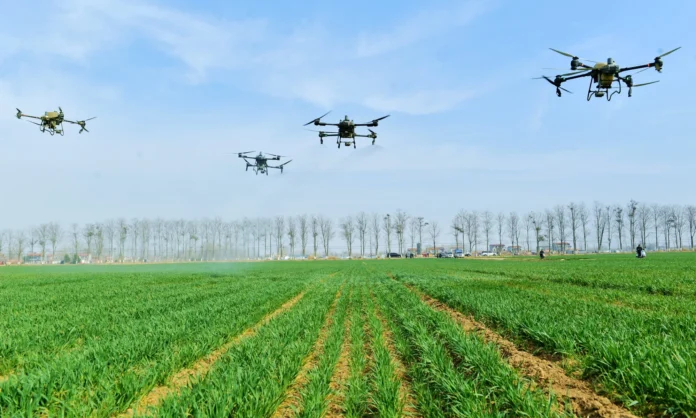
In the course of that visit, Yacine Oualid, the Minister of Agriculture, Rural Development, and Fisheries, presented an ambitious framework designed to reduce imports of seeds and plants in a measured and sustainable manner, with special attention devoted to vegetable crops. The minister underscored that the integration of modern technologies into local production processes constitutes a central priority for his department, one that not only targets domestic needs but also incorporates an orientation toward future exports. This technological focus is intended to elevate the quality and quantity of domestically generated seeds and plants, thereby reinforcing the resilience of the national agricultural system against external supply disruptions and price fluctuations on global markets.
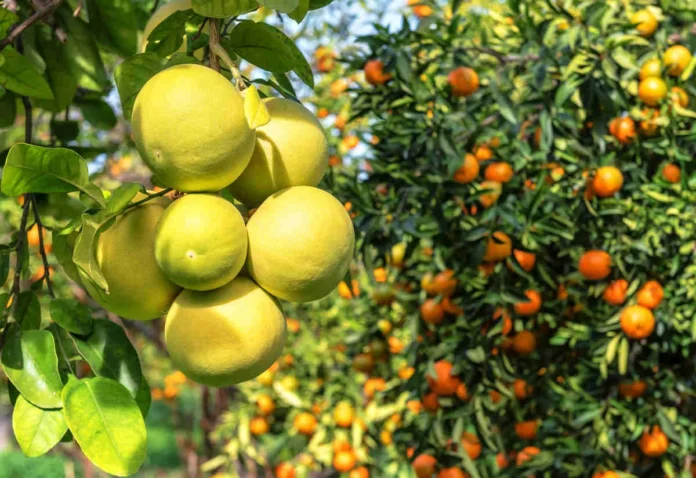
A pivotal element of the visit involved an inspection of Vitroplant Algérie, a prominent Algerian-Italian enterprise regarded as a leader in the cultivation of fruit trees through advanced tissue culture techniques. These methods enable the rapid and controlled multiplication of plant material in sterile laboratory conditions, yielding disease-free specimens that maintain precise genetic fidelity to the original varieties. The facility currently possesses an annual production capacity reaching 25 million plants, encompassing the generation of base potato seeds classified as G0, which represent the foundational pre-basic stock. Plans are in place to extend operations to subsequent generations, including G1 and G2, as well as elite selections identified as SE, all while directing a portion of output toward international markets. Such capabilities demonstrate the tangible progress already achieved in local propagation and signal the potential for Algeria to transition from consumer to supplier in specialized seed categories.
This current drive builds directly upon earlier governmental declarations, notably the 2022 statement by the then Prime Minister Aïmene Benabderrahmane, who announced the impending halt to seed imports commencing in 2023 and highlighted that the nation’s total imports of agricultural products had attained 11.5 billion dollars. Although implementation has required further refinement, the latest program articulates a clear pathway forward, emphasizing gradual yet resolute steps to realize the stated objectives. Through meetings with farmers in Blida, Minister Oualid provided an in-depth exposition of the departmental action plan scheduled for 2026 and 2027, which encompasses a series of interconnected measures intended to modernize the sector holistically and to embed seed production firmly within national capabilities.
Among these measures is the establishment of a unified national information system for agriculture, a digital infrastructure that will consolidate data from across the country, enabling real-time monitoring of production, soil conditions, weather patterns, and market demands. Such a system is projected to enhance decision-making processes at every level, from individual farms to central planning authorities, thereby optimizing resource allocation and minimizing inefficiencies that have historically contributed to import reliance. Closely linked to this initiative is the elaboration of a new law on agricultural land, which will introduce clearer regulatory frameworks for tenure, inheritance, and investment, thereby encouraging long-term commitments by cultivators and attracting capital into seed-related enterprises that require stable land access for multiplication fields and research stations.
The program further envisages a revision of existing support policies, adjusting subsidies, credit facilities, and technical assistance to align more precisely with priorities such as local seed development and technological adoption. This recalibration is expected to deliver more equitable and effective assistance to producers, fostering an environment where domestic innovation in hybrid varieties can flourish without the distorting effects of outdated incentive structures. In parallel, efforts will concentrate on the development of alternative feeds to diminish the costs of red meat production, an area where feed imports have indirectly inflated overall agricultural expenditures and where localized solutions can free up financial margins for reinvestment in seed programs.
A cornerstone of the entire strategy remains the promotion of local production for hybrid seeds, varieties engineered for superior yield potential, disease resistance, and adaptability to Algeria’s varied agro-ecological zones. By scaling up the multiplication and certification of these hybrids within national facilities, including those leveraging tissue culture, the country anticipates a steady displacement of imported equivalents, leading to cost reductions for farmers and improved consistency in crop performance. Finally, the modernization of agricultural cooperatives, coupled with accelerated mechanization, will equip collective farming structures with contemporary equipment and management practices, allowing them to participate more effectively in seed production chains and to disseminate advanced techniques to a wider base of smallholders.
Collectively, these components form a coherent vision that addresses not only the technical dimensions of seed autonomy but also the institutional, legal, and economic foundations necessary for sustained success. The emphasis on progressive implementation ensures that existing supply chains experience minimal disruption while domestic capacities are methodically expanded, a prudent approach that balances ambition with practicality. As production volumes increase, supported by the demonstrated capacity of enterprises such as Vitroplant Algérie, the agricultural sector stands to benefit from reduced input costs, higher productivity levels, and greater predictability in planning cycles.
Drawing upon the specific data and timelines articulated in the program, future projections indicate that substantial reductions in seed and plant imports will materialize over the coming years. With the 2026-2027 framework providing a structured implementation window and with facilities already operating at scales such as 25 million plants annually, it is anticipated that Algeria will attain near-complete self-sufficiency in key categories by the conclusion of this period. This milestone would translate into meaningful savings drawn from the baseline of 11.5 billion dollars in agricultural imports recorded in recent years, potentially conserving billions of dollars that could be redirected toward infrastructure, research, or social programs. Moreover, the export orientation embedded in current production strategies suggests that surplus output, particularly of certified potato seeds and tissue-cultured fruit tree plants, could generate new foreign exchange earnings, positioning Algeria as an emerging supplier within regional markets and beyond.
Such outcomes would further solidify the nation’s already established self-sufficiency in fruits and vegetables, extending that achievement into the upstream seed segment and creating a fully integrated, sovereign agricultural value chain. Farmers would gain access to locally adapted, high-quality inputs at competitive prices, while the broader economy would experience enhanced resilience against global commodity shocks. The integration of modern technologies across the outlined axes is expected to elevate average yields, reduce post-harvest losses, and promote environmentally sustainable practices, all of which contribute to long-term food security objectives.
In the years following 2027, continued refinement of these policies is foreseen to yield compounding benefits, including job creation in specialized seed production, laboratory work, and distribution networks, as well as strengthened cooperative structures that empower rural communities. The unified information system will likely evolve into a powerful tool for predictive analytics, allowing preemptive adjustments to cultivation plans and thereby minimizing risks associated with climatic variability or pest outbreaks. Over time, the cumulative effect of these advancements is projected to reinforce Algeria’s standing as a model of agricultural sovereignty in North Africa, demonstrating how targeted investment in technology and policy reform can transform historical dependencies into strategic advantages.
Ultimately, the government’s resolute pursuit of seed self-sufficiency reflects a mature understanding of the interconnections between agricultural independence, economic stability, and national development. By grounding its ambitions in concrete capacities, such as the 25 million plant benchmark, and in a clearly delineated multi-year program, Algeria is laying the groundwork for a future in which imports of seeds and plants become a relic of the past. This strategic evolution promises not only to safeguard the nation’s food supply but also to unlock new avenues for growth, innovation, and regional leadership in the agricultural sphere, ensuring that the sector remains a cornerstone of prosperity for generations to come.