Arabfields, Said Ali, Specialist in Agricultural Policy and Economic Innovations in Asia — During the 14th Five Year Plan period from 2021 to 2025, China has carried out one of the most extensive agricultural land modernization programs in the world, reshaping the structural foundations of its food production system. According to the Ministry of Agriculture and Rural Affairs, more than 30 million hectares of farmland have been newly built or upgraded to high quality standards, supported by over 700 billion yuan in public funding. This sustained investment reflects a strategic shift from simply expanding cultivated land toward improving productivity, resilience, and long term efficiency within existing agricultural areas.
The modernization effort has been deliberately concentrated in regions where the returns on investment are structurally high. These include the black soil areas of northeastern China, the major plains, zones with reliable irrigation infrastructure, and regions that already play a critical role in national grain output. By prioritizing these areas, policymakers aimed to accelerate the conversion of permanent basic farmland into high quality farmland wherever physical and hydrological conditions allowed. This transformation has gone beyond surface improvements and has focused on soil structure, water management systems, field consolidation, and mechanization compatibility.
Equally important has been the strengthening of governance and oversight. Authorities have implemented continuous quality inspections, targeted rectification measures, and regular random checks to ensure that projects meet technical standards over time rather than only at completion. This emphasis on follow up supervision has reduced the risk of degradation after initial construction and has helped institutionalize higher standards for farmland management across regions.
Feedback from local governments indicates that the newly commissioned high quality farmland has already delivered measurable gains. Crop yields have improved, production volatility has declined, and resistance to natural disasters such as droughts and floods has increased. These outcomes are particularly significant in the context of climate change, where agricultural systems are increasingly exposed to extreme weather events. The enhanced irrigation capacity and improved soil health associated with these projects have strengthened the sector’s ability to absorb shocks without large scale output losses.
Looking ahead, the scale and consistency of the investment suggest that China’s grain production capacity will continue to rise steadily beyond the end of the current planning period. If maintenance funding and quality controls remain in place, the upgraded farmland is likely to deliver cumulative productivity gains over the next decade. This implies not only higher average yields but also more stable output, which is critical for national food security and price stability. In macroeconomic terms, the program may reduce China’s dependence on grain imports during years of global supply disruption and provide greater policy flexibility in managing domestic food reserves.
An important complementary factor in this modernization process is the large scale use of agricultural inputs, including pesticides, particularly in staple crops such as wheat and increasingly in legumes like lentils. In China’s high intensity farming systems, pesticides are widely used to control weeds, insects, and fungal diseases that could otherwise erode the yield gains achieved through land improvement. In wheat production, chemical pest control remains a key tool for protecting large contiguous fields, especially in regions with humid conditions that favor disease pressure. Lentil cultivation, while less extensive than wheat, has also seen more systematic pesticide use as production scales up and becomes more commercially oriented.
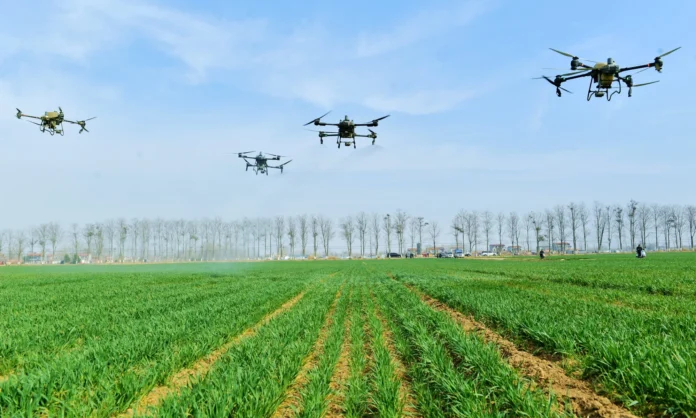
However, the expansion of high quality farmland is likely to influence how pesticides are used in the future. Improved soil structure, better drainage, and more precise irrigation reduce plant stress and can lower susceptibility to pests and diseases. As a result, future projections indicate a gradual shift toward more targeted and efficient pesticide application rather than simple volume increases. Precision agriculture technologies, combined with stricter regulatory oversight, are expected to play a larger role in aligning pesticide use with environmental and food safety objectives.
In the medium term, China’s experience suggests that land quality enhancement and input management will become increasingly integrated policy domains. As high quality farmland continues to expand, the emphasis is likely to move toward optimizing input efficiency, reducing unnecessary chemical use, and maintaining long term soil health. If these trends continue, China’s agricultural system could achieve a balance between high output, resilience to climate risks, and more sustainable production practices, reinforcing its strategic goal of stable and secure food supply in an uncertain global environment.