Arabfields, Said Ali, Analyst and Specialist in Agricultural Policy and Economic Innovations — China’s agricultural cooperatives are playing an increasingly important role in strengthening the country’s rural economy, as policymakers look for ways to protect farmers against climate-related disruptions, market uncertainty and rising production costs.
New research published in November 2026 suggests that expanding the collective agricultural economy could improve the sector’s ability to withstand economic shocks, while making better use of land, labour and financial resources.
The study, which examines data from 30 Chinese provinces between 2011 and 2023, finds a positive relationship between the development of new agricultural cooperative organisations and agricultural economic resilience. Its findings point to a shift away from fragmented, input-intensive farming towards a more coordinated system driven by productivity and efficient resource allocation.
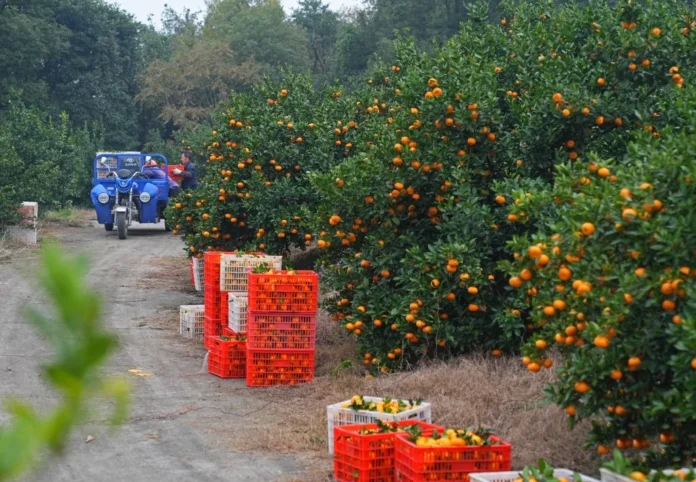
For farmers operating small and fragmented holdings, the cooperative model offers an opportunity to share machinery, access technical services and reduce some of the costs associated with agricultural production. It can also improve access to storage, processing facilities and wider distribution networks, areas where individual farmers often face financial and logistical constraints.
The research highlights the importance of improving the allocation of agricultural production factors. Rather than relying solely on additional land, labour or investment, cooperatives can help farmers obtain greater returns from resources already available to them.
The statistical findings provide further evidence of this relationship. Across the 390 observations used in the research, the estimated impact of cooperative economic development on agricultural resilience remained positive and statistically significant. The researchers calculated that a one-standard-deviation increase in cooperative development was associated with an approximately 0.139-standard-deviation improvement in agricultural economic resilience.
The benefits also extend beyond the organisation of farming activities. The study identifies labour productivity, land-use efficiency and the movement of agriculture-related investment into rural areas as important channels through which cooperatives strengthen the sector.
For a smallholder farmer, these changes can have practical consequences. Access to shared agricultural machinery may reduce the need for individual equipment purchases, while coordinated irrigation, technical assistance and crop management can help limit losses during difficult growing seasons. Better links with processing businesses and buyers may also improve farmers’ bargaining positions and reduce dependence on unstable local markets.
However, the benefits are not distributed evenly across China. The study finds that the positive effects are particularly pronounced in eastern and western provinces, while the results for central China are less statistically significant. Cooperative development also appears to have a stronger impact in regions outside the country’s major grain-producing areas.
Access to rural finance emerges as another important factor. The researchers identify a threshold in rural financial development, above which the positive effect of agricultural cooperatives becomes stronger. Their estimates rise from 0.116 below the threshold to 0.161 above it, suggesting that improved access to credit and investment can increase the economic contribution of collective farming organisations.
This finding has important implications for rural development policy. Cooperatives may struggle to expand their operations without affordable financing, particularly when investment is required for irrigation systems, modern equipment, storage facilities and agricultural technology.
Looking ahead, the findings point to further opportunities for China’s agricultural sector if cooperative development is accompanied by stronger rural financial services and continued investment in technology. Digital monitoring, smart irrigation, mechanisation and improved agricultural logistics could help farmers respond more effectively to climate pressures and changing market conditions.
The research does not provide a numerical forecast for agricultural resilience beyond its observation period, which ends in 2023. Nevertheless, its results suggest that regions able to combine collective organisation, productive investment and better resource management could be better positioned to withstand future disruptions.
For policymakers, the challenge will be to ensure that the cooperative model delivers tangible benefits to ordinary farmers rather than simply expanding institutional structures. Transparent management, fair income distribution and effective access to markets will remain essential to its long-term success.
As climate risks and economic uncertainty continue to test agricultural production systems, China’s experience offers an important lesson: strengthening food security may depend as much on how agricultural resources are organised and managed as on how much is invested in production.