Arabfields, Maleeka Kassou, East, West & Central Africa Agriculture Correspondent — Côte d’Ivoire is entering a new chapter for its cocoa industry as changing global demand, unstable prices and pressure on farmers force the world’s largest cocoa producer to reconsider how it manages one of its most important export sectors.
The country remains at the centre of the global cocoa trade, but the market has changed considerably. After a period of exceptionally high prices, cocoa prices weakened sharply in 2026 as production prospects improved and demand became less robust. For Ivorian farmers, the shift has created a very different environment from the one they experienced during the price surge of the previous two seasons.
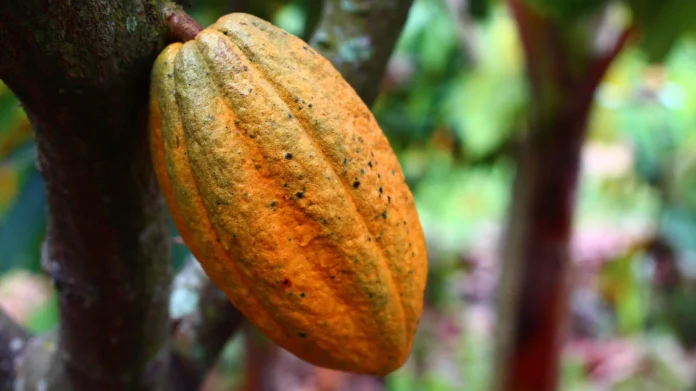
The challenge is particularly significant because cocoa remains deeply embedded in rural life. Millions of people depend directly or indirectly on the crop, and in many farming communities the annual cocoa harvest determines whether families can pay school expenses, repair their homes or invest in the next season.
One farmer in the south-western cocoa belt, for example, may see a strong international price on the market but still have to contend with ageing trees, fertiliser costs, disease and unpredictable rainfall. The gap between international market movements and the daily reality of producers has become one of the central questions facing the sector.
Production figures illustrate the scale of the challenge. Ivorian cocoa output was estimated at about 1.8 million tonnes for the 2024/25 season, up slightly from around 1.76 million tonnes the previous season, but still well below the approximately 2.3 million tonnes recorded in 2022/23. The decline has been linked in part to adverse weather and difficult crop conditions.
In 2026, the country is therefore looking increasingly toward productivity, quality and local processing rather than relying solely on higher volumes of raw beans. This approach could help Côte d’Ivoire capture more value from a commodity that has historically generated substantial export revenue while much of the processing and manufacturing takes place abroad.
The government is also under pressure to protect farmer incomes as global prices become less predictable. The sharp fall in cocoa prices during 2026 has raised concerns that farmers could once again bear the consequences of a market downturn after benefiting from unusually high prices during the previous period.
Environmental pressure is another factor changing the industry. Cocoa expansion has contributed to forest loss over the past decades, increasing pressure on producers and authorities to improve traceability and prevent cocoa from protected areas from entering international supply chains. New mapping and monitoring technologies are making it easier to identify cocoa-growing areas and could strengthen enforcement in the years ahead.
The direction of the market suggests that Côte d’Ivoire will have to become more selective about how it expands production. Rather than depending on the continuous opening of new farmland, future growth is likely to depend increasingly on rehabilitating ageing plantations, improving yields and supporting farmers with better planting material and agricultural techniques.
If production returns toward the two-million-tonne level while local processing continues to expand, Côte d’Ivoire could strengthen its position even if international prices remain below their recent peaks. Such a recovery would also provide greater stability for exporters and rural communities, although the benefits will depend heavily on how much additional value reaches farmers.
The next few seasons are therefore likely to be decisive. A combination of improved productivity, stronger traceability and greater domestic processing could make the Ivorian cocoa economy less vulnerable to swings in global prices. But if falling prices persist while production costs remain high, farmers may reduce investment in their plantations, creating another supply problem later in the decade.
For the people who work the cocoa farms, the issue is ultimately straightforward. A successful reform will not simply be measured by tonnes exported or the value of shipments. It will be measured by whether farmers can continue to make a living from their land, even when the global cocoa market changes direction.