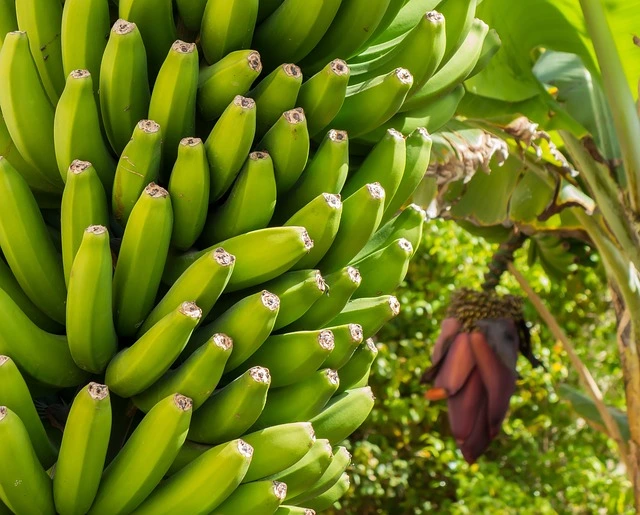
Arabfields, Imed Aissaoui — On December 18, 2025, Ecuador’s plant health authority Agrocalidad officially confirmed the presence of Fusarium Wilt Tropical Race 4 (TR4), a devastating soil-borne fungus, on a commercial banana farm in Santa Rosa, El Oro province, near the border with Peru. The detection, initially suspected in September on a modest seven-hectare plantation, has triggered immediate containment protocols and prompted the Ministry of Agriculture to declare a six-month phytosanitary emergency for the entire banana sector. This landmark event marks the entry of TR4 into the world’s leading banana-exporting nation, an arrival long anticipated yet still deeply concerning for an industry that supplies more than 70 countries worldwide.
Ecuador has spent over 14 years and invested more than $34 million preparing for this moment. Through coordinated efforts involving the Ecuadorean Banana Cluster, producers have undergone extensive training, risk zones have been carefully mapped, biosecurity kits have been distributed widely, and phytosanitary surveillance has been significantly strengthened. Technical studies and audits have been conducted on more than 1,500 farms, while advanced monitoring systems incorporating drones and satellite imagery now cover over 40 percent of the banana-growing areas in the key provinces of El Oro, Guayas, and Los Ríos. These proactive measures reflect a realistic acknowledgment that the arrival of TR4 was inevitable, given its relentless advance across Latin America, following initial detections in Colombia in 2019, Peru in 2021, and Venezuela shortly thereafter.
The pathogen, which attacks the vascular system of banana plants and leads to irreversible wilting and death, poses an existential threat to the dominant Cavendish variety that constitutes the vast majority of global exports. Once established in the soil, TR4 persists for decades, rendering conventional chemical controls or soil fumigation largely ineffective. Its spread occurs through contaminated soil, water, tools, and infected planting material, making strict biosecurity the only viable short-term defense. The confirmation in El Oro, a region already under heightened surveillance due to its proximity to infected areas in northern Peru, underscores how geographical contiguity and agricultural trade facilitate the pathogen’s movement despite rigorous border controls.
Looking ahead, the trajectory of TR4 in Ecuador and the broader Latin American region appears challenging. Historical patterns observed in other countries suggest that isolated detections often evolve into wider regional outbreaks when containment fails to achieve complete eradication. In Peru’s Piura region, for example, nearly half of the farms showed infection within four years of initial detection, with around 10 percent of plantations completely abandoned. Similar progression in Colombia and Venezuela has already caused substantial economic damage and forced structural adjustments in production systems. Given Ecuador’s unparalleled scale of production and its position as the top global exporter, even limited spread could generate significant disruptions.
In the coming years, banana volumes from Ecuador may face downward pressure if the fungus extends beyond the initial outbreak site. Small and medium-sized producers, who form the backbone of the industry, will likely bear the heaviest burden, as the costs of intensified biosecurity, decontamination efforts, and potential crop replacement accumulate rapidly. Industry leaders have already warned that escalating disease management expenses could mark the end of the era of inexpensive bananas on international markets. Major companies have described the confirmation in Ecuador as a serious escalation, one that threatens food security, price stability, and millions of rural livelihoods across the continent.
Yet the outlook is not entirely pessimistic. Ecuador’s long preparation period provides a critical advantage compared with earlier-affected nations. The ongoing phytosanitary emergency enables rapid mobilization of resources, international cooperation, and the full implementation of the national contingency plan. Global research efforts continue to accelerate, with promising developments in biotechnology, including CRISPR-Cas9 gene editing to target fungal virulence genes, and the pursuit of resistant cultivars through international breeding programs. Regional alliances and knowledge-sharing networks established under organizations such as the FAO and the Global Alliance against TR4 offer pathways for collaborative defense.
Over the medium to long term, the banana sector will probably undergo profound transformation. Diversification into more tolerant varieties, enhanced genetic improvement programs, and widespread adoption of integrated soil health management practices will become essential survival strategies. The current crisis may ultimately catalyze innovation that strengthens the resilience of banana production worldwide, though this transition will require substantial investment, scientific collaboration, and policy support. For now, Ecuador stands at a pivotal moment, where effective containment in the coming months could delay widespread impact, buying precious time for the development of sustainable solutions.
The arrival of TR4 represents a defining challenge for one of the most important agricultural industries in the developing world, but the country’s preparedness, determination, and international partnerships provide grounds for cautious optimism that the worst consequences can still be averted. The coming years will reveal whether these efforts prove sufficient to protect a crop that remains central to both global food systems and the economic vitality of entire nations.