Arabfields, Sophia Daly, Financial Analyst specialized in Agriculture and Futures Markets — Global grain production stands poised to achieve record levels for the third consecutive year, yet the underlying market equilibrium remains precarious and susceptible to sudden shifts from weather patterns, logistical bottlenecks, and evolving demand dynamics. According to assessments from the International Grains Council released in February 2026, total grains output, encompassing wheat and coarse grains, is forecast at 2,460 million tonnes for the 2025/26 marketing season, reflecting a year-on-year expansion of approximately 130 million tonnes, the largest annual increment observed over the past twelve years, and corresponding to a robust six percent growth relative to the preceding campaign. This surge effectively equates to injecting an additional volume comparable to the entire annual production of a major exporter such as Russia into the global supply pool, thereby signaling a transition from three successive years of market deficits toward a surplus configuration where production surpasses consumption for the first time in four years.
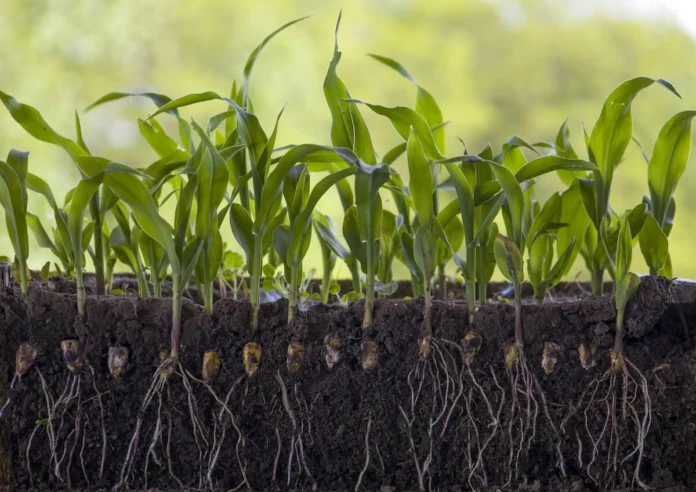
The composition of this historic harvest underscores the pivotal contributions from key staple crops, with wheat production anticipated to reach around 842 million tonnes and maize output climbing to approximately 1,313 million tonnes, both establishing new benchmarks amid favorable conditions in prominent exporting regions. Wheat gains derive substantially from expanded yields in Argentina, Canada, and the European Union, while the maize increment stems predominantly from elevated production in the United States, projected near the 500 million tonne threshold. Despite the impressive aggregate volumes, consumption projections for total grains in 2025/26 hover at 2,415 million tonnes, permitting a meaningful replenishment of inventories that will elevate end-season carryover stocks to 631 million tonnes, the highest level registered in six years and approaching pre-pandemic norms. This stock buildup, amounting to an increase of 45 million tonnes compared with the prior season, offers a buffer against potential shortfalls, although the overall supply outlook has been adjusted marginally tighter month-on-month owing to smaller opening inventories.
Nevertheless, the resilience of this apparent surplus proves limited when examined through the lens of stock-to-use ratios, which stand at approximately 34 percent for wheat and 24 percent for maize, figures that translate into no more than a few months of active consumption coverage worldwide. Such slender margins imply that even moderate disruptions, whether arising from adverse meteorological events or interruptions in supply chains, could rapidly transmit volatility into international prices and availability. The market has already demonstrated this sensitivity, as evidenced by the firmness in wheat quotations despite the abundant outlook, a phenomenon attributable to lingering uncertainties surrounding the forthcoming 2026/27 harvest, persistent weather hazards across the United States, the Black Sea region, and the European Union, as well as the cautious selling behavior exhibited by producers, particularly in Europe where farmers exhibit reluctance to part with supplies at prevailing price levels.
Demand-side pressures further complicate the picture, as several factors continue to constrain upward momentum in wheat utilization. Lower international rice prices, following the relaxation of export restrictions by India, have diverted some feed and food demand away from wheat toward more economical alternatives. Concurrently, the recovery in white corn production across Sub-Saharan Africa has diminished reliance on imported wheat in certain markets, while the inherent competitiveness of maize within livestock feed rations has intensified substitution effects. The availability of relatively inexpensive soybean meal has compounded these dynamics, heightening competition among various feed ingredients and thereby moderating overall wheat consumption growth to 823 million tonnes in the current season, a level that nonetheless supports trade volumes expanding to 209 million tonnes.
For maize, the situation mirrors this complexity, with production advances enabling consumption to reach 1,298 million tonnes and trade to attain 196 million tonnes. Market participants maintain close vigilance over weather developments in South America, the pace of United States exports, and potential policy adjustments in China, where a partial resurgence in import activity could materialize following a recent period of reduced purchases. These variables introduce an element of unpredictability that tempers optimism, even as the global grains trade projection for 2025/26 has been lifted to 449 million tonnes, driven by heightened shipments toward Asian destinations amid solid international demand.
Looking ahead, initial projections for the 2026/27 season, though tentative given the early stage of planning, indicate a subtle tightening in the wheat supply and demand balance. Expectations center on a modestly reduced harvest coupled with continued gains in consumption, potentially reversing some of the current surplus momentum and placing renewed pressure on inventories. Maize output may similarly experience a year-on-year dip under assumptions of trend yields and prevailing sown area estimates, while barley acreage could contract below historical averages in response to comparatively weak profit margins for growers. These forward-looking assessments, derived directly from prevailing data trends and early planting intentions, underscore the necessity for sustained productivity enhancements to safeguard against emerging constraints.
The implications of this fragile equilibrium extend far beyond immediate trading floors, influencing food security, agricultural incomes, and broader economic stability across both developed and developing economies. In exporting nations, the combination of record supplies and subdued prices risks compressing farmer revenues, potentially discouraging future investments in technology, infrastructure, and sustainable practices essential for long-term yield stability. Producers in the European Union and the United States, for instance, confront the prospect of margins falling below breakeven thresholds in certain regions, a scenario that could accelerate structural adjustments within the sector and prompt calls for targeted policy support to maintain planting enthusiasm.
Conversely, importing countries, particularly those in vulnerable regions of Asia and Africa, benefit from the downward pressure on prices that accompanies abundant harvests, affording temporary relief to household budgets and government subsidy programs. Yet this advantage hinges on the uninterrupted flow of trade, which remains exposed to logistical vulnerabilities such as port congestion, shipping constraints, or geopolitical tensions that could swiftly elevate costs and restrict access. The recent firmness in wheat prices, despite overall plentiful supplies, illustrates how quickly sentiment can shift when risk factors materialize, reminding stakeholders that the current stock rebuild, while welcome, does not eliminate the structural fragilities embedded in global supply chains.
Sustainability considerations further amplify the importance of these developments, as the pursuit of record yields must increasingly contend with climate variability, soil degradation, and water resource limitations that threaten to erode productivity gains over time. The observed weather risks in major production belts during the current and prospective seasons highlight the growing intersection between agricultural output and environmental dynamics, necessitating accelerated adoption of resilient crop varieties, precision farming techniques, and diversified cropping systems. International cooperation on research, knowledge sharing, and risk mitigation strategies will prove indispensable if the trajectory of successive record harvests is to persist without compromising ecological foundations.
In parallel, evolving consumption patterns driven by population growth, urbanization, and dietary shifts in emerging markets will continue to shape demand trajectories. Rising requirements for feed grains to support expanding livestock sectors, alongside steady food use of wheat and rice, are projected to sustain utilization at elevated levels, potentially outpacing supply increments in the medium term if yield improvements lag. The anticipated partial return of China to import markets for maize exemplifies how policy decisions in large economies can exert outsized influence on global balances, reinforcing the interconnected nature of the grains complex.
Ultimately, the attainment of record global grain production in 2025/26 represents a significant achievement for the agricultural community, demonstrating the capacity of modern farming systems to deliver substantial volumes under favorable conditions. The rebuilding of stocks to their highest level in six years provides a vital cushion that enhances market resilience and supports food security objectives worldwide. However, the persistently low stock-to-use ratios for wheat and maize, combined with the identified vulnerabilities to weather shocks, logistical disruptions, and demand substitutions, affirm that the equilibrium remains delicate. Forward projections for 2026/27, pointing toward a tighter wheat outlook amid expectations of a smaller crop and rising consumption, serve as a cautionary signal that vigilance and proactive measures will be required to navigate the uncertainties ahead.
Stakeholders across the value chain, from producers and traders to policymakers and consumers, must therefore approach the current abundance with measured realism, prioritizing investments in infrastructure, innovation, and international coordination to fortify the system against future stresses. Only through such concerted efforts can the global grain market transition from a state of fragile balance to one of enduring stability, ensuring that record harvests translate into reliable benefits for all participants in the international food economy. The coming seasons will test this resolve, as the interplay of supply abundance and inherent risks continues to define the contours of agricultural markets on a planetary scale.