Arabfields, Maleeka Kassou, East, West & Central Africa Agriculture Correspondent — Ghana has taken a decisive step toward greater economic autonomy with the launch of sweeping changes in its cocoa sector, a move that seeks to terminate reliance on external funding sources and establish a more resilient foundation for one of the country’s most critical industries. These reforms, initiated by the government, address longstanding structural weaknesses that have exposed the sector to volatility in global markets and internal financial pressures, while charting a course for enhanced value retention and sustainable development. By shifting away from practices that have historically tied cocoa purchases to foreign loans, the authorities aim to empower domestic stakeholders and ensure that the benefits of this vital commodity flow more directly to Ghanaian farmers and the broader economy.
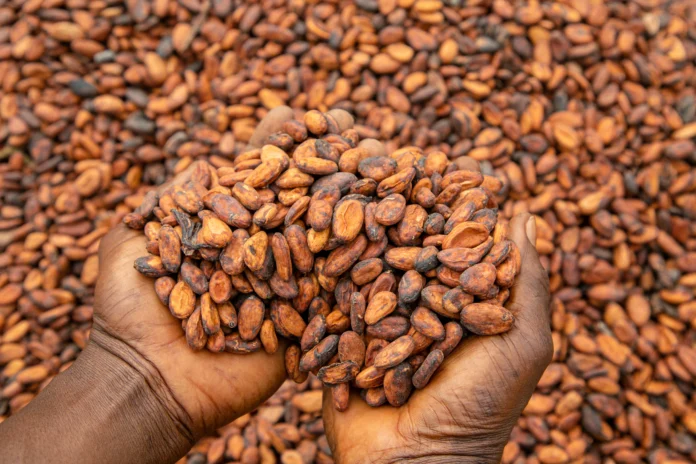
The cocoa industry has long represented a cornerstone of Ghana’s economic landscape, supporting millions of livelihoods in rural communities and contributing substantially to foreign exchange earnings through exports of raw beans. Yet recent years have highlighted vulnerabilities, including sharp fluctuations in international prices that led to significant losses for the regulatory body responsible for the sector, compounded by accumulated obligations from past financing arrangements and expenditures beyond core operations. Production shortfalls, delayed settlements for producers, and constraints on local processing capacity further underscored the need for fundamental adjustments. In response, the government has introduced a series of interconnected measures designed to restore financial health, protect producer incomes, and promote greater industrialization within the value chain, all while aligning with a broader vision of resource sovereignty.
At the heart of these initiatives lies the commitment to cease dependence on foreign financing for cocoa acquisitions, replacing it with mechanisms rooted in domestic resources. The government has declared its intention to raise bonds in the local currency to fund purchases directly from farmers, ensuring that sufficient funds in cedis are available to meet obligations without pledging future harvests as collateral to external entities. This transition eliminates a longstanding arrangement under which beans were often committed abroad in exchange for upfront capital, a system that limited opportunities for domestic utilization and exposed the sector to exchange rate risks and creditor demands. Instead, the new approach establishes a self-sustaining cycle whereby proceeds from sales are reinvested promptly within each crop year, fostering liquidity and reducing the risk of rollover debts that have previously burdened operations.
Complementing the financing overhaul are targeted adjustments to pricing structures that balance immediate market conditions with long-term fairness for producers. For the remainder of the current season, producer prices have been recalibrated to align with prevailing export realizations, providing a measured response to the decline in global values from earlier elevated levels. This adjustment serves as a protective buffer, preventing deeper financial distress while maintaining incentives for continued cultivation. Looking beyond the transitional period, new legislation will introduce an automatic mechanism for price determination, linking payments to movements in world market rates, exchange fluctuations, and other relevant factors, with a guaranteed minimum share of the free-on-board value directed to farmers. Such a framework promises to transmit market signals more effectively, encouraging productivity gains and shielding participants from extreme volatility that has characterized recent cycles.
Parallel efforts focus on expanding local processing to capture a larger portion of the value added in the cocoa chain. By redirecting beans previously locked into export commitments, the reforms unlock substantial capacity for domestic transformation into products such as cocoa butter, powder, and liquor, which command higher returns on international markets. A requirement will take effect in the upcoming season mandating that at least half of all produced beans undergo processing within Ghana, with immediate allocations already directed toward local facilities to build momentum. State-owned entities involved in buying and processing are being revitalized to lead this expansion, supported by engagement with private operators capable of scaling operations efficiently. This emphasis on industrialization not only retains economic value domestically but also stimulates ancillary industries, from packaging and logistics to research into quality enhancements that can command premium positioning.
Financial restructuring forms another essential pillar, aimed at cleansing the balance sheet of the sector’s governing institution and refocusing it on its primary mandate. Legacy debts owed to central fiscal authorities have been restructured through conversion into equity positions, thereby strengthening capital reserves and enabling continued support for operations without ongoing strain. Similarly, obligations related to infrastructure projects unrelated to cocoa activities have been rationalized and transferred to appropriate ministries, reducing the burden and allowing resources to concentrate on farmer services, quality control, and market development. These steps are accompanied by directives for comprehensive reviews of past activities to promote accountability and eliminate inefficiencies, ensuring that future governance adheres to principles of transparency and fiscal discipline.
The broader context of these reforms extends to a national strategy for asserting control over natural resources, with timelines extending to full localization of processing activities across related commodities by the end of the decade. In this vision, Ghana will progressively minimize the export of unprocessed materials, fostering an ecosystem where extraction and transformation occur domestically to generate employment, skills development, and diversified revenue streams. For the cocoa sector specifically, the elimination of foreign collateral requirements immediately frees resources that can be channeled into farmer support programs, including inputs for sustainable cultivation practices that address challenges such as aging trees and climate impacts.
As these measures unfold, future projections grounded in the outlined data indicate a period of stabilization and accelerated growth for the sector. Within the next two to three years, the adoption of domestic bond financing is anticipated to yield a more predictable funding environment, minimizing disruptions from external market shifts and enabling timely payments that bolster farmer confidence and encourage expanded planting. With enhanced liquidity, production volumes could rebound from recent shortfalls, potentially restoring Ghana’s competitive standing as output stabilizes around historically robust levels. The mandated increase in local processing is expected to drive a substantial uplift in export earnings, as higher-value derivatives replace a portion of raw bean shipments, thereby multiplying the economic multiplier effect within the country and contributing more robustly to gross domestic product.
By the turn of the decade, the cumulative impact of these reforms is projected to position the cocoa industry as a model of integrated development, where value addition supports thousands of additional jobs in processing facilities, transportation networks, and supporting services. Farmer incomes stand to benefit from the automatic price linkage, which will provide a more equitable distribution of returns even amid global fluctuations, reducing incidences of distress sales or diversion to neighboring markets. Greater retention of revenues domestically will facilitate reinvestment in research, extension services, and infrastructure tailored to the sector, fostering innovation in areas such as disease-resistant varieties and eco-friendly production methods that enhance long-term resilience.
Moreover, the shift toward full economic sovereignty in resource management is likely to attract complementary investments from both local and international partners interested in participating in a stable, domestically oriented supply chain. As Ghana demonstrates success in decoupling from exploitative financing models, it may inspire similar transitions across the region, strengthening collective bargaining power in global commodity markets and elevating Africa’s role in the chocolate value chain. Potential challenges, including the need to deepen domestic capital markets for bond issuance and to scale processing infrastructure efficiently, are addressed through the phased implementation and governance enhancements, which prioritize capacity building and oversight to mitigate risks.
In the longer horizon extending beyond 2030, sustained adherence to these principles could transform the sector into a dynamic engine of inclusive growth, with processed cocoa products forming a larger share of exports and generating multiplier effects across agriculture, manufacturing, and services. Youth employment opportunities in value-added industries would expand, contributing to reduced rural-urban migration and more balanced regional development. The overall economic resilience gained from reduced commodity dependence would buffer against external shocks, allowing Ghana to pursue diversified strategies while maintaining cocoa as a reliable pillar. Environmental considerations integrated into the reforms, such as support for sustainable farming, would further align the sector with global standards, potentially unlocking access to premium markets that reward responsible production.
These developments collectively represent a forward-looking strategy that not only resolves immediate fiscal and operational challenges but also embeds principles of self-determination and efficiency into the fabric of the industry. Through meticulous execution of the announced measures, the government is laying the groundwork for a cocoa sector that delivers enduring prosperity to producers, processors, and the nation as a whole, while serving as a benchmark for resource-rich economies seeking to maximize benefits from their endowments. The coming years will test the robustness of this framework, yet the foundational elements of domestic financing, equitable pricing, and localized processing offer a compelling pathway to a more secure and prosperous future for Ghana’s cocoa heritage.