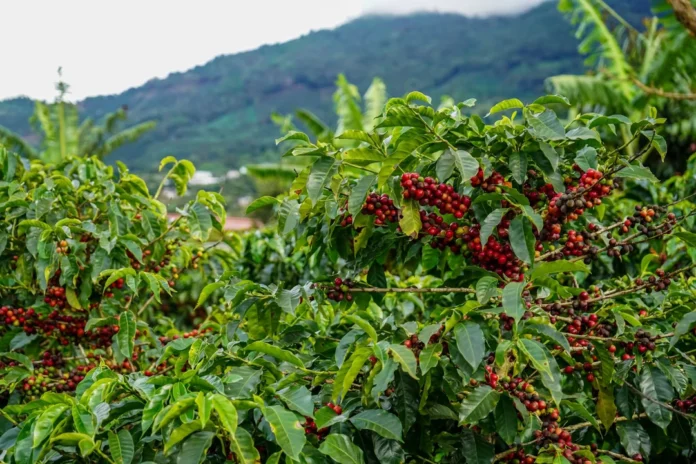
Arabfields, Imed Aissaoui, Oran, Algeria — The United Nations has officially designated October 1 as International Coffee Day, a recognition that underscores the profound global significance of coffee as one of the world’s most traded commodities and a cornerstone of economic activity in numerous regions. This annual observance highlights coffee’s role beyond a simple beverage, positioning it as the third most consumed drink globally after water and tea, while emphasizing its contributions to livelihoods, trade, and sustainable development.
Coffee sustains the livelihoods of approximately 25 million farmers and their families worldwide, many of whom operate as smallholders in developing countries where the crop serves as a primary source of income and foreign exchange. The sector generates an annual economic value exceeding $200 billion, reflecting its vast scale across production, processing, trade, and retail. Global coffee production has demonstrated steady growth in recent years, with output surpassing 11 million metric tons in earlier periods, and recent forecasts indicate continued expansion driven by recovery in key origins and favorable conditions in others.
In 2026, the coffee market reflects a dynamic landscape shaped by record-level production estimates and persistent demand pressures. According to projections from authoritative agricultural sources, world coffee production for the 2025/26 marketing year reaches a historic high of 178.8 million 60-kilogram bags, marking an increase of approximately 2 percent compared to the previous year. This record output results primarily from continued recovery in Vietnam, record harvests in Indonesia and Ethiopia, and partial offsets to declines in major producers such as Brazil and Colombia, where climatic challenges have impacted certain varieties. Looking further ahead, some industry analyses anticipate even higher figures, with global production potentially approaching 180 million bags in the 2026/27 season, representing an increase of roughly 8 million bags from the prior year and signaling improved supply prospects in major Arabica and Robusta regions.
Consumption patterns remain robust, with global demand continuing to rise steadily. For the 2025/26 period, world coffee consumption is forecasted to attain a record 173.9 million 60-kilogram bags, reflecting a growth of about 1.3 percent year-over-year. This upward trajectory is supported by sustained appetite in traditional markets including the United States and Europe, alongside accelerating domestic consumption in emerging economies such as Indonesia, China, and parts of the Middle East. Per capita consumption has historically increased at an average annual rate of 1.2 percent over the past decade, a trend that persists amid shifting preferences toward premium and convenient formats. The global coffee market value stands at approximately $185.69 billion in 2026, with projections indicating expansion toward $238.99 billion by 2031 at a compound annual growth rate of around 5.18 percent, driven by demand for specialty offerings, ready-to-drink products, and greater emphasis on sustainability.
Despite these positive production figures, the market experiences structural tensions, as consumption has frequently outpaced supply in recent cycles, leading to declining ending stocks projected at 20.1 million bags for 2025/26, the fifth consecutive year of reduction. Such dynamics have contributed to elevated prices in prior periods, though recent months show some moderation due to improved supply outlooks, particularly from Brazil, where forecasts suggest substantial increases in both Arabica and Robusta output for subsequent harvests. The International Coffee Organization composite indicator price has exhibited volatility, yet signs of stabilization emerge as supply expectations strengthen.
The socioeconomic importance of coffee remains particularly evident in producing regions, especially in East Africa, where the crop constitutes a major export driver. In countries like Ethiopia, Uganda, and Burundi, coffee accounts for significant portions of total merchandise exports, often exceeding 19 to 27 percent, and frequently generates revenues that surpass or closely match food import expenditures. This foreign exchange contribution supports national economies and rural development, while the sector connects smallholder communities to international markets.
Looking to the future, the designation of International Coffee Day serves as a platform to address ongoing challenges, including climate vulnerabilities, price fluctuations, and the need for sustainable practices to ensure long-term viability. Forecasts point toward continued growth in both production and consumption, albeit with potential adjustments due to weather patterns, input costs, and geopolitical factors influencing trade. As demand in Asia-Pacific accelerates and premium segments expand, the industry is poised for further evolution, with emphasis on traceability, resilience, and inclusive growth to benefit the millions dependent on coffee cultivation.
In summary, coffee stands as a vital global commodity that intertwines economic prosperity, cultural traditions, and agricultural heritage. The establishment of October 1 as its international day reinforces global commitment to recognizing and supporting this essential sector amid evolving market conditions and future opportunities.