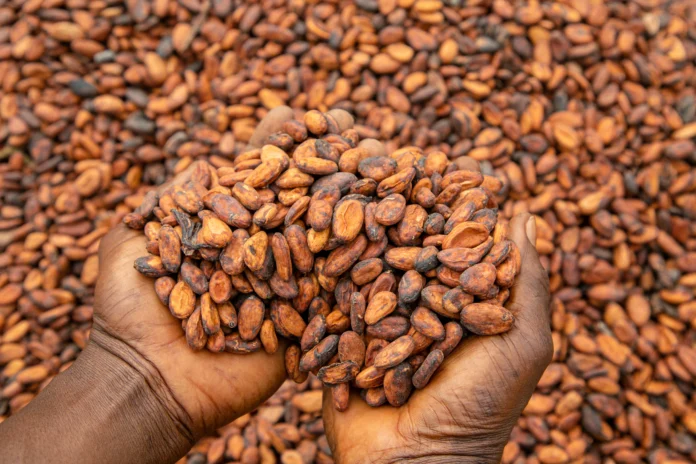
Arabfields, Nadia Fatima Zahra, Arabfields, Yamoussoukro, Ivory Coast — The global cocoa industry, a cornerstone of agricultural economies in West Africa, has been grappling with unprecedented volatility in recent years, particularly affecting major producers like Ivory Coast and Ghana, which together supply over sixty percent of the world’s cocoa beans. This volatility stems from a combination of climatic disruptions, disease outbreaks, and shifting market dynamics that have led to dramatic price fluctuations, impacting farmers, exporters, and chocolate manufacturers alike. In 2026, the sector faces a pivotal moment as prices continue to decline from their historic highs, prompting governments to intervene with price adjustments to stabilize local markets and prevent economic fallout for millions of smallholder farmers who depend on cocoa for their livelihoods. The current crisis in Ivory Coast, the world’s leading cocoa producer, exemplifies these challenges, with a sharp reduction in farmgate prices announced in early March 2026, reflecting broader global trends toward surplus production and subdued demand.
Historically, cocoa prices have been susceptible to supply shocks, but the period from 2024 to 2026 has seen extremes that underscore the fragility of the market. In December 2024, cocoa futures reached an all-time high of 12,906 dollars per metric ton in New York, driven by adverse weather conditions in West Africa, including prolonged droughts and the spread of swollen shoot virus, which decimated yields. This surge was short-lived, however, as improved rainfall patterns and better crop management practices began to restore production levels. By February 2026, prices had plummeted to a low of 2,952 dollars per metric ton, marking a decline of over seventy percent from the peak and representing the lowest level in more than two years. This rapid reversal has created a surplus environment, with global cocoa production for the 2025-2026 season estimated at 4.728 million metric tons, surpassing grindings, or processing demand, which stand at 4.606 million metric tons, resulting in a projected surplus of approximately 365,000 metric tons. Such a surplus, the first in several years, has alleviated fears of shortages but introduced new pressures on producers who fixed prices at higher levels earlier in the cycle.
In Ivory Coast, which produced around 1.78 million metric tons of cocoa in the 2025-2026 season, accounting for nearly forty percent of global output, the crisis has manifested in unsold stockpiles and liquidity shortages for farmers. The country’s main crop season, running from October to February, saw favorable weather leading to healthier yields, but this abundance coincided with a global price drop, leaving exporters with an inventory of 100,000 metric tons of unsold beans by January 2026. To address this, the Ivorian government, through the Conseil du Café-Cacao, implemented a buyback program allocating 280 billion CFA francs, equivalent to about 496 million dollars, to purchase the entire stockpile at the guaranteed main crop price of 2,800 CFA francs per kilogram. As of early March 2026, 23,000 metric tons had already been acquired, providing much-needed cash flow to farmers and averting potential unrest among producer organizations. This intervention highlights the government’s role in buffering smallholders from market volatility, as cocoa supports the livelihoods of over six million people in Ivory Coast, contributing significantly to the nation’s economy, which is the largest in the West African Economic and Monetary Union.
The most dramatic response to the crisis came on March 4, 2026, when the Ivorian Minister of Agriculture announced a fifty-seven percent reduction in the farmgate price for the mid-crop, or petite traite, season, which commenced a month early in March. This adjustment lowered the price from 2,800 CFA francs per kilogram to 1,200 CFA francs per kilogram, or roughly 2.13 dollars, aligning it more closely with prevailing world market rates hovering around 3,000 dollars per metric ton. This move, described as a reluctant readjustment necessitated by the evolution of global prices, aims to make Ivorian cocoa more competitive and stimulate purchases by international traders who had slowed acquisitions due to the price mismatch. Comparatively, neighboring Ghana, the second-largest producer with an output of 650,000 metric tons in 2026, implemented a less severe cut of twenty-eight point six percent, setting its farmgate price at 41,392 Ghanaian cedis per metric ton, or about 3,847 dollars. Despite the disparity, Ivory Coast’s adjusted price remains attractive enough to potentially reduce illegal cross-border smuggling to Ghana, a persistent issue that drains resources from the formal economy.
The implications of this price reduction extend beyond immediate farmer incomes, influencing the broader supply chain and export dynamics. In the ports of Abidjan and San Pedro, cocoa arrivals have shown signs of recovery, totaling 28,000 metric tons in the week ending March 1, 2026, compared to 18,000 metric tons during the same period the previous year, indicating a resurgence in trade activity. This uptick suggests that the lower prices are encouraging exporters to resume operations, potentially clearing backlogs and restoring liquidity to the sector. However, the elimination of premiums for quality and the decent living income differential of 400 dollars per metric ton, in place since the 2020-2021 season, could undermine long-term sustainability efforts aimed at improving farmer welfare. With cocoa grindings projected to decline by four point two percent globally in 2026 to 4.606 million metric tons, driven by higher costs passed on to consumers and reduced chocolate demand, the industry faces a delicate balance between supply abundance and consumption slowdowns.
Looking ahead, forecasts for the remainder of 2026 and into 2027 paint a picture of cautious stabilization, with potential for gradual price recovery if supply surpluses do not overwhelm the market. Based on current data, global cocoa prices are expected to trade within a range of 5,500 to 7,000 dollars per metric ton throughout 2026, reflecting ongoing supply tightness in some regions despite the overall surplus. Ivory Coast’s production is anticipated to rebound modestly to 1.85 million metric tons by the end of the year, supported by improved rainfall and disease control measures, while Ghana’s output may reach 600,000 metric tons, aided by a four percent increase in farmgate prices that, though deemed insufficient by some farmer groups, provides incentives for better crop maintenance. These projections assume normal weather conditions, as any return of El Niño effects could disrupt yields and push prices higher. The International Cocoa Organization estimates a small global surplus for 2025-2026, which could transition into balanced supply-demand dynamics by 2027, potentially driving prices toward 7,300 to 7,900 dollars per metric ton as inventories rebuild and demand from emerging markets in Asia grows.
Further into the future, structural shifts in the cocoa market suggest a trajectory of higher average prices over the long term, with forecasts indicating cocoa could reach 8,900 dollars per metric ton by the end of 2027, climbing to 10,800 dollars in 2028, 12,700 dollars in 2029, and exceeding 14,500 dollars by 2030. This upward trend is underpinned by persistent challenges such as aging plantations, limited investment in West Africa, and the geographic concentration of production, which makes the sector vulnerable to disruptions. In Ivory Coast, where annual production has declined from over two million metric tons a few years ago to around 1.6 million metric tons recently, efforts to diversify and enhance sustainability, including traceability initiatives mandated by the European Union, could mitigate risks but may also increase costs. Similarly, Ghana’s harvest, which once surpassed one million metric tons, fell to under 500,000 metric tons last season due to weather and disease, but with projected recoveries, the combined output from these two nations could stabilize at sixty to seventy percent of global supply, provided policy alignments prevent further price collapses.
The crisis also highlights opportunities for diversification beyond West Africa, with Latin American countries like Ecuador aiming to overtake Ghana as the second-largest producer by 2027, targeting 650,000 metric tons annually through expanded plantations and modern farming techniques. This shift could redistribute global production risks and foster more resilient supply chains, potentially leading to a ten percent increase in non-West African output by 2027. However, for Ivory Coast, the immediate focus remains on supporting farmers through the buyback program and price adjustments to prevent discouragement and maintain cultivation levels. If global demand destruction persists, with grindings expected to drop by four point eight percent to 4.65 million metric tons in 2026 due to higher consumer prices for chocolate, the industry may see further reformulation by manufacturers, substituting cocoa with alternatives to reduce costs.
In summary, while the 2026 cocoa crisis in Ivory Coast has necessitated painful adjustments, including the fifty-seven percent farmgate price cut, it sets the stage for a potential rebound driven by surplus resolution and production recoveries. By leveraging data from current surpluses of 365,000 metric tons and projected price ranges, the sector could achieve greater stability, ensuring that West African economies continue to benefit from this vital commodity without succumbing to the whims of volatile markets. As the year progresses, monitoring weather patterns and trade flows will be crucial to refining these forecasts and safeguarding the millions reliant on cocoa’s enduring appeal.